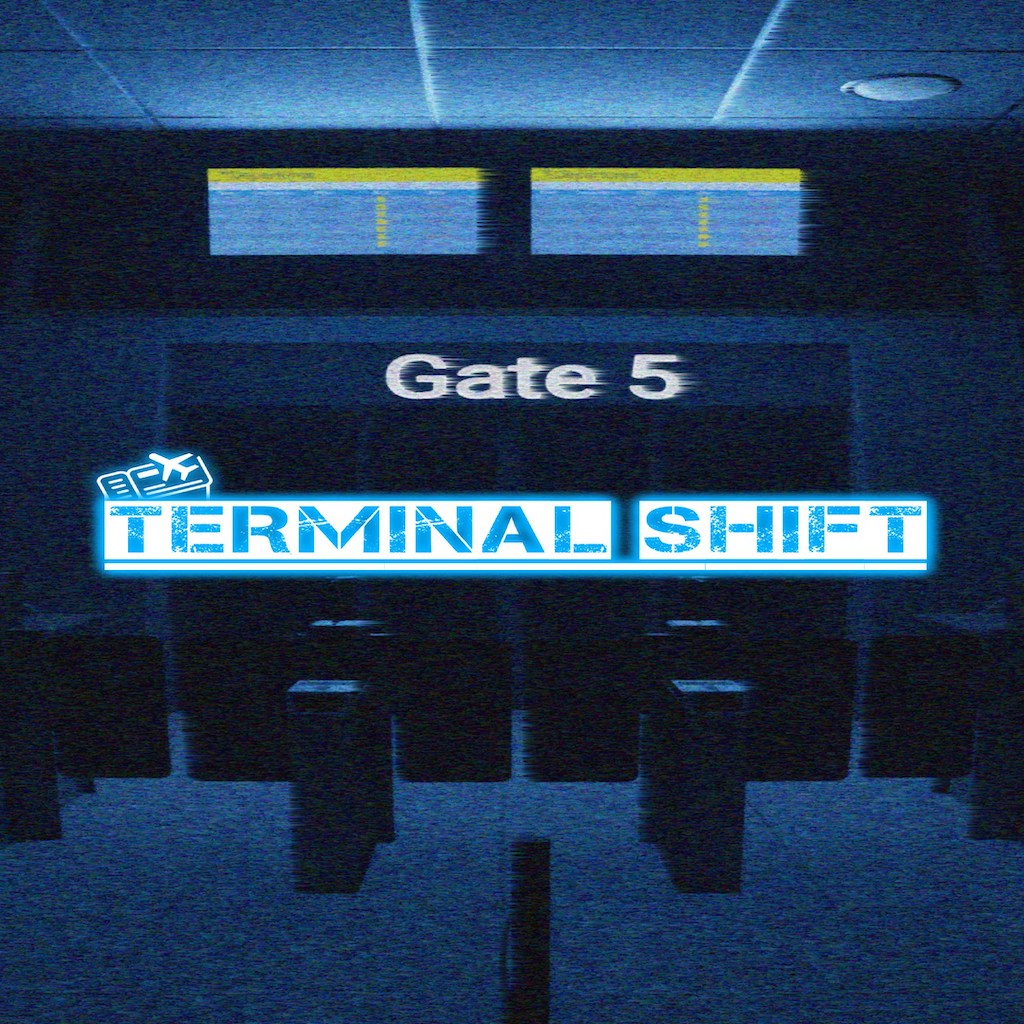
Airports are strange places even on the best of days. They are designed to move thousands of people through enormous spaces with mechanical efficiency, yet when those crowds disappear, the silence becomes unsettling. Long corridors stretch into the distance, departure boards flicker without purpose, and rows of empty seats seem to wait for passengers who will never arrive. Terminal Shift immediately captures that eerie atmosphere, transforming one of the world’s busiest public spaces into an oppressive labyrinth where every corner feels just a little wrong.
Developed and published by Digital Star Games, Terminal Shift blends psychological horror with environmental puzzle-solving, asking players to escape a looping airport terminal by discovering a procedurally generated ten-digit access code. It sounds deceptively simple, but the brilliance lies in how the game weaponises observation. Rather than filling every hallway with monsters or relying solely on sudden scares, it forces you to question the environment itself. Every object, every shadow and every unusual pattern might conceal the next number you need, while an unseen presence reminds you that standing still for too long is rarely a good idea.
The result is a horror experience that values tension over spectacle. It trusts players to notice subtle changes, rewards careful exploration and slowly builds paranoia with every completed loop. While it does not reinvent psychological horror, it confidently carves out its own unsettling identity.
Gameplay
The central gameplay loop revolves around collecting a ten-digit access code, one number at a time. Each loop through the airport hides a single digit somewhere in the environment, and that location changes each time. Sometimes the number is written plainly on a surface, but more often it is disguised within the shapes of surrounding objects, formed by shadows, or cleverly hidden within patterns that initially appear perfectly ordinary.
That simple premise quickly becomes surprisingly absorbing. Instead of rushing through each area, you naturally slow your pace, studying walls, furniture and architecture with increasing suspicion. The airport itself becomes the puzzle, encouraging players to pay attention to details they would normally ignore in almost any other horror game.
Procedural generation helps prevent the experience from becoming predictable. Even after understanding how the game works, there is no guarantee where the next number will appear. This uncertainty keeps every new loop engaging because observation remains just as important in the final hours as in the opening moments.
The keypad system also deserves praise. Every discovered digit is entered before progressing, and the game stores your progress across loops. That structure creates a satisfying sense of forward momentum, even when individual attempts end in failure. Each successful discovery feels like genuine progress towards eventual escape rather than merely surviving another encounter. Of course, searching every inch of the airport would be far too comfortable without something hunting you.
Living With Constant Anxiety
The creature stalking Terminal Shift is used sparingly, which ultimately makes it far more effective. Rather than appearing constantly, its unpredictable presence creates a persistent unease throughout every exploration session. You are never entirely certain whether you have time to thoroughly inspect an area or whether lingering for just a few extra seconds will prove fatal.
This uncertainty fundamentally changes how you approach exploration. One moment you are carefully examining unusual floor patterns, and the next you are abandoning your investigation because an unsettling sound somewhere in the terminal tells you danger may be approaching. The balance between curiosity and self-preservation becomes the driving force behind the entire experience.
Importantly, the creature never overshadows the puzzle design. Terminal Shift understands that its environmental mystery remains the main attraction. The monster exists to disrupt concentration rather than replace thoughtful exploration with endless chase sequences.
There are moments when encounters become slightly repetitive, particularly during longer sessions, but the game’s restrained use of its antagonist prevents fatigue from becoming a significant issue. Horror is often more effective when players imagine what might happen rather than constantly witnessing it, and Terminal Shift leans heavily into that philosophy.
Atmosphere and Presentation
Few independent horror games make better use of environmental storytelling than Terminal Shift. The airport feels both familiar and deeply unsettling, creating an uncanny version of a place most people already know. Empty check-in desks, abandoned seating areas and silent boarding gates combine to create a space that feels frozen in time.
Lighting plays a major role in maintaining tension. Long stretches of dimly lit corridors contrast with harsh fluorescent lighting, making every corner feel unpredictable. Reflections, shadows and distant silhouettes constantly draw your attention, prompting second-guessing of what you have just seen.
The optional VHS camera mode adds another enjoyable layer to the presentation. While not essential, it introduces nostalgic analogue distortion that complements the game’s psychological themes surprisingly well. The zoom function also proves genuinely useful when examining suspicious details hidden throughout the terminal.
Minimal interface elements further strengthen immersion. Without excessive objective markers or intrusive notifications, players remain focused on their surroundings rather than constantly checking menus. Every piece of information comes from careful observation rather than explicit instruction.
Sound Design
If the visuals establish the atmosphere, the audio completes it. Terminal Shift makes excellent use of silence, allowing the natural ambience of an empty airport to become unsettling in its own right. Air-conditioning hums overhead, distant metallic echoes bounce through deserted corridors, and occasional unexplained noises instantly capture your attention.
The soundtrack knows when to remain absent. Rather than filling every moment with dramatic music, the game often relies entirely on environmental sound. This restraint makes the few musical cues that do appear considerably more impactful.
The creature’s audio design is particularly effective. Strange movements, distant footsteps, and unsettling noises rarely reveal its exact location, forcing players to rely on instinct rather than certainty. Every unexpected sound has the potential to interrupt your concentration, making puzzle-solving increasingly stressful without feeling unfair.
Headphones are almost essential. The directional audio contributes enormously to the game’s tension, helping transform otherwise ordinary hallways into spaces that constantly feel unsafe.
Replay Value
Terminal Shift benefits greatly from its procedural structure. Because access code locations change with each loop, replayability comes naturally, rather than relying solely on optional collectibles or alternative endings. Returning for another escape attempt remains engaging because success depends on observation rather than memorisation.
Difficulty options further extend the experience by letting players adjust both the challenge of finding anomalies and the aggressiveness of the pursuing entity. Those seeking a more methodical puzzle experience can lean towards observation, while horror veterans can increase the pressure considerably.
The experience is not especially lengthy, but that works to its advantage. Psychological horror often loses effectiveness when stretched too far, and Terminal Shift wisely leaves players wanting just a little more rather than exhausting its strongest ideas.
Final Verdict
Terminal Shift proves that psychological horror does not require endless jump scares or overwhelming spectacle to remain memorable. Instead, it builds tension through uncertainty, environmental observation and the constant sense that something is quietly watching just beyond your line of sight. Its looping airport becomes more unsettling with each return visit, gradually transforming familiar architecture into an endless maze of suspicion.
The procedural number-hunting mechanic gives the game an identity that sets it apart from many modern indie horror titles. Rather than simply surviving, players actively investigate their surroundings, making observation every bit as important as courage. Combined with a strong atmosphere, thoughtful audio design and a genuinely oppressive setting, this approach creates an experience that lingers long after the credits roll.
Terminal Shift occasionally repeats itself during extended sessions, and some players may wish for greater narrative depth beyond the central mystery. Even so, its focused design and confident execution ensure that every successful escape feels earned. For fans of slow-burning psychological horror built on atmosphere rather than excess, this is a journey well worth taking, even if you may think twice before visiting an empty airport again.