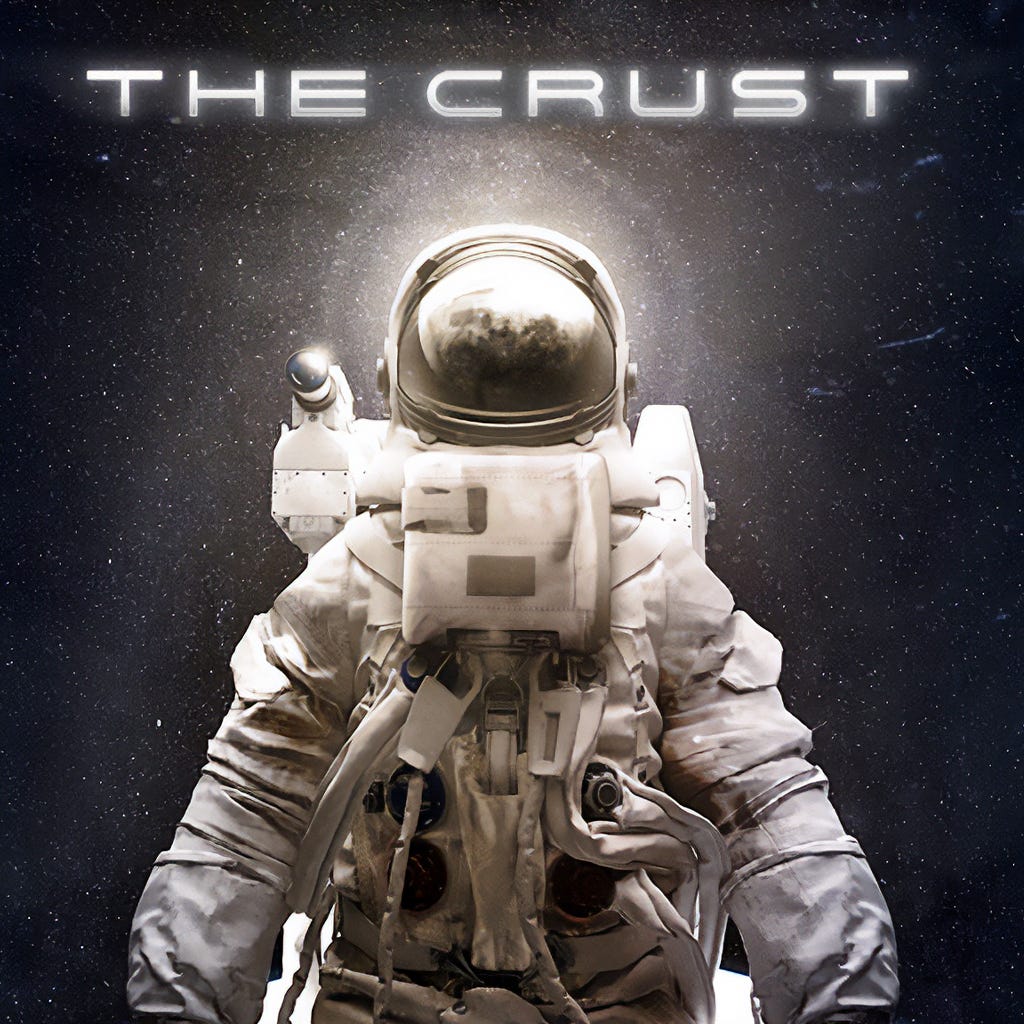
There is something wonderfully appealing about being given an entire piece of the Moon and being told to turn it into a functioning colony. At first, The Crust makes that sound relatively straightforward. Mine some regolith, build a few machines, establish a production line and send resources back to a struggling Earth. Then you realise that those resources need processing, the machines need power, the colonists need somewhere to live, the production lines need to be connected, and Earth has a rather inconvenient habit of needing more and more stuff. Suddenly, your quiet little lunar outpost has become a sprawling industrial operation, and you are the person expected to keep the whole thing running.
Developed by VEOM Studio and published by Crytivo, The Crust is an ambitious colony simulator that combines resource management, factory automation, exploration, trading and a story-driven campaign. It is a game that clearly wants to appeal to players who enjoy getting their hands dirty with production chains and logistics, but it also understands that a colony is more than just machines moving boxes around. There are people involved, political decisions to make, discoveries waiting beneath the lunar surface, and plenty of moments when you have to stop and work out exactly what went wrong with the beautifully organised factory you were so proud of five minutes earlier.
Welcome To The Moon
The basic premise is immediately appealing. Earth is struggling with dwindling resources, while the Moon offers the materials humanity desperately needs. Your job is to establish and expand a lunar colony capable of extracting, processing and shipping those resources back to Earth. It sounds like the sort of job that would require an enormous team of engineers, scientists and logistics experts in real life, but here you get to be all of them.
The scale of the operation is one of The Crust’s greatest strengths. You begin with modest ambitions, gathering resources and constructing the essentials, but before long you are managing increasingly complex production chains. Raw materials need to become processed resources, which in turn become useful components, and those components feed into even more advanced machinery. It is a satisfying progression because you can see your colony evolving from a basic outpost into something that resembles a genuine industrial complex.
Automation Is Everything
If there is one area where The Crust really sinks its teeth into you, it is automation. Conveyor belts and drones become the veins and arteries of your lunar operation, carrying materials from one part of the colony to another while your machinery handles the repetitive work. There is a satisfying sense in watching a production line finally run exactly as you intended.
Of course, getting to that point can be considerably less satisfying. The deeper you delve into the production system, the more complex your requirements become, and it is remarkably easy to create a bottleneck without realising it. One machine might be waiting for a resource that is not being produced quickly enough, while another part of the colony is sitting on a huge stockpile of something you desperately need elsewhere. Learning to spot these problems and redesign your logistics is where much of the game’s enjoyment comes from.
The introduction of drones adds another layer to this industrial puzzle. Instead of relying entirely on fixed conveyor systems, you can use automated logistics to move resources around your operation, allowing you to build more flexible production networks. There is something strangely calming about sitting back and watching the whole system work once you have finally ironed out all those little problems.
Beneath The Surface
One of the things that gives The Crust more personality than a straightforward factory simulator is its use of the Moon itself. Your colony is not simply a collection of menus and production screens. There is a whole hostile world outside, waiting to be explored, and your rover becomes an important tool for discovering what lies out there.
Exploration lets you investigate different lunar locations, search for resources and uncover secrets tied to humanity’s attempts to establish itself on the Moon. Remote mining sites and abandoned research facilities add variety to the experience, giving you reasons to look beyond the immediate boundaries of your colony. The contrast between the barren lunar surface and the busy industrial complex beneath it also works beautifully for the atmosphere.
There is something particularly effective about emerging onto the surface after spending time surrounded by machinery, watching your little rover disappear into the Moon’s enormous emptiness. It reinforces just how isolated your colony really is. You are building something that represents humanity’s future, but that future is sitting on an incredibly unforgiving piece of rock.
Keeping Everyone Alive
Machines might be important, but The Crust makes it clear that people are ultimately your most valuable resource. Your colonists have health, moods, needs, skills and individual characteristics that must be taken into account. A highly efficient factory is of little use if the people running it are miserable, unhealthy or completely unsuited to their jobs.
Managing your workforce therefore becomes another puzzle to solve. Hiring specialists with the right abilities can make a noticeable difference, while assembling a team whose skills complement one another helps your colony operate more efficiently. You need to consider living quarters, oxygen systems, food production and the general wellbeing of the people who have been brave enough to move to a dusty rock millions of miles from home.
This human element gives the game much-needed warmth. Without it, The Crust could easily have become little more than a beautifully presented spreadsheet with conveyor belts. Instead, there is a constant reminder that every resource you produce and every decision you make ultimately affects people.
Trading With Earth
The economic side of The Crust is another major part of the experience. Your colony does not exist in isolation, because Earth desperately needs what you produce. Contracts let you trade resources with different factions, and the decisions you make can have wider political consequences.
This is where the game starts to feel considerably larger than the colony itself. You are not simply deciding what to mine or which machine to build next. You are deciding who receives your resources, which interests you support, and how you want to approach the wider economic situation back on Earth. You can pursue profit, support particular factions, or attempt to navigate the political landscape in a way that benefits your own operation.
It is an enjoyable addition because it gives your production lines a purpose beyond simply making the next building possible. When you are desperately trying to increase production because Earth needs a particular resource, your carefully constructed factory suddenly feels like part of something much bigger.
A Story With Consequences
The inclusion of a story-driven campaign is perhaps the most interesting aspect of The Crust. Colony simulators can sometimes struggle to provide a compelling reason to keep expanding beyond the simple pleasure of optimisation, but the campaign gives your decisions a broader context.
There are discoveries to make, corporate interests to navigate, political events unfolding back on Earth, and moral choices that can influence how the story develops. The campaign’s multiple endings also encourage you to consider the consequences of your decisions rather than simply treating every choice as another route towards maximum profit.
The result is a pleasing blend of personal and strategic decision-making. You might spend twenty minutes obsessing over a conveyor-belt layout, only to be presented with a story decision that suddenly asks you to consider the consequences of what your colony is actually doing. Those contrasting elements work surprisingly well together.
Research And Progression
Research provides another satisfying sense of progression. Three research trees let you develop your technological capabilities and gradually unlock new possibilities for your colony. The more advanced your operation becomes, the more ambitious your production chains can be, creating a rewarding sense of technological growth.
There is also a nice rhythm to progression. You are constantly working towards something, whether that is a new piece of machinery, an improvement to your infrastructure, or the next major stage of your colony’s development. The game understands that one of the great pleasures of this genre is looking at something you could not build yesterday and realising you can now make it part of your operation.
The addition of Planning Mode and the expanded Sandbox 2.0 also gives players more freedom to approach the game in their own way. Those who love carefully designing enormous industrial systems can spend hours refining their layouts, while players who simply want to experiment have considerably more room to play around with the game’s systems.
A Beautifully Lonely Moon
Visually, The Crust strikes a convincing balance between sterile industrial technology and the bleak beauty of the lunar landscape. The surface is suitably barren, with vast expanses of grey terrain that make your colony look almost comically small by comparison. Head underground, however, and the mood changes completely.
Conveyors move resources, machinery operates, and drones carry supplies, and the whole colony gradually becomes a living industrial organism. Zooming in on the production areas reveals a wealth of small mechanical details, from mining equipment to processing machinery and automated systems. Watching all those components working together gives the colony a genuine sense of life.
The audio design complements that atmosphere nicely. An electronic soundtrack reinforces the feeling of isolation, while the mechanical sounds of the colony provide a satisfying background hum. The clatter of resources moving along conveyors, the operation of machinery, and the heavy sound of your rover travelling across the surface all contribute to making the Moon feel like a place rather than simply another map.
The Learning Curve Is Real
It would be dishonest to pretend that The Crust is immediately accessible to everyone. There is a lot to learn, and the game throws an impressive number of systems at you. If you are completely new to colony simulators or factory automation games, the sheer number of things to monitor can feel overwhelming at first.
There is a definite learning curve here, particularly as production chains become more complex. You will make mistakes. You will build something in the wrong place, run out of a resource you thought you had plenty of, and probably spend far too long wondering why a perfectly sensible production line has suddenly stopped working. The important thing is that those mistakes generally feel like part of the learning process rather than simply punishment.
Once the systems begin to click, however, The Crust becomes much more satisfying. That moment when you finally understand how everything fits together is incredibly rewarding. Suddenly you are not just building a colony; you are designing an enormous machine in which every component has a purpose.
Final Verdict
The Crust is an ambitious and surprisingly engrossing colony simulator that manages to blend several complex genres without losing sight of what makes each enjoyable. The factory automation is deep enough to keep logistics fans occupied for hours, while exploration, colonist management, trading and the story campaign provide welcome reasons to look beyond the production floor.
It can certainly be intimidating. There is a lot to learn, and newcomers may find themselves staring at menus and production requirements, wondering where on Earth to begin. Yet that complexity is also part of the appeal. Once you understand the systems, there is a wonderful satisfaction in watching a colony you designed from scratch become a huge, self-sustaining industrial operation.
More importantly, The Crust gives all that number crunching and resource management a setting with genuine character. The Moon is an excellent backdrop. The contrast between its lonely surface and bustling underground facilities is fantastic, and the connection between your colony and a struggling Earth gives your actions greater meaning. Add the branching campaign, political decisions, exploration and multiple endings, and there is plenty here to keep you coming back.
This is not a game about building a little lunar base and watching the credits roll. It is about turning an empty stretch of the Moon into humanity’s next great industrial frontier, one conveyor belt, one colonist and one questionable economic decision at a time. There are rough edges, and the learning curve can be steep, but when everything is running smoothly, The Crust delivers that wonderfully addictive feeling of having built something that actually works.