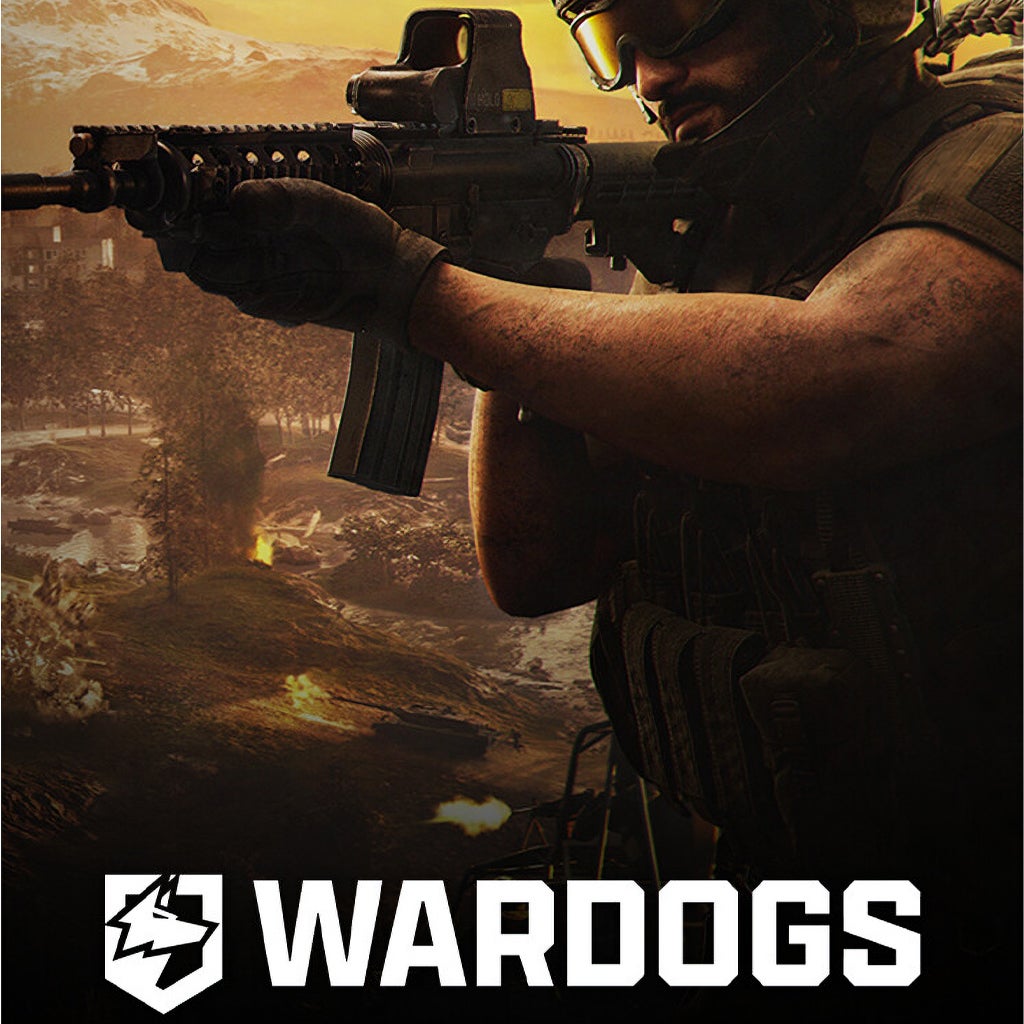
There is something wonderfully appealing about a game that looks at the modern military shooter and asks, “What if we simply let the players make the mess?” That is essentially the philosophy behind WARDOGS, a large-scale warfare FPS that throws up to 100 players onto enormous battlefields and gives them an impressive degree of freedom to decide how they want to fight. There are no neat little corridors, no guarantee that the enemy will approach from the direction you expect, and, most importantly, no promise that the building you are hiding behind will still be there five minutes later.
Developed by BULKHEAD and published by Team17, WARDOGS is built around a three-team battle for control of constantly changing objectives. Inspired by King of the Hill, each match revolves around a randomly positioned Control Zone, with the team that has the most players inside it earning points until somebody reaches 100. That sounds straightforward enough, but throw in vehicles, destructible environments, construction, custom loadouts, an in-game economy, and a battlefield full of players who all have their own ideas, and things become considerably more interesting.
Welcome To The Warzone
The first thing that stands out about WARDOGS is its scale. A 2x2km Control Zone is already a substantial area to fight over, but it sits within larger maps that give players plenty of room to manoeuvre, flank and rethink their approach. You are not simply running towards a glowing objective marker and waiting for the numbers to change. You are fighting over territory, finding useful positions and working out how the opposing teams are approaching the same problem.
That makes every match feel slightly different. The Control Zone can appear in a completely different location from the previous game, while the decisions players make around it can dramatically shape how the battle unfolds. One match might become a frantic infantry battle around a town, while another could turn into a combined-arms brawl involving tanks, helicopters and enough explosions to make you question why anyone thought this was a good place to build a city. And that unpredictability is one of WARDOGS’ greatest strengths.
Every Life Has A Price
One of the game’s cleverest ideas is its economy. Every player begins with $10,000 and can use it to purchase a loadout before heading into battle. Weapons, equipment, utility items and vehicles are all available, giving you plenty of freedom to decide what sort of soldier you want to be.
What makes the system particularly interesting is that your money is not simply there to be spent and forgotten. Teamplay actions earn cash, meaning reviving a squadmate, transporting teammates into the Control Zone or helping capture the objective can all contribute to your personal bankroll. Suddenly, doing the right thing for your team is not merely encouraged by a scoreboard or a friendly voice telling you to be a team player. There is a tangible reward attached to it.
Even better, your cash carries over between matches. That introduces an additional layer of decision-making, because spending a fortune on a powerful vehicle might completely change the current battle, but it also means you have less money available for whatever comes next. There is a lovely sense of risk and reward to the system, particularly when you have saved enough money for something extravagant and finally decide that the time is right to unleash it.
Pick Your Poison
WARDOGS does not seem particularly interested in telling players there is one correct way to play. You can take a more conventional combat role, stay close to your squad and fight directly around the objective, or take a more specialised approach.
Fancy disappearing into the landscape with a ghillie suit and picking off enemies from a distance? Go for it. Want to spend your time transporting teammates and supplies by helicopter? That is an option too. Alternatively, you could grab something heavily armoured and turn an enemy position into rubble, or spend your money building a forward operating base and turning a useful position into a defensive stronghold.
This freedom gives the game a wonderfully sandbox-like quality. The battlefield becomes less of a predefined shooting gallery and more of a collection of opportunities. The important question is not simply “What weapon should I use?” but “What does my team need right now?” That is a much more interesting question.
When The Battlefield Fights Back
Destruction is another major part of the experience, and it can completely change the tactical possibilities. Buildings and structures are not necessarily permanent obstacles that simply exist to provide cover. With the right equipment, they can be damaged or destroyed, opening new routes and sightlines while potentially leaving occupants scrambling for somewhere else to hide.
There is something deeply satisfying about solving a tactical problem with an excessive amount of explosives. An enemy position looks too well defended? Blow through the wall. A building is providing the opposition with an excellent vantage point? Bring it down. A road is becoming a particularly nasty killing ground? Find another way through.
Of course, destruction works both ways. The cover you thought would protect you may disappear in spectacular fashion, leaving you exposed at exactly the wrong moment. It adds a sense of uncertainty to firefights because the battlefield itself can change around you.
Three Teams Are Better Than Two
The decision to have three teams competing for the same objective is particularly important. Traditional team-based shooters often revolve around two opposing sides, making it relatively easy to see where the danger is coming from. With three teams involved, the battlefield becomes considerably harder to read.
You might be fighting one team inside the Control Zone while a third force moves in from another direction. A position that looked secure a few moments earlier can suddenly become a nightmare as another group appears from behind. It also creates opportunities to let two opposing teams weaken each other before moving in yourself.
That additional layer of uncertainty makes positioning and awareness incredibly important. Charging into a fight might get you a few kills, but knowing when not to fight can be just as valuable.
Teamwork Actually Matters
For all the freedom WARDOGS provides, it clearly wants players to work together. Local voice chat is a big part of that, allowing teammates to coordinate movements, call out enemies and organise attacks. Of course, giving players access to voice chat also brings the inevitable nonsense that comes with it, but that is part of the charm of a player-driven battlefield.
The best moments are likely to come when a squad actually starts behaving like a squad. One player spots an enemy position, another provides covering fire, somebody brings in a vehicle, and suddenly the entire attack comes together. Those moments are difficult to manufacture in a scripted game because they happen naturally through player interaction.
There is also something satisfying about earning money through helpful actions. Reviving somebody who might otherwise have been lost, transporting teammates into a contested area, or simply helping maintain control of the objective can all contribute to your progression. It gives support players a genuine reason to feel useful rather than making everything revolve around who can produce the biggest kill count.
Tactical Warfare With A Sense Of Chaos
The weaponry and vehicles provide plenty of opportunities for mayhem, but WARDOGS seems at its best when it balances that destructive power with tactical decision-making. Tanks are not simply enormous weapons on wheels; helicopters are not merely flashy toys, and defensive structures are not just things to build because the game lets you.
Everything has a purpose. A vehicle can get your squad into the fight quickly, but it can also become an expensive target. A heavily fortified position can provide excellent defensive cover, but it might attract the attention of every enemy player on the map. Spending heavily on equipment can turn you into a formidable force, but losing that investment can sting considerably.
That economic layer gives otherwise familiar military mechanics a little more weight. You are not simply choosing what would be fun to use. You are constantly considering whether it is worth the cost.
A Battlefield Full Of Personality
Visually, WARDOGS embraces a gritty, modern military aesthetic, with large environments, smoke, muzzle flashes, debris, and extensive environmental destruction that helps sell the scale of the battles. The industrial surroundings and war-torn architecture provide a suitable backdrop for the chaos, while explosions and collapsing structures give the maps a sense of constant activity.
The sound design is equally important. Heavy gunfire, explosions, vehicle engines, and radio chatter create the sort of noisy battlefield atmosphere you would expect from a game determined to make you feel surrounded by conflict. When everything starts happening at once, the combination of visual destruction and sound can make a firefight feel genuinely enormous.
There is also a pleasing contrast between those huge battles and the quieter moments when you are simply moving through the environment, searching for a better position or working out where the next attack is coming from. Those pauses give the combat room to breathe, making the eventual explosions feel that little bit more dramatic.
The Price Of Freedom
If there is one area where WARDOGS can test your patience, it is the sheer unpredictability that makes it so appealing in the first place. Large, player-driven battles can become chaotic, and not every player will communicate or cooperate. Sometimes you can make what feels like a sensible tactical decision only to discover that half the enemy team has decided to attack from precisely that direction.
The three-team structure can also make situations difficult to read, particularly for players accustomed to more traditional two-sided shooters. Add the economy and expensive equipment into the mix, and mistakes can have consequences beyond simply losing a gunfight.
But I would argue that these are largely part of the game’s identity rather than fundamental problems. WARDOGS is deliberately trying to create situations where players have to adapt, and sometimes adapting means admitting that your brilliant plan was actually rubbish. We have all been there.
Final Verdict
WARDOGS is an ambitious take on large-scale tactical warfare that recognises the appeal of giving players genuine freedom. Its combination of three team battles, shifting Control Zones, persistent cash, custom loadouts, vehicles, and construction and destruction creates a battlefield where decisions can matter just as much as reflexes.
The economy is particularly clever, rewarding teamwork with tangible benefits while making every expensive purchase feel meaningful. The ability to choose your own approach also gives the game a welcome sense of freedom, whether you want to snipe from a hillside, transport teammates, build defensive positions, or simply climb into something enormous and cause a frankly unreasonable amount of destruction.
It is not always going to be a perfectly organised military operation. In fact, sometimes it will probably resemble the world’s most expensive playground argument. But that is precisely where WARDOGS finds its personality. It is a shooter built around the idea that the most memorable stories should come from the players themselves.
When the plan works, the whole squad moves as one, the objective falls into your hands, and that expensive piece of kit you saved for turns the tide of battle. WARDOGS can be hugely satisfying. When the plan goes spectacularly wrong, at least you will probably have a good story to tell afterwards.