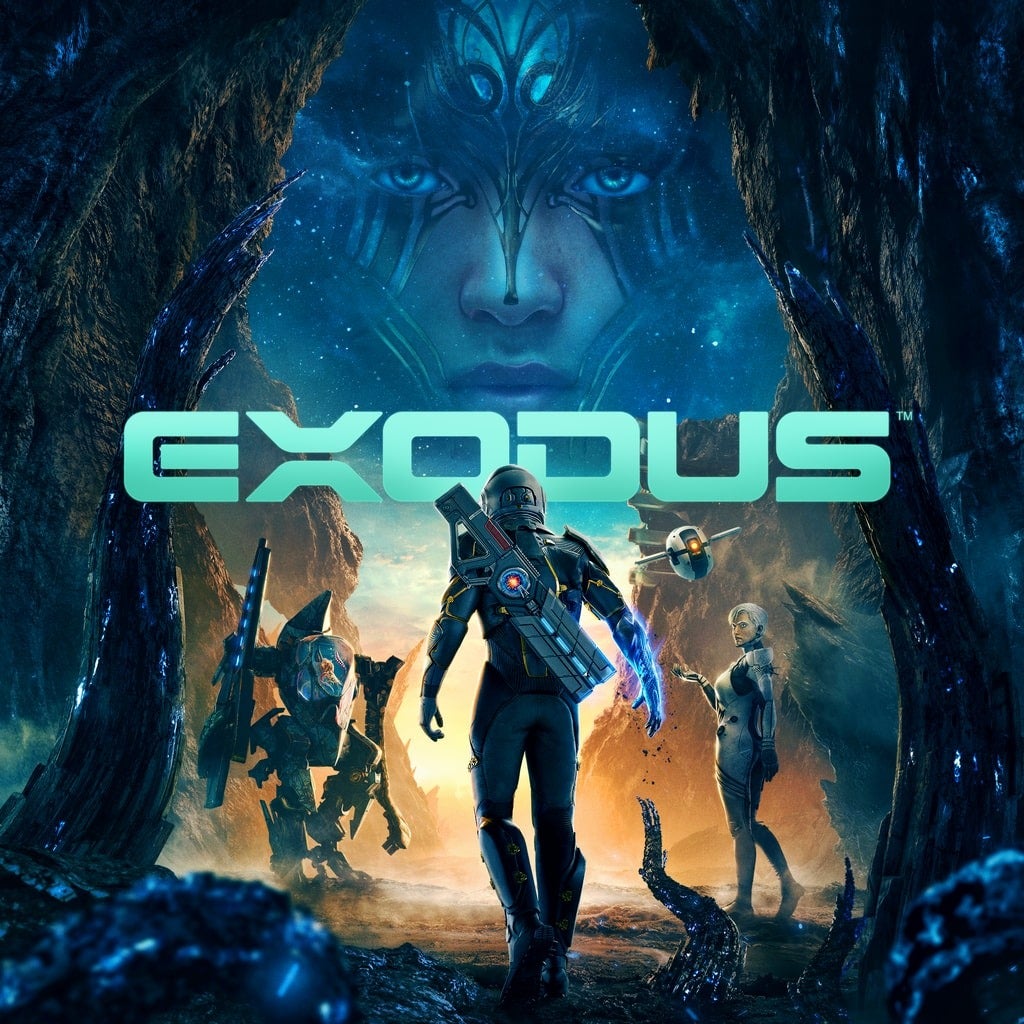
There is something wonderfully intimidating about Exodus. At first glance, it looks like another enormous science fiction adventure, packed with alien worlds, spectacular weapons and a colourful cast of companions. Look a little closer, though, and a much more interesting idea sits beneath all that familiar space-opera spectacle. This is a game built around the concept of time itself and the consequences of travelling through a universe where the people you leave behind can age by decades while you experience only days or weeks.
That premise alone gives Exodus a fascinating hook, particularly because it comes from Archetype Entertainment, a studio founded by developers with considerable experience creating story-driven RPGs. The team includes former BioWare veterans James Ohlen, Drew Karpyshyn and Chad Robertson, names that inevitably bring Mass Effect, Star Wars: Knights of the Old Republic and other character-focused RPGs to mind. It would be unfair to simply call Exodus a new Mass Effect, but the comparison is understandable when you see the emphasis on companions, dialogue, exploration, player choice and cinematic science fiction storytelling.
With the release now confirmed for 7 April 2027, there is still plenty that remains under wraps. What we have seen so far, however, suggests that Archetype isn’t simply attempting to recreate a familiar formula. Exodus appears to be building its own identity around the strange relationship between humanity, technology and time. If the finished game can make those ideas matter as much as its gunfights and spectacular set pieces, this could become one of the more intriguing RPGs on the horizon.
A Galaxy Where Time Is the Enemy
The central concept behind Exodus is one of its greatest strengths. Players take on the role of Jun Aslan, a salvager who becomes a Traveler, venturing into deep space in search of incredibly advanced Celestial technology. The catch is that interstellar travel comes with a devastating price. While Jun may experience a relatively short period away from home, much more time can pass for those left behind.
That creates an unusual kind of emotional pressure. In most space adventures, travelling to another planet is essentially a loading screen between adventures. In Exodus, returning home can mean discovering that relationships have changed, people have grown older and events have moved on without you. Decisions made during one part of the story could therefore have consequences that only become apparent much later, creating the potential for a narrative that feels genuinely personal rather than simply branching into a handful of predictable dialogue options.
It is a wonderfully science-fiction idea because it takes something familiar and makes it unsettling. Jun can save someone’s life today only to return years later and discover that the person they saved has lived an entire chapter of their life without them. The question is whether Exodus will use that idea merely as an interesting storytelling gimmick or turn it into the emotional foundation of the entire adventure. From what we’ve seen so far, the latter seems to be the ambition.
Jun Won’t Be Facing the Galaxy Alone
Of course, even the most fascinating science fiction premise needs characters capable of carrying it, and companions appear to be extremely important to Exodus. Jun will meet a colourful collection of allies during the journey, each bringing their own abilities, personalities and perspectives to the adventure. One of the more recent reveals is Salt, an Awakened octopus mercenary and bounty hunter who joins Jun during the story.
Salt is certainly not the kind of companion you’d expect to see in a conventional space RPG. She pilots a specialised combat mech and brings long-range firepower, evasive manoeuvres and ink-like smokescreens into battle. More importantly, her relationship with Jun appears to be based on something more meaningful than simply being another character who happens to accompany the player.
Then there is Emrys, a member of the mysterious Deva, a Celestial species defined by its multiple consciousnesses. Emrys takes on a support role, using Remnant Orbs to drain enemies and transfer that stolen power back to Jun. Mechanically, that gives players another layer of tactical choice, while narratively it introduces yet another strange piece of the universe that Archetype is building.
The real test will be whether these characters feel like people rather than collections of combat abilities. That is an area where the studio’s BioWare heritage could prove particularly valuable. If Jun’s companions develop believable relationships, conflicting motivations and their own reactions to the player’s decisions, the journey through the Omega Centauri cluster could become something players remember long after the credits roll.
Shooting, Abilities and Squad Tactics
For all the talk about narrative, Exodus isn’t an interactive novel. There is a substantial action RPG beneath it, with third-person shooting and mechanics, along with a selection of futuristic abilities. Jun’s Celestial technology provides particularly imaginative tools, including devastating attacks capable of tearing into enemies and manipulating the battlefield.
Combat appears designed around combining Jun’s abilities with those of the accompanying characters. Rather than simply pointing a weapon at the nearest enemy and emptying a magazine, players can issue commands and use companion abilities to create openings. That should make encounters feel more deliberate, especially when dealing with stronger opponents.
Salt’s combat style provides a good example. Her ability to operate at range while using evasive movement and smoke gives her a very different role from a conventional assault companion. Emrys, meanwhile, can weaken opponents while strengthening Jun, suggesting that building an effective team could become an important part of the experience.
There is still a question about how deep these systems will ultimately become. We have seen enough to establish the foundations, but not enough to know whether Exodus will offer the kind of tactical flexibility that makes experimenting with different companions and abilities genuinely rewarding. That is something the final game will have to demonstrate.
A Universe Built for Discovery
If combat is the muscle, exploration looks set to provide much of Exodus’s personality. Archetype has created a science fiction setting filled with humanity’s attempts to survive amid technology considerably more advanced than anything humans have built. The Celestials and their mysterious technology are a particularly intriguing part of that world.
The environments shown so far suggest this will not be a small collection of interchangeable corridors. Massive orbital structures, alien architecture, abandoned locations and vast celestial environments give the game an appropriately epic scale. There is a feeling that Jun is only seeing a tiny part of a much larger story.
That sense of scale is important because Exodus aims to make players care about the universe beyond the immediate mission. The best science fiction RPGs create the feeling that the protagonist could step away from the main story and still find something interesting happening elsewhere. Whether Archetype can achieve that remains to be seen, but the foundations certainly look promising.
A Visual Feast Among the Stars
Visually, Exodus is already making a strong impression. Built with Unreal Engine 5, the game pairs detailed character models with vast environments, elaborate spacecraft and strange alien technology. The result is a cinematic presentation that often looks closer to a science fiction film than to a traditional RPG.
There is also welcome variety in the visual design. Some locations are recognisably technological and industrial, while others feel distinctly alien. The contrast between familiar human spaces and the incomprehensible architecture of the Celestials reinforces one of the game’s central themes: humanity is venturing into places it was never meant to understand.
The sound design is equally important. Weapons have the expected weight and impact, while the score leans into the emotional side of the adventure rather than simply providing background noise. With a story built around separation, loss and the passage of time, music could play a major role in turning otherwise spectacular scenes into genuinely memorable ones.
The Mass Effect Shadow
It would be impossible to discuss Exodus without mentioning Mass Effect. The combination of a veteran BioWare development team, squad-based combat, dialogue-driven storytelling and a vast science-fiction setting makes the comparison almost inevitable.
But Exodus needs to be more than nostalgia for another era of RPGs. Fortunately, the time-dilation concept gives it something genuinely distinctive. The idea that a player’s actions can continue to unfold while they are physically absent from the people and places they care about has enormous storytelling potential.
That is also why I’m particularly interested in seeing how the choices work across the full campaign. A conventional branching narrative might let you choose between two outcomes at the end of a mission. Exodus has the opportunity to make consequences feel stranger and more unpredictable, because the passage of time itself becomes part of the equation.
Early Impressions
There is still much we don’t know about Exodus, and that is worth remembering when looking at any preview. We haven’t seen the complete story, the full companion roster, the eventual breadth of exploration, or how all the systems will fit together across a full-length campaign. The April 2027 release date gives Archetype considerable time to polish the experience, but expectations are already understandably high.
What is clear is that the studio isn’t lacking ambition. Exodus aims to deliver spectacular action, meaningful relationships, a vast science-fiction universe, and a narrative mechanic that could fundamentally change how players think about their choices. That is a lot to balance, but there is something refreshing about a big-budget RPG attempting to build its identity around an idea rather than simply assembling familiar features.
The latest reveals surrounding Salt and Emrys only strengthen that impression. These are unusual characters operating within a setting that seems determined to avoid being entirely predictable, while Jun’s journey provides the human perspective needed to make all the cosmic weirdness matter.
Preview Verdict
EXODUS currently looks like a hugely ambitious science fiction RPG with one particularly exciting idea at its heart. The combination of squad-based combat, colourful companions, cinematic presentation and a universe packed with mysteries already gives it plenty of appeal, but it is the manipulation of time and its potential consequences that could ultimately set the game apart.
There is obviously a long road between an intriguing premise and a genuinely great RPG. Archetype Entertainment still has to prove that the combat remains engaging throughout a lengthy campaign, that its companions have enough depth to become memorable, and that the time-dilation concept has meaningful consequences rather than simply serving as an impressive plot device. Those are substantial challenges, but the material shown so far gives plenty of reason to remain interested.
With 7 April 2027 now marked on the calendar, Exodus has plenty of time to reveal what else is hiding among the stars. For now, it feels less like a game attempting to recreate the past and more like one trying to take the lessons of classic space RPGs somewhere unfamiliar.