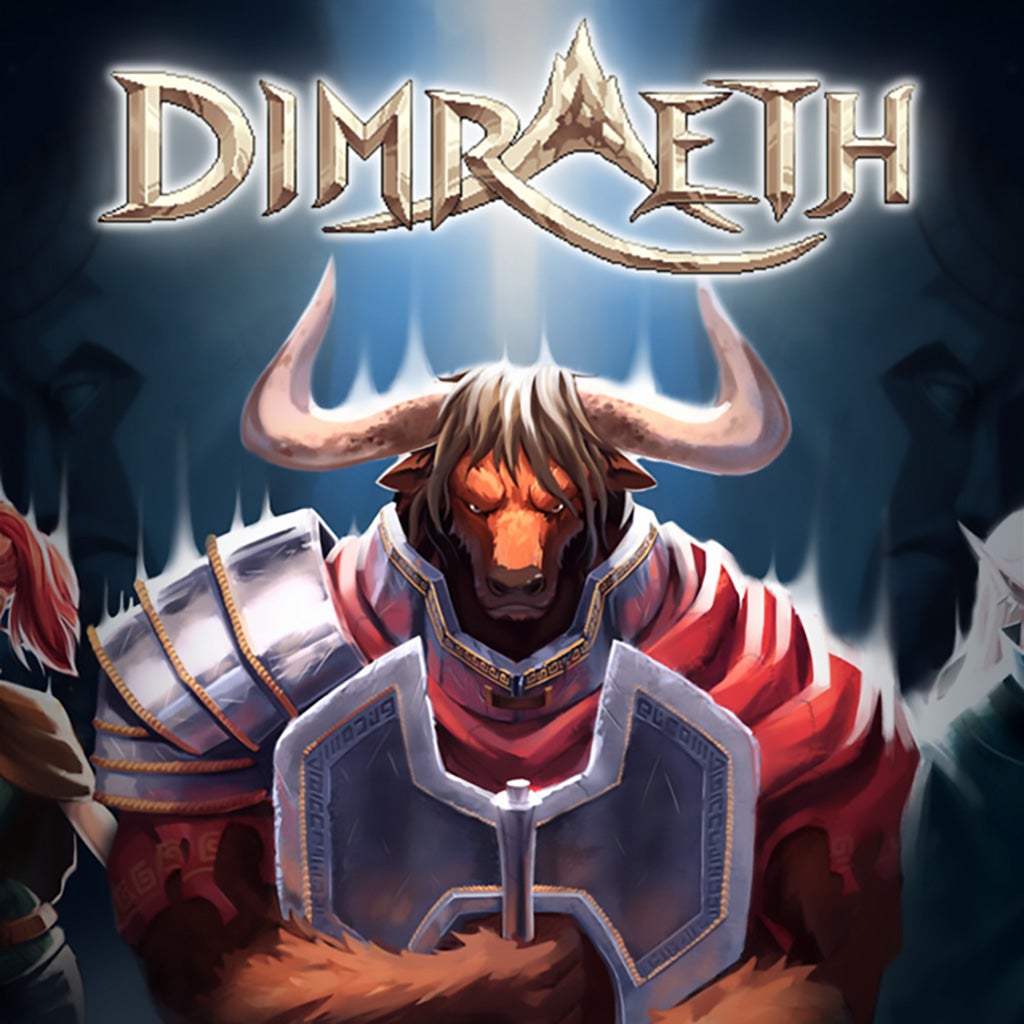
There is something appealing about a game that takes the familiar ingredients of the fantasy RPG and decides that perhaps throwing a few more into the pot might work. Dimraeth is one of those games. It is a top-down action RPG with Souls-lite combat, sprawling character progression, spell collecting, crafting, relationships, farming, base-building, and cooperative adventuring for up to eight players. On paper, that sounds like a lot for one game to juggle, yet Dimraeth manages to bring these systems together into an adventure that feels surprisingly cohesive.
Set within the handcrafted pixel world of Mirkea, Dimraeth drops you into a land being consumed by corruption. The Ogre Magi Sylbos wants to claim Dimraeth and the mysterious power connected to it, while the dark gods lurking behind the growing threat promise considerably more trouble than your average fantasy villain. You are an unlikely hero who has somehow inherited an ancient power you barely understand, and before long you are recruited by the venerable wizard Faustas to stand alongside the free peoples of Mirkea. It is a classic fantasy setup, certainly, but there is enough personality in the world and enough freedom in how you develop your character to make the journey feel like your own.
A Hero Of Your Own Making
Character creation is one of Dimraeth’s biggest attractions. Eight races and six classes can be combined to create 48 different Archetypes, each with its own skill tree and playstyle. That immediately gives the game considerable replay value, because choosing a race is not simply about changing how your character looks. It becomes part of your hero’s broader mechanical identity and influences the abilities and progression paths available to you.
The skill trees are where things become particularly interesting. Rather than simply following a predictable route towards bigger numbers, you are encouraged to think about what sort of fighter you want to become. There is room to specialise, experiment and build something that feels distinctly yours, whether you want to focus on physical attacks, elemental magic or some wonderfully strange combination of the two. With so many options available, there is a genuine sense that your character is growing rather than merely levelling up.
Of course, with freedom comes a little confusion. Dimraeth has many systems competing for your attention, particularly in the early hours, and players who prefer their RPGs to gently introduce mechanics one at a time may find themselves staring at skill trees, spells, equipment and crafting options, wondering where on earth to begin. Once everything starts to click, however, the sheer amount of choice becomes one of the game’s greatest strengths.
Every Swing Matters
Combat is where Dimraeth’s Souls-like influence is particularly obvious. This is not a game where charging into a group of enemies and hammering the attack button until everything stops moving always works. Attacks consume stamina, enemies telegraph their intentions, and positioning matters enormously. Knowing when to strike, when to dodge, and when to simply get out of the way can make the difference between walking away from an encounter and being sent back to the last safe point.
There is something satisfying about that deliberate rhythm. You begin by cautiously watching an enemy, learning its attack patterns and looking for an opening. Eventually you become more confident, recognising telegraphs almost instinctively and knowing when a parry or a perfectly timed dodge will leave an opponent exposed. It does not try to replicate the brutality of a full Souls-like experience, but it understands what makes that style of combat so satisfying.
Magic adds another layer to the fighting. More than 300 spells can be discovered through spellbooks, while your race and class provide additional abilities of their own. You can equip five spells at any one time, so selecting your loadout becomes part of the strategy rather than simply equipping everything you have found. Experimenting with elemental combinations and finding a rotation that works beautifully against a particular enemy can be tremendously rewarding.
The best moments come when everything works together. A well-timed dodge creates an opening, a melee strike drains an enemy’s health, and a spell lands at exactly the right moment. Suddenly, a battle that initially looked intimidating begins to feel almost choreographed. It takes some practice, but when Dimraeth gets its combat rhythm right, it feels fantastic.
Mirkea Is Worth Exploring
The world of Mirkea is another reason to keep venturing beyond the safety of home. The handcrafted pixel art gives the game a distinctive identity, with lush forests, gloomy caverns and corrupted environments providing plenty of contrast. There is a surprising amount of visual detail packed into the pixel presentation, particularly when magic starts flying across the screen.
Dynamic lighting also adds a little extra depth. Forests can feel inviting one moment and strangely threatening the next, while darker subterranean areas create a genuine sense of uncertainty. It is a style that proves pixel art need not be simplistic, and Dimraeth frequently looks far more elaborate than its retro-inspired presentation might initially suggest.
Visual clarity is particularly important during combat. With multiple enemies attacking and spells exploding across the battlefield, things could easily become a messy blur, but telegraph markers and clear attack animations help you understand what is happening. That becomes even more important when playing cooperatively, where several players can turn a small encounter into absolute magical mayhem within seconds.
The audio works nicely alongside the visuals. Sweeping orchestral music gives the larger adventures a sense of importance, while weapon clashes, spell impacts and environmental sounds help make the world feel alive. There is also a pleasing contrast between the intensity of combat and the quieter moments spent exploring forests or returning home after a long expedition.
Home Sweet Home
Perhaps the most interesting thing about Dimraeth is what happens after the fighting stops. Your home is not simply somewhere to dump unwanted equipment before heading back into the wilderness. It becomes another part of your progression, allowing you to build farms, quarries and other facilities that provide resources for future adventures.
This creates a satisfying loop. You head out into Mirkea, complete quests, defeat enemies, collect materials and gather whatever useful loot you can find. Eventually you return home, turn those resources into equipment, potions or food, and then use your improved character to venture further into the world. Suddenly that seemingly insignificant pile of resources has a purpose, and your settlement gradually starts to feel like something you have actually built rather than another menu screen.
Cooking is another nice touch, with hearty meals providing bonuses to your vitality. Crafting equipment and brewing potions similarly encourage you to think beyond simply finding the strongest weapon. There is a pleasing sense of preparation, particularly before heading into areas where you know the enemies are going to test your build.
The settlement also ties into the game’s relationships. Recruiting allies opens up additional conversations and personal quests, while deeper relationships can eventually lead towards romance. Investing resources into your allies’ facilities can also expand shop inventories, unlock crafting services and create more opportunities for farming. It gives the home system a purpose beyond decoration and makes the people around you feel like genuine contributors to your growing little corner of Mirkea.
Better With Friends
While Dimraeth works perfectly well as a solo adventure, the possibility of playing with up to seven other people changes the experience considerably. Seamless drop-in and drop-out co-op makes it easy to bring friends into the adventure without making multiplayer feel like a separate mode bolted on the side.
Importantly, your character progression travels with you. Your level, equipment, inventory, spells and personal progression remain yours, so you are not starting from scratch every time you enter somebody else’s world. Story progress, recruited allies and buildings remain tied to individual worlds, which is a sensible compromise that allows players to maintain their own adventures while still helping friends with theirs.
Eight players in a fantasy RPG is inevitably going to produce some chaos, and that is part of the appeal. Watching a carefully planned combat encounter descend into a storm of spells, melee attacks and panicked dodges can be hilarious, particularly when everyone is trying to work out who is actually hitting what. The fact that the combat remains deliberate rather than becoming a simple button-mashing exercise gives co-op battles a satisfying sense of teamwork.
A Huge Adventure With Plenty To Learn
If there is one thing that occasionally holds Dimraeth back, it is the sheer volume of information thrown at the player. There are races, classes, Archetypes, skill trees, spells, crafting, resources, cooking, farming, relationships, settlement upgrades and cooperative progression to understand. None of these systems feels pointless, but there are moments when you might wish the game would simply take your hand for a little longer before letting go.
That complexity is also what makes the game so easy to become absorbed in. Once you understand how the various systems feed into one another, Dimraeth becomes a game of constant little improvements. You are not simply trying to make your hero stronger. You are improving your equipment, refining your spell loadout, developing your home, helping your allies and gradually making Mirkea feel a little less hostile.
There is something quite satisfying about returning from a dangerous expedition with a bag full of resources and knowing exactly what you want to do with them. Upgrade the farm? Improve the forge? Craft a new weapon? Brew some potions? Perhaps strengthen a particular relationship? Dimraeth gives you plenty of reasons to care about what happens between adventures, and that helps prevent the world from feeling like a series of combat arenas connected by corridors.
Final Verdict
Dimraeth is an ambitious fantasy RPG that packs a surprisingly large number of ideas into its world without losing sight of what makes each one enjoyable. The Souls-lite combat provides a satisfying foundation, while the extensive character progression gives you plenty of freedom to experiment with different builds. Add in more than 300 spells, crafting, farming, settlement development, relationships and seamless eight-player co-op, and there is an impressive amount of adventure packed into the package.
It is not perfect. The early experience can feel a little overwhelming, and players will need some patience while learning how the different progression systems fit together. Yet there is a warmth beneath all the complexity that makes Dimraeth easy to appreciate. Your character grows, your home develops, your relationships deepen, and the world slowly begins to feel like somewhere you belong.
Most importantly, Dimraeth understands the simple pleasure of heading out with a purpose and returning home having made progress. Whether you prefer carefully planned solo adventures or chaotic evenings with a group of friends, there is plenty here to get your teeth into. With its attractive pixel art, satisfying combat and wonderfully expansive progression systems, Dimraeth feels like the beginning of something with considerable potential.