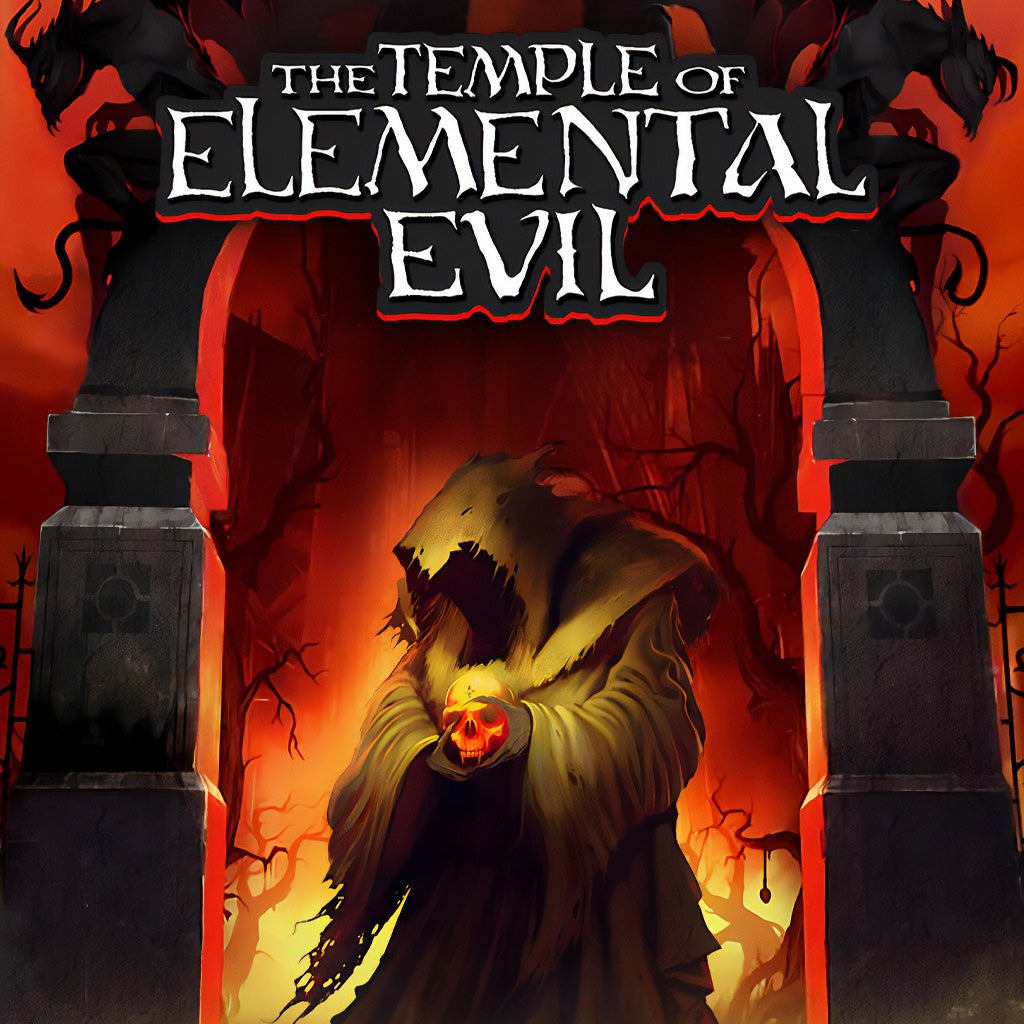
The Temple of Elemental Evil is a game that occupies a unique and often contentious place in the history of computer role-playing games. Developed by Troika Games and based directly on Gary Gygax’s classic Dungeons & Dragons module, it represents one of the most faithful digital adaptations of tabletop mechanics ever attempted. That faithfulness is both its greatest strength and its most significant limitation. For players willing to embrace its rigidity, complexity, and unapologetically old-school design, The Temple of Elemental Evil offers a deeply tactical and atmospheric experience. For others, it remains an austere relic of a genre era that demanded patience above all else.
A World Rooted in Tabletop Tradition
Unlike many CRPGs that use tabletop systems as loose inspiration, The Temple of Elemental Evil commits fully to its source material. Built on the Dungeons & Dragons 3.5 ruleset, nearly every mechanic — from combat resolution and spellcasting to alignment and class abilities — is implemented with remarkable accuracy. This dedication immediately defines the experience. The game does not simplify its systems for accessibility, nor does it attempt to modernise its ruleset. Instead, it assumes players either understand D&D fundamentals or are willing to learn them through trial and error.
The setting itself reflects classic fantasy sensibilities. Villages feel grounded and mundane, dungeons are oppressive and dangerous, and evil is presented not as abstract threat but as something entrenched and organised. The titular Temple looms as both physical location and thematic anchor, representing corruption, cultism, and the slow erosion of order. While the narrative framing is minimal by modern standards, it succeeds in establishing tone and stakes without excessive exposition.
Party-Based Role-Playing and Character Creation
Character creation in The Temple of Elemental Evil is robust and uncompromising. Players can create a full party from scratch, selecting race, class, alignment, skills, feats, and attributes with granular control. This freedom allows for extensive experimentation, but it also carries risk. Poorly constructed characters can struggle significantly, especially given the game’s unforgiving combat encounters.
Party composition matters enormously. Balance between frontline durability, magical utility, and support roles is essential, and the game rarely compensates for poor planning. This emphasis on preparation reinforces the tabletop feel, where success often begins before dice are ever rolled.
Role-playing choices, particularly alignment, have tangible consequences. Dialogue options, quest outcomes, and even combat encounters can shift based on party alignment, adding subtle replayability and reinforcing the moral structure of the world.
Turn-Based Combat Done Right — and Wrong
Combat is the cornerstone of The Temple of Elemental Evil, and it remains one of the most accurate digital representations of turn-based D&D combat ever created. Battles unfold on grid-based maps, with strict adherence to initiative order, attacks of opportunity, movement rules, and spell mechanics.
When it works, combat is exceptional. Tactical positioning, spell timing, and ability synergy create encounters that feel genuinely strategic. Victories are earned through planning rather than reflex, and difficult fights often hinge on smart use of terrain or crowd control rather than raw damage output.
However, this precision comes at a cost. Combat can be slow, particularly in larger encounters, and early-game difficulty can feel punishing. Random encounters are often brutal, and unlucky dice rolls can derail even well-planned strategies. This reinforces authenticity but can lead to frustration, especially for players accustomed to more forgiving systems.
Exploration, Dungeons, and Pacing
Dungeon design is another defining feature. The Temple itself is sprawling, layered, and methodical, filled with traps, secrets, and hostile factions. Exploration feels dangerous and deliberate, with limited hand-holding. Players must manage resources carefully, knowing that retreat is often wiser than pressing forward unprepared.
That said, pacing is uneven. Large sections of dungeon crawling can feel repetitive, and narrative progression is frequently overshadowed by combat density. While this suits players who enjoy methodical dungeon exploration, it can feel exhausting over extended sessions.
Side quests and optional content exist but are largely functional rather than narrative-driven. They reinforce the world’s structure but rarely provide emotional payoff.
Visuals, Interface, and Presentation
Visually, The Temple of Elemental Evil shows its age. Character models are simplistic, animations are stiff, and environmental detail is limited. However, the isometric perspective and clear grid-based presentation support tactical clarity, which is ultimately more important than spectacle.
The interface, while comprehensive, is clunky by modern standards. Menus are dense, information is often buried, and quality-of-life features are sparse. Yet for experienced CRPG players, the interface becomes manageable with familiarity, even if it never feels elegant.
Audio design is understated but effective. Ambient sounds enhance dungeon atmosphere, while the musical score reinforces a sense of foreboding without overwhelming the experience.
Legacy, Mod Support, and Longevity
At launch, The Temple of Elemental Evil was infamous for technical issues. Bugs, balance problems, and incomplete content marred its reputation. Over time, community patches and mods — particularly the Circle of Eight mod — have significantly improved stability, balance, and content completeness. With these enhancements, the game becomes far closer to its original vision.
Replayability is strong for players who enjoy experimenting with party builds, alignments, and tactical approaches. However, the core structure remains static, and those seeking narrative variation may find limited incentive to return.
Final Verdict
The Temple of Elemental Evil is a demanding, deeply traditional CRPG that prioritises mechanical authenticity over accessibility. It excels as a digital translation of tabletop Dungeons & Dragons combat and systems, offering a level of tactical depth rarely matched even today. At the same time, its rigid pacing, dated presentation, and unforgiving design prevent it from appealing beyond a specific audience.
For genre enthusiasts and tabletop veterans, it remains an important and rewarding experience. For others, it is best approached as a historical artifact — impressive, influential, but firmly rooted in its time.
A mechanically brilliant but uncompromising classic, whose dedication to tabletop authenticity delivers depth at the expense of accessibility and modern polish.