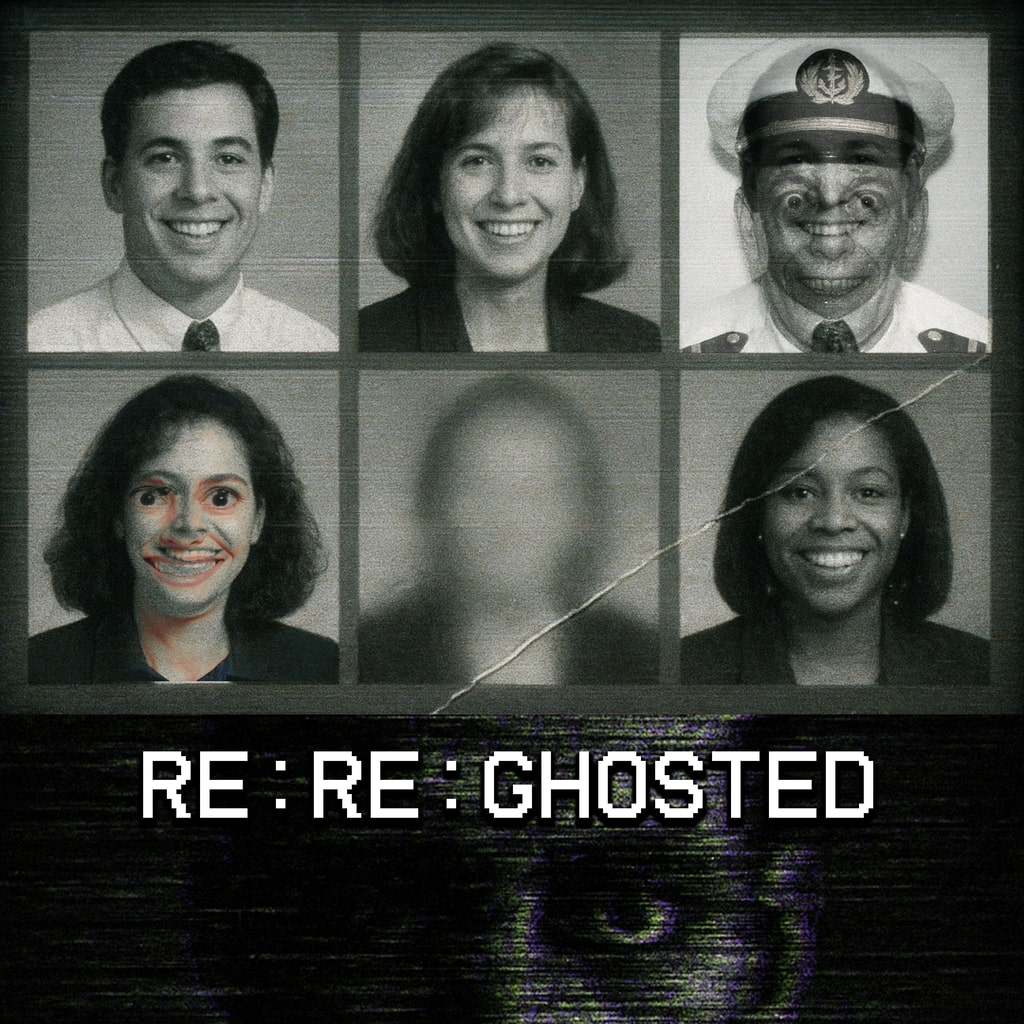
Released on April 9, 2026, re:re:ghosted is Playstige Interactive’s latest experimental project. Available only as a digital download for PlayStation 5 and PlayStation 4, it immediately catches the eye with its minimalist style—short, sharp challenges paired with clean visuals and quick payoffs. But don’t be fooled into thinking it’s just another micro-puzzler.
There’s something more strange and captivating beneath the surface. The game blends abstract puzzles with psychological horror, creating a heady mix that feels both cerebral and deeply unsettling. It pulls you into fractured spaces and distorted logic, leaning into surreal themes—job searches, dreams, and environments that feel like backrooms—suggesting a story that’s just waiting to be uncovered.
re:re:ghosted isn’t just polished design; it’s intentionally disjointed, sometimes uncomfortable but often brilliant. It’s a game that invites you to lose yourself inside its strange, twisted world.
Core Concept – Puzzle Logic in a Haunted Framework
At its core, re:re:ghosted is a game that guides ghost-like entities through tight, obstacle-filled levels. Each puzzle is about understanding movement patterns, manipulating the environment, and how different systems interact.
You don’t control the ghosts directly. Instead, you influence where they go—changing their paths, triggering environmental effects, and sometimes bending the laws of physics. Timing and foresight are everything; even small mistakes can throw off a solution.
Levels are short, often solvable in a minute or two, but they get tougher quickly. The early stages act as tutorials for individual mechanics, while later puzzles combine these ideas in more complex ways.
The game is easy to pick up but surprisingly challenging to master.
Micro-Puzzler Design – Fast Iteration, Sharp Thinking
The “micro-puzzler” format really shows what re:re:ghosted does best. Keeping levels short invites players to try different approaches. When you fail, it doesn’t feel like the end—it’s just part of figuring things out.
Restarting a puzzle happens instantly, letting players jump right back in to try new approaches and improve their strategies. It creates a satisfying rhythm of trial, error, and finally breakthroughs.
But the game doesn’t stick to classic logic puzzles alone. It often introduces mechanics that seem intentionally mysterious at first, pushing players to question their assumptions. Solutions tend to be less about straightforward reasoning and more about understanding the game’s own language.
That mix can be both exciting and a bit frustrating.
When it hits the mark, re:re:ghosted delivers those “aha” moments that make a puzzle great. Yet, it can also turn some players away—especially those who prefer clearer guidance or rules they can count on.
Aesthetic and Atmosphere – Minimalism Meets Unease
The game features a stark, high-contrast visual style. Environments are simplified to basic shapes and colors, making the gameplay clear and easy to read.
But there’s something unsettling lurking beneath this minimal look.
As you play, the presentation slowly changes. Subtle distortions, strange environmental glitches, and unexpected shifts start to appear. What begins as a seemingly sterile puzzle world slowly morphs into a psychological horror experience.
You’re likely to notice the influence of the “backrooms”—spaces that feel both oddly familiar and deeply unsettling. Corridors stretch on longer than they should, rooms seem to loop, and the entire setting feels increasingly unstable.
This mix of puzzle-solving and horror aesthetics really sets re:re:ghosted apart from other games.
Narrative – Fragmented and Interpretive
Instead of a traditional story, re:re:ghosted takes a fragmented, almost abstract approach to storytelling.
It uses snippets of text, environmental cues, and surreal images to explore themes like identity, repetition, and existential fear. The game references job hunts, resumes, and bureaucratic systems, creating a strange mix of the everyday and the uncanny.
It’s not always clear what’s real within this world or if there’s meant to be a cohesive story at all.
For some, this uncertainty will be part of the fascination—a puzzle to unravel. For others, it might come across as an underdeveloped idea that never quite finds its footing.
Horror Elements – Subtle but Effective
Although re:re:ghosted is partly marketed as a psychological horror, it doesn’t come across as genuinely scary. You won’t find jump scares or obvious threats here.
Instead, it creates an atmosphere that pulls you in. The unease comes from a feeling of disorientation—like the game is quietly shifting beneath your feet. Familiar mechanics start to act strangely, and spaces become less predictable. Solving puzzles feels tense, almost like there’s something just beneath the surface.
This subtle, mood-driven approach fits perfectly with the game’s minimalist style. By steering clear of typical horror clichés, it keeps a consistent tone that feels uniquely its own.
Controls and Performance
On PlayStation 5, re:re:ghosted runs smoothly, loading quickly and responding instantly to controls. The simple design keeps things straightforward, so performance rarely gets in the way.
The controls feel natural, letting players focus on the puzzles instead of battling with the interface. The game does a good job of staying out of the way.
That said, as the puzzles get trickier, the lack of detailed feedback can make it difficult to see why a solution didn’t work. This ties into the game’s bigger idea—one that values discovery over clarity.
Replayability and Longevity
As a micro-puzzler, re:re:ghosted doesn’t take very long to get through. Most players will find themselves finishing its main content in just a few hours.
But what makes it interesting is that it invites you to come back, to refine your solutions or to better understand its mechanics. Its abstract puzzles spark discussion and interpretation, giving it a life beyond a single playthrough.
That said, this game really speaks to a niche crowd. Those who groove with its style will find plenty to love, while others might find its more obscure parts a bit off-putting.
Final Verdict
re:re:ghosted is a captivating, if occasionally uneven, experiment. It melds minimalist puzzle design with a subtle psychological horror vibe, resulting in an experience that feels both intelligent and unsettling.
Its strengths come through in its sharp level layout, quick iterations, and unique tone. Yet, its dependence on ambiguity—both in puzzles and narrative—can sometimes backfire, leading to moments of frustration or disconnection.
This isn’t a game for everyone. But for those open to its oddities, re:re:ghosted delivers a memorable, thought-provoking journey that sticks with you long after the last puzzle.