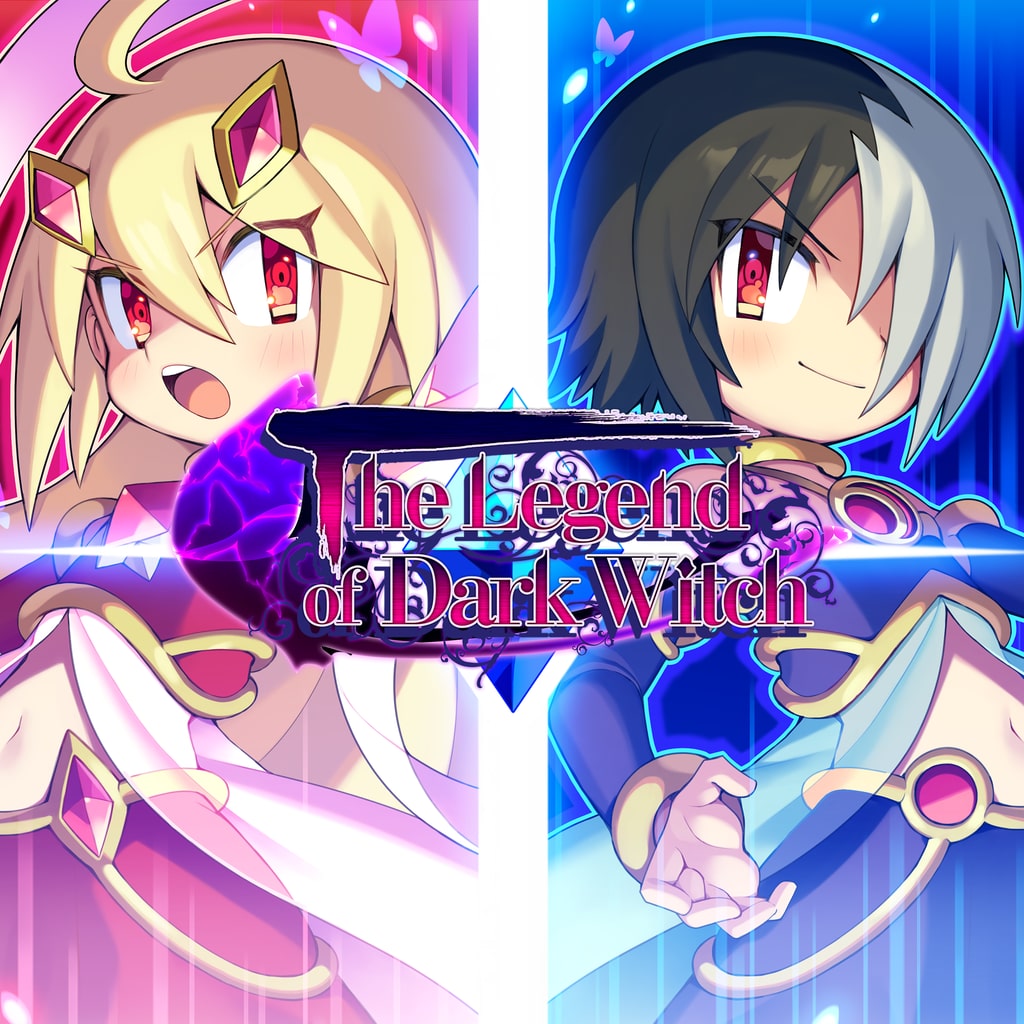
There is something wonderfully comforting about a game that knows exactly what it wants to be. The Legend of Dark Witch does not spend much time pretending to be anything other than a colourful, fast-paced 2D action platformer inspired by the classics that defined the genre. Developed by INSIDE SYSTEM and published by CIRCLE Entertainment, it wears its retro influences proudly, blending tight platforming, challenging boss battles and a healthy dose of character-driven charm into a compact adventure that is surprisingly hard to put down. It may look like a cheerful little pixel art game, but beneath those bright colours lies an experience that is more than happy to test your reflexes.
The story follows Zizou, the Dark Witch, as she sets out to recover the stolen Syega Crystals. These mysterious crystals once provided the world with great power, but their disappearance has plunged everything into darkness. Naturally, restoring them requires defeating a succession of formidable bosses, stealing their abilities and working out how those newly acquired powers can help you overcome what lies ahead. It is a premise that will feel instantly familiar to anyone who grew up with classic action platformers, but The Legend of Dark Witch puts enough of its own personality into the formula to make the adventure feel far more than a simple imitation.
A Familiar Adventure With Its Own Spark
The structure will immediately bring to mind certain 8- and 16-bit classics. You choose from a collection of stages, tackle them in the order you prefer, and eventually face a boss who rewards your efforts with a powerful new ability. Those abilities are not simply trophies to add to your collection. They become important tools for both combat and exploration, giving you reasons to revisit earlier stages once you have expanded Zizou’s arsenal.
That sense of progression is one of the game’s strongest qualities. A difficult section that seemed completely unreasonable on your first attempt can suddenly become much more manageable once you have acquired the right ability. It creates that wonderful feeling of gradually understanding the game’s systems rather than simply growing stronger through conventional level grinding.
There is also an element of strategy in choosing which stage to tackle first. Different abilities can make certain encounters considerably easier, so the order in which you approach the bosses can genuinely affect your experience. It is a small touch, but it gives the otherwise familiar structure a welcome sense of freedom.
Fast, Precise And Occasionally Brutal
The platforming is where The Legend of Dark Witch makes its intentions particularly clear. Movement is responsive, jumps are precise, and enemies are positioned to encourage attention rather than simply sprinting through every screen. The stages are not enormous, but they are packed with obstacles, enemies and hazards designed to keep you moving.
There is a satisfying rhythm to the action. You learn when to jump, when to attack, and when it is better to simply get out of the way. Some sections can become surprisingly tense, especially when several enemies are positioned around a tricky platforming sequence and you are trying to avoid unnecessary damage.
The difficulty is adjustable through three modes, a welcome addition. Players who simply want to enjoy the adventure can choose a more forgiving setting, while those looking for a serious test can turn things up. Even on the easier settings, though, the game retains enough challenge to make success feel worthwhile.
The Power Slot Changes Everything
One of the most interesting mechanics is the power slot system. Defeating enemies yields Tres, which fills a meter at the bottom of the screen. Once you have accumulated enough, you can activate abilities that provide temporary boosts or defensive advantages.
This adds a layer of decision-making that is easy to overlook at first. You might use the meter to increase your speed, improve your attacks, or activate a shield, but choosing when to spend that resource can make a real difference. Using everything immediately might make the current section easier, but saving it for a difficult encounter could be the wiser choice.
It gives combat a little more personality than simply jumping and shooting. You are constantly balancing the immediate benefit of using your resources against the possibility that something considerably nastier is waiting around the next corner. That extra consideration makes the action feel more strategic without slowing the pace.
Boss Battles Are The Main Event
The bosses are undoubtedly among the highlights. Each has its own personality, attack patterns and weaknesses, and learning to deal with them is a significant part of the adventure. These encounters can be chaotic, but there is usually a clear pattern beneath the spectacle if you take the time to observe it.
Defeating a boss and acquiring their ability is particularly satisfying because it gives the victory a tangible reward. You are not simply moving on to the next stage. You are expanding your options, and that new power may completely change how you approach another area.
There is also a lovely sense of experimentation. You may discover that an ability you initially dismissed is extremely useful against a particular enemy or obstacle, encouraging you to revisit earlier stages with a different perspective. It is an old trick, but The Legend of Dark Witch understands why it works.
Tres, Upgrades And The Temptation To Replay
The Tres system goes beyond temporary power boosts. Resources can also be spent between missions on permanent improvements, allowing you to increase health, acquire additional lives, or improve weapon efficiency.
This creates a satisfying sense of progression without turning the game into a traditional RPG. You are still relying on your own ability to navigate stages and defeat enemies, but the permanent upgrades provide a little extra breathing room. They are particularly useful if you decide to tackle the harder difficulty settings.
Replayability is further strengthened by bonuses and additional playable characters. The possibility of returning to the adventure with a different character or on a tougher difficulty setting gives the game more longevity than its relatively compact campaign might initially suggest.
Bright, Colourful And Full Of Personality
Visually, The Legend of Dark Witch is a cheerful celebration of pixel art. The stages have distinct themes, the character sprites are expressive, and the colourful presentation gives the adventure a playful identity.
That brightness also creates a nice contrast with the game’s difficulty. You might be controlling a cute, colourful witch in a world that looks almost harmless, only to discover that the game has no problem throwing a nasty sequence of hazards directly at you. The presentation is friendly, but the challenge is not always quite so welcoming.
The soundtrack fits the aesthetic beautifully. The upbeat chiptune music has plenty of energy and works particularly well during boss encounters. It gives the game that unmistakable retro arcade flavour without making the experience feel like it is simply borrowing nostalgia for its own sake.
The Charm Of Simplicity
Perhaps the biggest compliment you can pay The Legend of Dark Witch is that it does not overcomplicate things. There are no enormous open worlds to get lost in, no sprawling quest logs and no endless systems competing for your attention. You choose a stage, fight your way through it, learn something new and move on.
That focus makes it easy to pick up and play. You can complete a few stages in a short session or spend longer trying to master the harder challenges. The straightforward structure also makes the game particularly appealing to players who miss the days when an action platformer could simply put you in control and let you get on with it.
There are occasions when its simplicity can work against it. Some players may find the stages a little brief, while the retro-inspired difficulty can occasionally feel harsher than expected. The game also does not offer the same depth or scale as larger modern platforming adventures. Those are fair criticisms, but they need to be viewed alongside the game’s modest, focused design rather than treated as failures to become something it never intended to be.
Final Verdict
The Legend of Dark Witch is a lovely little throwback that understands the appeal of classic 2D action platformers. Its responsive controls, enjoyable boss fights and clever power-slot system give the familiar formula enough personality to remain engaging, while the ability-based progression creates that satisfying feeling of gradually becoming more capable.
Zizou herself is an appealing protagonist, and the colourful presentation helps the game stand out from the often darker, retro-inspired adventures that have become so common. There is a genuine sense of fun here, and that matters. The Legend of Dark Witch does not take itself too seriously, but it takes its gameplay seriously enough to deliver a worthwhile challenge.
The boss-ability system is perhaps the strongest part of the experience. Watching your arsenal grow and then realising that a new power changes the way you approach an earlier stage is exactly the kind of simple but effective design that made classic platformers so addictive. Add the Tres upgrades, multiple difficulty levels and replay bonuses, and there is plenty here to keep determined players coming back.
It is not perfect. Some stages could offer a little more variety, and players looking for a huge adventure may find the relatively compact structure somewhat limiting. Yet there is something refreshing about its focus. The Legend of Dark Witch knows what makes this genre enjoyable and concentrates on those fundamentals rather than burying them beneath unnecessary complexity.
For anyone with a soft spot for classic platformers, The Legend of Dark Witch is an easy game to appreciate. It is colourful, energetic, challenging and packed with enough personality to make its familiar ideas feel fresh. It may not reinvent the genre, but it certainly reminds us why these games became classics in the first place.