Some games need almost no introduction. Mention Bubble Bobble to a certain generation of players, and you can almost hear the music before you have finished saying the name. Taito’s bubbly little adventure has charmed players for decades, and now HAMSTER Corporation has brought its 1988 8-bit home console version into the modern era as part of the Console Archives series. Rather than attempting to reinvent the experience, this release focuses on preservation, accessibility and giving a much-loved piece of gaming history another chance to entertain a new audience.
That distinction is important because Console Archives BUBBLE BOBBLE is not trying to be a modern remake. This is the original home console experience, presented with the kind of convenience that simply was not available when Bub and Bob were first bouncing across television screens. The result is a fascinating little time capsule that demonstrates just how clever developers could be with relatively modest hardware. It is cute, deceptively simple and still capable of making you grin when you trap an enemy inside a bubble and immediately pop it.
Bubble Dragons To The Rescue
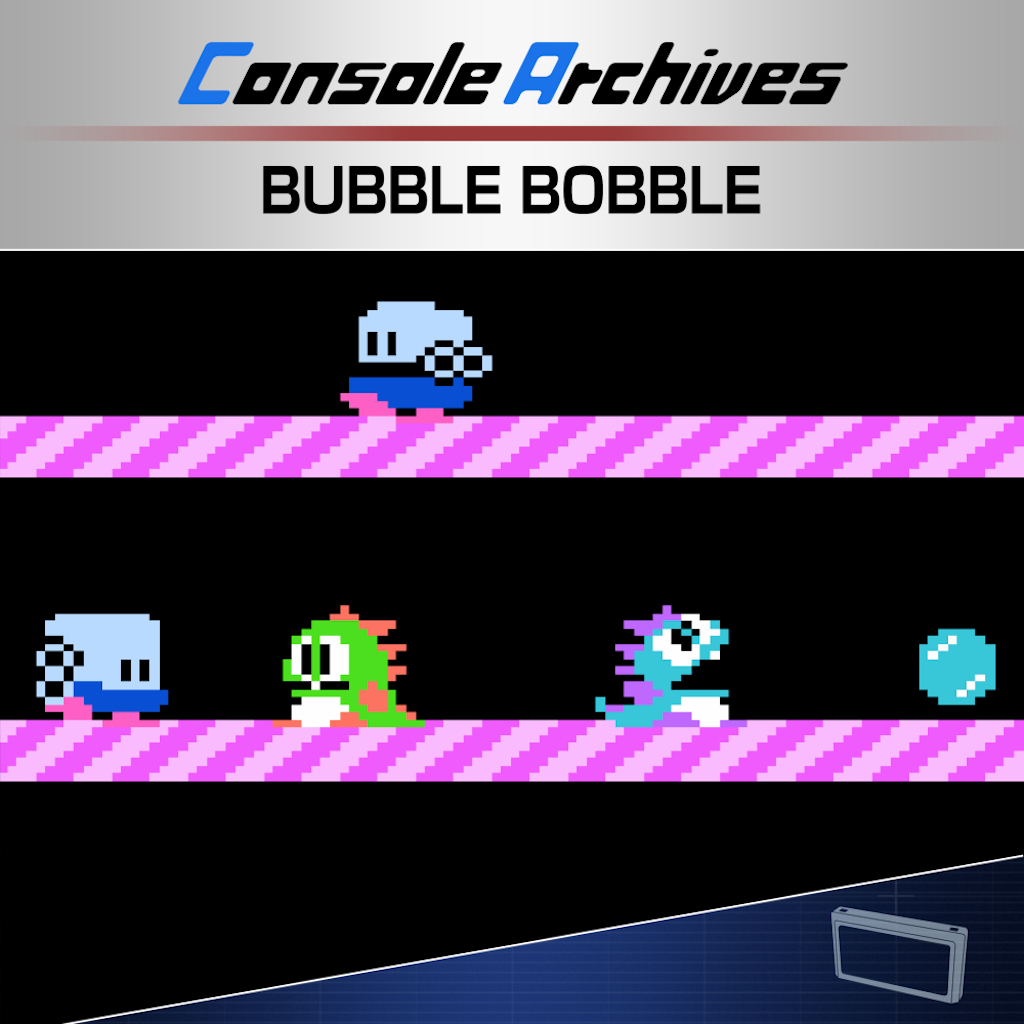
The premise is wonderfully straightforward. Bub and Bob have been transformed into Bubble Dragons by a wizard, while their girlfriends, Betty and Patty, have been kidnapped. Naturally, there is only one reasonable response to such an outrage: embark on a 100-stage adventure filled with monsters, platforms and a frankly ridiculous number of bubbles.
It is the sort of setup that could be explained in about ten seconds, and that is perfectly appropriate. Bubble Bobble has never needed an elaborate narrative because the real story is the adventure you create while playing. Each stage presents another compact challenge, another collection of enemies and another opportunity to work out the best way to clear the screen.
There is also an important reason to keep going beyond simply reaching the end. Clearing all 100 stages can lead to the game’s elusive True Ending, giving determined players something considerably more substantial to chase. It adds a little mystery to what initially looks like a simple arcade-style platformer and gives the full adventure a satisfying sense of purpose.
The Art Of The Bubble
The central mechanic remains as charming as ever. Bub and Bob can blow bubbles that trap enemies, allowing you to pop them and turn the defeated monsters into high-scoring fruit. It sounds almost absurdly innocent when described like that, but the system has surprising depth.
A bubble is not simply an attack. It can also become a temporary platform, allowing you to reach higher areas, and managing multiple enemies becomes a game of positioning and timing. You need to anticipate where an enemy is headed, where your bubble will travel, and how quickly you can get into position to pop it.
This is where Bubble Bobble demonstrates the sort of elegant design that has allowed it to endure for so long. The controls are straightforward enough for almost anyone to understand, but mastering the mechanics requires considerably more thought. You can muddle your way through some stages, but once you start trying to clear screens efficiently, the game suddenly reveals a much deeper layer.
100 Tiny Challenges
One of the most impressive things about the original Bubble Bobble is the sheer variety it offers within a simple single-screen format. Rather than giving you enormous scrolling environments, each stage is effectively a compact puzzle box. Platforms, enemies and hazards are arranged to encourage you to think before acting.
Some stages are straightforward enough, allowing you to trap and clear enemies without too much trouble. Others become considerably more complicated, particularly when multiple enemy types move simultaneously. Suddenly you are deciding whether it is safer to attack immediately or wait for the right opportunity.
That structure also makes the game perfect for short sessions. You can play a few stages when you have ten minutes to spare, or settle in for a longer attempt at reaching Stage 100. The compact nature of the levels makes progress feel tangible, while the challenge gradually encourages you to become more efficient.
Power Ups, Secrets And Score Chasing
The game is filled with items and power-ups that can completely change how a stage plays. Speed boosts, candy and other useful bonuses give Bub and Bob additional abilities, while special items can help turn a difficult section into something considerably more manageable.
There is also a satisfying scoring system for those who want to take things seriously. Simply finishing a stage is one thing, but chasing high scores encourages you to learn the best ways to group enemies together and maximise your rewards. This is where the arcade DNA becomes particularly obvious.
Even though this particular release focuses on the home console version, the basic philosophy remains intact. It is a game that rewards repetition because every failed attempt teaches you something. You gradually learn enemy behaviour, remember stage layouts and discover tricks that seemed impossible when you first started.
Two Dragons Are Better Than One
The local two-player co-op remains one of the great pleasures of Bubble Bobble. Playing as Bub and Bob together turns the adventure into something that can be wonderfully cooperative one minute and hilariously chaotic the next.
There are advantages to having another player around. You can cover different areas, combine bubble attacks and help each other reach awkward platforms. A well-coordinated pair can make some stages considerably easier, particularly when you learn to use bubbles as stepping stones.
Of course, two players can also create their own problems. There is something deeply familiar about accidentally getting in your friend’s way, popping a bubble at precisely the wrong moment, or competing for the best fruit. That playful chaos is part of the charm, and it is one of the reasons Bubble Bobble has always worked so well as a shared experience.
A Trip Back To 1988
Visually, this is unmistakably an 8-bit game. The sprites are simple yet expressive, the environments are brightly coloured, and the monsters have enough personality to remain memorable despite their limited graphical detail. There is an innocence to the presentation that is increasingly rare in modern games.
The soundtrack is equally nostalgic. Those catchy chiptune melodies can lodge in your brain surprisingly quickly, and the simple sound effects have the same instant recognisability. There is no attempt to modernise the audio or dress it up with unnecessary additions. It sounds exactly like the sort of game you might have played on an old television in the late 1980s.
For retro enthusiasts, that authenticity is a major part of the appeal. For newcomers, the simplicity might initially seem startling. Once you settle into the rhythm, however, the old-fashioned presentation becomes part of the game’s personality rather than something to be overlooked.
Modern Convenience Meets Old School Design
Where Console Archives BUBBLE BOBBLE earns its place on modern hardware is through HAMSTER’s collection of quality-of-life features. Customisable button layouts make the controls easier to adapt to modern preferences, while save and load functionality means you do not necessarily have to commit to a marathon session just to make meaningful progress.
The rewind functionality is particularly useful for anyone experiencing the game for the first time. Older games can sometimes have wonderfully brutal difficulty spikes, and being able to rewind a mistake can make the learning process much less frustrating.
Screen options, including CRT-style presentation, are another welcome addition. They allow players to recreate some of the feel of playing these games on the televisions they were originally designed for. It might sound like a small feature, but for preservation-focused releases, those little details matter.
Preservation Rather Than Reinvention
There is a temptation when reviewing an older game to judge it entirely by modern standards. That would miss the point here. Console Archives BUBBLE BOBBLE is valuable precisely because it preserves a particular version of a particular game rather than attempting to turn it into something else.
That does mean some limitations remain. The basic structure is repetitive by modern standards; the presentation is obviously dated; and some of the difficulty can feel unforgiving if you are accustomed to modern games that constantly guide you towards the next objective. The experience also lacks some of the bells and whistles contemporary players may expect.
Yet those limitations are inseparable from its historical appeal. This is a game from another era, built around simple rules and clever level design rather than enormous worlds and cinematic storytelling. Once you approach it on those terms, its qualities become much easier to appreciate.
Final Verdict
Console Archives BUBBLE BOBBLE is a lovely reminder that great game design does not require complicated systems. Give players a character who can blow bubbles, a collection of monsters, a few platforms and 100 carefully constructed stages, and you can create something that remains enjoyable nearly four decades later.
The bubble mechanics are still wonderfully satisfying, the level design continues to encourage experimentation, and the two-player mode remains an absolute delight. There is also something genuinely rewarding about working your way towards Stage 100 and discovering that the game has more secrets waiting for those willing to put in the effort.
HAMSTER’s modern additions make the experience considerably easier to live with, too. Save states, rewind functionality, custom controls and display options are exactly the sort of additions that help older games remain accessible without changing the underlying experience.
It is not going to fool anyone into thinking they are playing a modern platformer, and it should not try to. What it does provide is a faithful window into an important part of console gaming history, and one that remains surprisingly fun once you start popping those bubbles.
For long-time fans, Console Archives BUBBLE BOBBLE offers a chance to revisit an old friend. For newcomers, it provides an opportunity to discover why Bub and Bob became such enduring gaming characters in the first place. It is simple, cheerful, occasionally fiendishly difficult and packed with the kind of old-school charm that modern games often struggle to replicate.