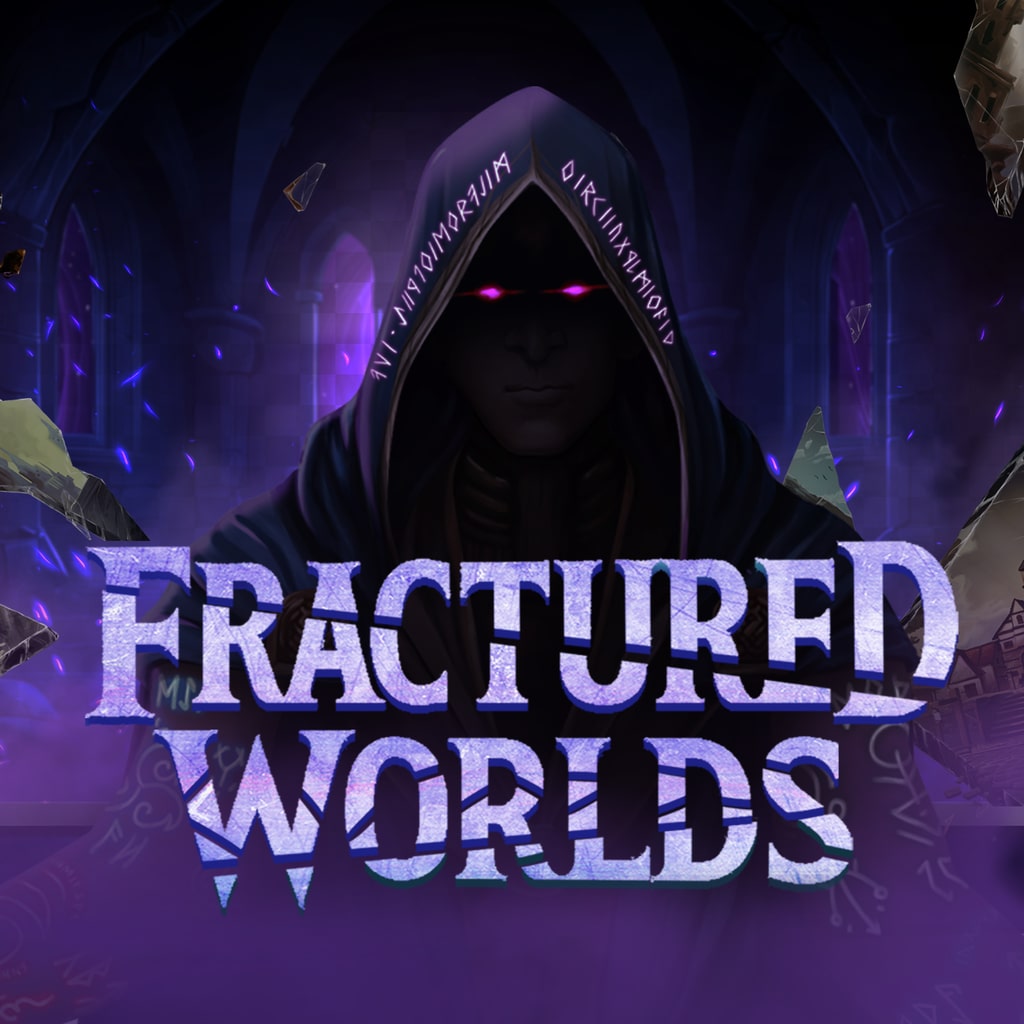
There is something inherently unsettling about arriving in a world that has already ended. In Fractured Worlds, reality itself has been torn apart by the ambition of those who once inhabited it, leaving behind broken realms that feel like fragments of memory floating in the aftermath of a catastrophe. Dungeons, forests, volcanic wastelands and industrial cities exist as pieces of worlds that no longer truly belong together, and your journey through them is driven by a simple but compelling question: what happened here, and can anything that has been lost ever really be restored? Developed and published by Laser Guided Games, Fractured Worlds is a dark fantasy action RPG that builds its identity around deliberate combat, flexible character progression and the intriguing idea that even reality cannot always keep players entirely separate.
It is a game that asks for patience. Combat is weighty, enemies can be punishing, and a single careless decision can remove a sizeable chunk of your health. Yet beneath that harsh exterior lies a surprisingly flexible adventure that gives you room to experiment, whether that means wielding a crushing two-handed mace, keeping enemies at bay with a spear, or manipulating Aether through magical wands. Add in procedural realms, mysterious memory fragments, powerful bosses and an unusual multiplayer system that allows other worlds to briefly overlap with your own, and Fractured Worlds becomes an ambitious journey through a universe where nothing feels entirely stable.
A Reality Broken By Ambition
The central premise immediately gives Fractured Worlds a strong sense of atmosphere. This is not a kingdom merely under threat or a world that might one day collapse if you fail. The damage has already been done. Reality is fractured, the consequences of past ambition are everywhere, and you are left to walk through the remains.
Guided by a mysterious voice, your character travels through these broken realms in search of answers. Along the way, memory fragments reveal pieces of the past, gradually building a picture of the people affected by the cataclysm and the forces responsible for it. The storytelling itself feels appropriately fragmented, with the truth emerging in pieces rather than being handed to you in one enormous exposition dump.
That approach suits the world. You are exploring the ruins of a disaster, so it makes sense that understanding it requires you to gather what remains. Every fragment has the potential to clarify the wider story, encouraging exploration for more than simply finding better equipment or another upgrade.
Every Swing Matters
Combat is where Fractured Worlds demands your full attention. This is not an action RPG where you can simply hammer the attack button and expect your character to carve through everything nearby. Weapons have weight, speed and distinct movesets, so choosing your equipment genuinely affects how you play.
A heavy two-handed mace can deliver devastating stagger damage, but its slower attacks leave less room for error. Spears offer a more nimble approach and are particularly useful for controlling groups, while magic wands allow you to manipulate Aether and approach combat from a different angle entirely. None of these options feel like simple visual alternatives, as each requires its own rhythm.
That weight gives the combat a satisfying sense of commitment. Once you begin a powerful attack, you need to consider whether the enemy will actually remain where you expect them to be. Positioning, timing and stamina management all become important, and the game is perfectly willing to punish impatience.
Learn, Adapt And Try Again
There is certainly a Souls-inspired quality to the combat, particularly in how enemy attacks demand observation and respect. Powerful foes can take away a significant portion of your health if you misjudge an attack, but the important thing is that their actions are designed to be readable. With practice, you come to understand their movements and recognise the brief moments when it is safe to strike.
That makes defeat easier to accept. You may not enjoy losing, but you usually know why it happened. Perhaps you became greedy and attempted one attack too many; perhaps your stamina was empty when you needed to evade; or perhaps you simply failed to read an enemy’s attack correctly.
The boss fights are where this design philosophy is particularly effective. Enemies such as the Treasure Golem, the unsettling Rorsch and the imposing Ghostly Knight are designed as major obstacles rather than disposable encounters. Each requires you to pay attention, learn patterns and gradually improve until what initially seemed overwhelming becomes manageable.
There is a genuine sense of achievement attached to victory. When you finally defeat a boss that has been repeatedly flattening you, it feels earned. Fractured Worlds does not always make the road to that moment comfortable, but that discomfort is part of the reward.
Build Without Being Boxed In
One of the game’s best ideas is its classless progression system. Instead of choosing a rigid archetype at the start and spending the rest of the game wondering whether you made the wrong decision, you are free to experiment with different builds and respec your character when necessary.
This works especially well alongside the equipment system. Finding a powerful Legendary item can genuinely make you reconsider your approach, as you are not permanently locked into a build that cannot use it effectively. If an exciting new weapon drops, you can adjust your character and see what it can do rather than immediately selling it because it does not fit the role you chose ten hours earlier.
That freedom makes experimentation considerably less intimidating. You can try a little of everything, move between melee and magic, or adjust your setup to the challenges ahead. It also gives the game a stronger sense of discovery, as loot can inspire an entirely new playstyle.
Worlds Within Worlds
The fractured nature of reality is not merely a storytelling device. It is reflected directly in the game’s exploration. The environments are procedurally generated fragments of former worlds, blending medieval dungeons, enchanted forests, volcanic landscapes and industrial locations.
This variety helps prevent the journey from becoming visually repetitive. Moving from a gloomy dungeon into a strange forest, then finding yourself surrounded by the remnants of an industrial civilisation, reinforces the idea that you are travelling through pieces of different realities rather than one conventional fantasy kingdom.
The procedural structure also gives exploration a sense of unpredictability. You may have a general sense of what kind of environment you are entering, but there remains an element of uncertainty about what lies ahead. For a game built around a shattered reality, that unpredictability feels thematically appropriate.
Of course, procedural generation can never entirely replace carefully designed environments with strong landmarks and memorable set pieces. There are moments when the fragmented approach can make locations feel more functional than truly iconic. Even so, the variety of biomes and the sense of travelling through worlds that were never meant to exist together give Fractured Worlds an interesting identity.
When Other Worlds Bleed Through
The multiplayer mechanics are perhaps the most unusual part of the experience. Because reality is distorted, other players’ worlds can occasionally overlap with your own. You can choose to interact with them, assist them, or continue along your own path.
There is also a darker side to these encounters. Players can invade, deceive, and manipulate situations to their advantage, creating opportunities to share loot or to lure someone into a deadly encounter. This unpredictability suits the game’s fractured setting remarkably well.
You never quite know whether another player will be helpful or become another problem. That uncertainty creates potentially memorable moments, particularly when valuable loot is involved. Cooperation can be rewarding, but greed and betrayal are always possibilities.
It is a system that adds personality to the world. Rather than treating multiplayer as a separate menu option, the overlapping realities aim to make other players feel like part of the setting itself.
Map Shards And Shared Danger
Map Shards build on that idea by letting players share fragments of their world with others. These artefacts create cooperative instances with random modifiers that alter the monsters within and increase potential rewards.
The modifiers make these shared areas more than simple repeats of existing content. A familiar encounter can become considerably more dangerous, depending on the conditions attached to the Map Shard. The greater risk is balanced by better loot, raising the classic question at the heart of every good action RPG: just how much danger are you willing to accept for the chance of finding something special?
The ability for players to leave comments about a Map Shard is a particularly nice touch. Someone might warn you about an especially brutal encounter, while another player could point out that the area contains valuable rewards. Of course, there is always the possibility that somebody is being less than honest, which fits rather nicely with the game’s willingness to allow deception between players.
A World Worthy Of Its Name
Visually, Fractured Worlds embraces its dark fantasy setting. Gothic architecture, dramatic lighting and grim environments create a suitably oppressive atmosphere, while the variety of biomes prevents everything from becoming one endless stretch of grey ruins.
The darker presentation is also supported by the game’s combat design. Enemy movements are generally clear enough to read, which is essential when survival depends on recognising an attack before it arrives. Bosses are imposing without becoming visually incomprehensible, allowing the spectacle of the fights to coexist with the precision they demand.
The soundtrack follows a similar approach. Haunting ambient music supports exploration, creating an uneasy feeling as you move through the remnants of broken worlds. During major encounters, the music becomes more intense, adding weight to battles that already demand your complete attention.
Final Verdict
Fractured Worlds is an ambitious dark fantasy action RPG that succeeds because it understands the value of tension. Every weapon feels distinct, every tough enemy demands respect, and every boss victory feels genuinely earned. The world itself provides an intriguing setting, with fragments of different realities creating a journey that feels appropriately strange and unstable.
The classless progression system is one of its strongest features. Being able to experiment freely without fearing you have permanently ruined your build is liberating, while the ability to adapt around powerful Legendary equipment gives loot an extra sense of importance. The multiplayer overlaps and Map Shards also offer some genuinely inventive ideas, making interactions with other players feel connected to the fractured nature of the world.
The procedural environments may occasionally lack the unforgettable landmarks of a fully handcrafted adventure, and the deliberate combat will undoubtedly test the patience of players seeking a more forgiving experience. Stamina management and careful timing are not optional here, and the game can be unforgiving when you make mistakes.
For those willing to meet it on its own terms, however, Fractured Worlds offers a rewarding journey. It is challenging without being thoughtlessly cruel, flexible without becoming directionless, and atmospheric enough to make its broken reality feel like a place worth exploring.
There is something fitting about the game’s central idea. A world shattered by ambition cannot simply be repaired with one heroic swing of a sword. You have to search through the fragments, understand what went wrong, and carefully piece things back together. Fractured Worlds asks the same of its players, rewarding patience, curiosity, and the willingness to learn from every mistake.