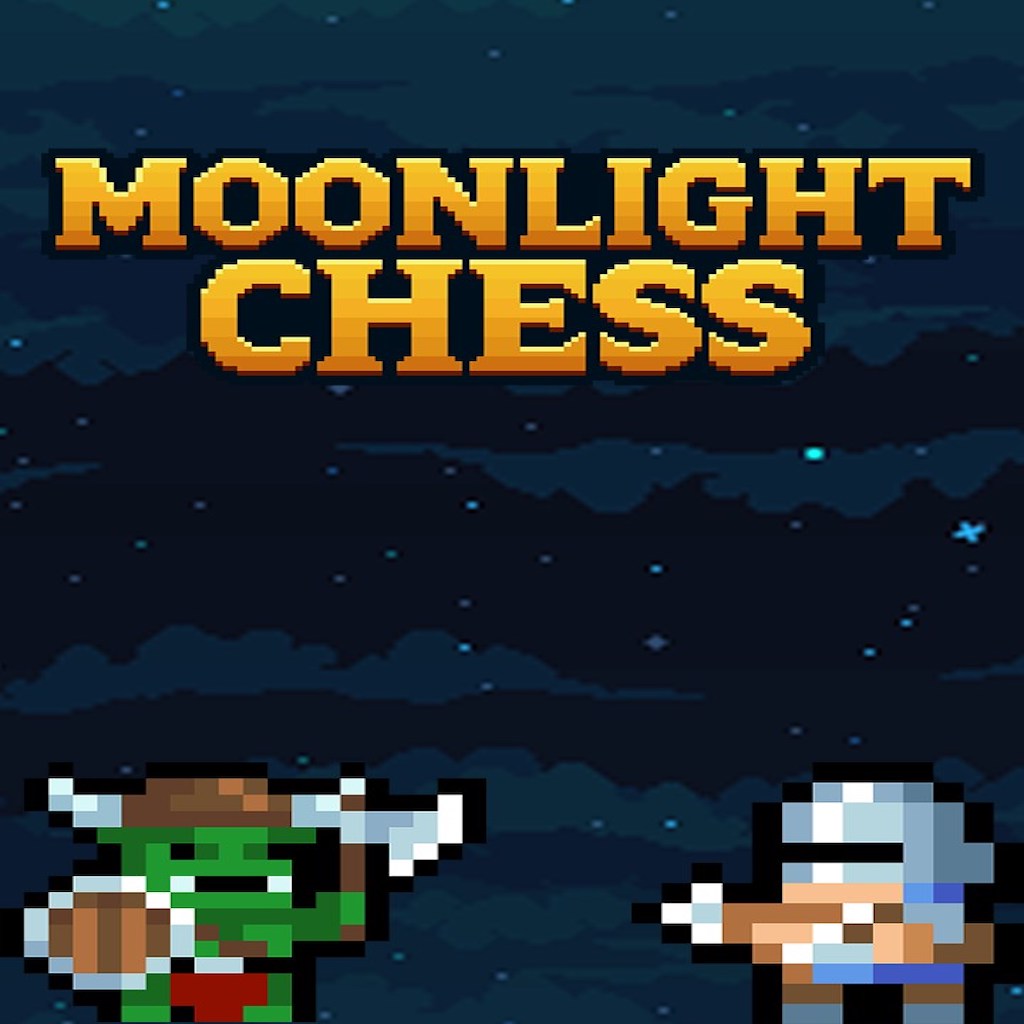
There is a particular kind of satisfaction in watching a plan unfold exactly as you imagined. You place a unit in what seems like an insignificant little square, combine it with another fighter, add a useful upgrade, and then sit back as the battlefield comes alive. Suddenly, that seemingly ordinary soldier is punching far above its weight, enemies are falling in waves, and you are left wondering whether you have accidentally stumbled upon the perfect army. That is the appeal of Moonlight Chess, a charming turn-based auto-battler that puts the emphasis firmly on what happens before the fighting starts.
Developed by MyDreamForever and published on consoles by Desert Water Games, Moonlight Chess combines card drafting, tactical positioning, unit upgrades and automatic combat into a package that is remarkably easy to pick up. Its pixel art presentation gives it a friendly retro character, while the underlying strategy offers considerably more to think about than the cute visuals might initially suggest. You are building an army capable of taking on waves of orcs, undead and demons, but the real challenge is working out how all those individual pieces can work together. It is a simple concept on the surface, yet one that becomes increasingly enjoyable once you start experimenting with its systems.
Building Your Army
The first thing Moonlight Chess gets right is its grasp of what makes an auto-battler enjoyable. You are not simply collecting increasingly powerful characters and throwing them onto a battlefield. Every turn presents you with a selection of cards, and you have to decide which unit or upgrade to take before working out where it belongs.
That second decision is where things become interesting. Positioning matters, and placing the right unit in the wrong location can completely undermine an otherwise promising strategy. You need to think about which fighters should be on the front line, which ones benefit from protection, and which units can provide useful buffs or support from behind. The battlefield may be represented by a relatively simple grid, but there is enough going on within those squares to make you pause and think.
The beauty of this system is that you are effectively designing your own little fighting machine. Once the battle begins, your troops take over and do what they have been trained to do. There is no frantic clicking or constant issuing of commands, so your success depends on whether the decisions you made beforehand were any good.
That can produce some wonderfully satisfying moments. Watching an army you carefully assembled tear through an enemy wave feels less like watching a computer play the game for you and more like seeing your own strategy put to the test. When it works, there is a genuine sense of accomplishment.
The Art Of The Merge
The ability to merge and upgrade units adds another welcome layer to the experience. Duplicate fighters are not simply disposable extras, as combining them can produce stronger versions capable of handling increasingly dangerous opponents. This introduces another decision, as keeping two separate units can sometimes be more useful than combining them immediately.
It is these little choices that give Moonlight Chess its character. There is rarely a single obvious answer, and the best decision can depend on what the rest of your army looks like. A powerful unit might be tempting, but if merging it means losing a useful tactical position, you have to weigh whether the immediate benefit is worth the sacrifice.
The system also encourages experimentation, which I always appreciate in a strategy game. You can try one combination, discover that it does not work particularly well, and then adjust your approach in the next run. There is a pleasing sense of discovery in finding a unit combination that suddenly makes everything click.
It is not the deepest merging system you will ever encounter, but it does exactly what it needs to do. It adds another reason to pay attention to your army rather than simply buying the strongest thing available every time.
Let The Troops Fight
Combat itself is automatic, and this will inevitably divide players. Some strategy fans love having direct control over every movement and attack, so watching your units make their own decisions may initially feel like surrendering too much control.
I think it works rather well here. The whole point is that the battle is the result of the decisions you made beforehand. You have chosen the units, arranged them on the grid, selected your upgrades and decided which combinations are worth pursuing. Once the fighting starts, it becomes the moment of truth.
There is also a lovely tension in watching a battle that could go either way. You know that you cannot simply jump in and rescue a poorly constructed army, so you are forced to watch the consequences of your decisions. When things go wrong, it can be frustrating, but it also gives you something useful to learn from.
That creates a pleasant loop of preparation, combat, reflection and experimentation. You build, you fight, you discover what went wrong and then you try to do better next time. It is a straightforward formula, but one that is surprisingly difficult to put down once you get into the rhythm.
Three Worlds To Conquer
The campaign takes you through three distinct environments, with frozen wastes, dense forests and gloomy swamps providing the backdrop for your battles. Visually, this gives the game much-needed variety and prevents every encounter from feeling as though it is taking place on exactly the same patch of ground.
More importantly, the different environments are intended to challenge your strategy in different ways. The game does not simply throw a new backdrop at you and expect you to carry on using the same army forever. As you encounter new enemy types and increasingly dangerous abilities, you have to reconsider what your army is capable of.
The fantasy setting itself is certainly familiar. Orcs are marching across the land, undead forces threaten to extinguish life, and demons are doing their best to turn the kingdom into a living nightmare. There is no great storytelling revolution taking place here, but the premise provides enough context to give your battles some purpose.
There is something quite satisfying about starting with a collection of relatively humble units and gradually turning them into an army capable of standing against increasingly intimidating forces. The scale may be modest, but the progression gives the adventure a useful sense of momentum.
Cards, Choices And Consequences
The card system is another important part of the experience. Between battles, you are presented with choices, and deciding how to spend your resources becomes part of the strategy. You might be tempted by a new unit, but perhaps your existing army would benefit more from an upgrade or another copy of a fighter you are already using.
This prevents the game from becoming completely predictable. You have to adapt to the options presented to you rather than following one perfectly scripted build every time. Even when the available choices are not exactly what you wanted, there is often a way to make them work if you are willing to rethink your formation.
That unpredictability is one of the reasons the auto-battler formula can be so addictive. You start with a vague idea of what you want to build, but the game keeps throwing decisions at you. Sometimes you get exactly what you need, while other times you have to improvise.
The best runs can therefore feel like they have developed their own little story. You might begin with one strategy, discover an unexpected synergy, and suddenly find yourself building the entire army around it. Those moments are when Moonlight Chess is at its most enjoyable.
A Friendly Face For Strategy
The pixel art presentation suits the game beautifully. It is colourful, readable and charming without overwhelming the battlefield with unnecessary detail. When multiple units, enemies and effects occupy a relatively small grid, visual clarity is crucial, and Moonlight Chess generally keeps things easy to follow.
The user interface also deserves credit for being straightforward. There is a lot of information to take in when building an army, but the game does not seem interested in making the player fight the menus as well as the enemies. The overall presentation is clean and approachable, which helps make the game suitable for players who may not already be experts in the auto-battler genre.
That accessibility is one of the game’s biggest strengths. You can grasp the basic idea very quickly, yet there is enough going on underneath to reward players who take the time to learn the relationships between units. It manages to be approachable without becoming completely brainless.
When The Formula Starts To Show
Of course, Moonlight Chess is not without its limitations. The underlying combat systems remain relatively lightweight compared with some of the more demanding roguelike auto-battlers, and players seeking enormous strategic complexity may eventually feel they have seen most of what the game has to offer.
The enemy AI can also be fairly straightforward. At times, opposing forces feel more like obstacles designed to test your latest build than genuinely clever tactical opponents. That does not ruin the experience, but it does reduce some of the tension, as the game does not always challenge you with particularly sophisticated enemy behaviour.
There is also some repetition in the later stages. Once you have become comfortable with the core systems, some of the battlefield layouts begin to feel familiar, and the novelty of assembling another army can start to fade. The game’s structure is well suited to bite-sized sessions, but its relatively simple foundations mean it may not have the same long-term depth as some of the genre’s bigger names.
Fortunately, the price and accessibility of the experience work in its favour. This is not trying to be the definitive auto-battler, and judging it as though it were a sprawling strategy epic would be missing the point.
One More Battle
What I like most about Moonlight Chess is how quickly it can convince you to have one more go. You finish a battle, notice that a particular unit combination worked surprisingly well, and immediately start thinking about how you could improve it. Perhaps you could move that fighter one square to the left, merge those two units earlier, or take a different card upgrade.
That feeling is the secret ingredient in any good strategy game. It is not necessarily about making every system enormously complicated. It is about giving the player enough interesting decisions that they genuinely care about what happens next.
Moonlight Chess understands that remarkably well. It keeps its rules accessible, but the combination of positioning, cards, merging and synergies gives you enough rope to either construct something brilliant or completely tie yourself in knots. The latter can be frustrating, but it is also part of the fun.
There is something wonderfully tactile about building an army one decision at a time. You can see it taking shape on the grid, and when the finished formation goes into battle, you get to find out whether your ideas were as clever as they seemed in your head.
Final Verdict
Moonlight Chess does not attempt to reinvent the auto-battler, but it does not need to. What it offers is a clean, accessible and surprisingly addictive tactical experience built around a handful of well-understood ideas. The combination of card choices, grid positioning, automatic combat, unit merging and synergies gives the player plenty of opportunities to experiment without drowning them in unnecessary complexity.
The three environments provide visual variety, while the different enemy factions and evolving abilities ensure that you cannot simply sleepwalk through every encounter. The pixel art is charming, the interface is easy to understand, and the quick progression makes the game particularly well suited to shorter gaming sessions.
Its weaknesses become more apparent the longer you play. The enemy AI is not especially sophisticated; some later stages can feel repetitive, and the overall strategic depth is lighter than in the more demanding entries in the genre. Players who want complete control over every battlefield decision may also struggle with the automated combat.
For everyone else, though, there is a lot to enjoy here. Moonlight Chess has that wonderfully dangerous quality of making you think you will play just one more battle before suddenly realising that far more time has passed than you intended. It is not grand strategy, and it is not trying to be. It is a charming little tactical playground where the fun comes from building something, watching it fight, and then immediately wondering how you could make it even better. And sometimes, that is more than enough.