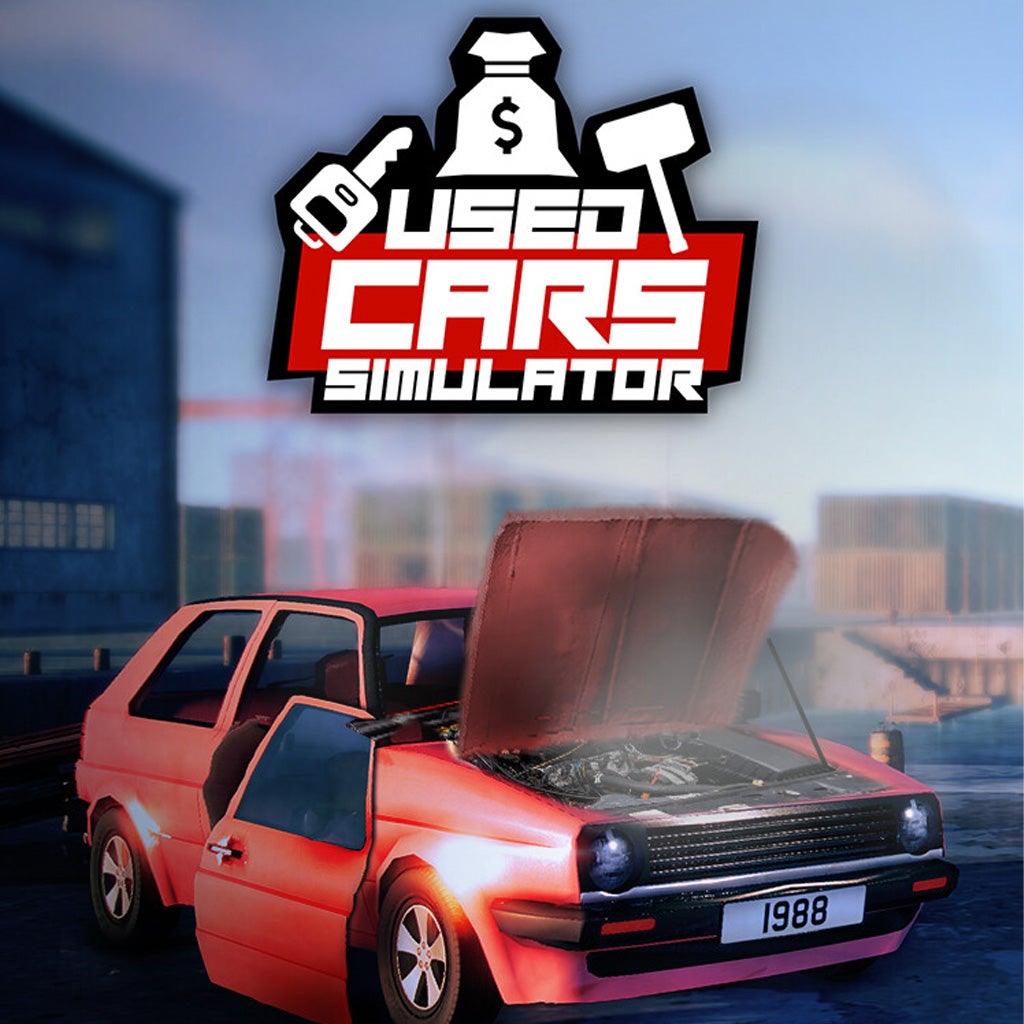
There is something wonderfully appealing about the idea of turning a battered old shed into a thriving used-car empire. Not a glamorous showroom with polished floors and expensive sports cars, either. I mean the sort of place where the vehicles arrive looking as though they have spent the last decade being driven through hedges, and your first instinct is to wonder whether anyone would be foolish enough to buy them. In Used Cars Simulator, however, that is precisely where the fun begins. With a little mechanical know-how, some careful haggling and perhaps the occasional activity that sits firmly on the wrong side of the law, DreamWay Games has created a surprisingly entertaining simulation that blends car restoration, business management and open-world exploration into one rather scruffy package.
Developed by DreamWay Games and published by PlayWay S.A., Used Cars Simulator puts you in the shoes of someone with very little money but considerably more ambition. Your starting point is hardly the stuff of automotive dreams, but the premise is refreshingly simple. Buy cars cheaply, repair them, make them presentable and sell them for a profit. Then repeat the process until your humble operation grows into something resembling a proper business. It is a familiar simulation formula, but the combination of legitimate trading, criminal opportunities and open-world exploration gives it a personality of its own.
From Rust Bucket to Roadworthy
The heart of Used Cars Simulator is, unsurprisingly, the cars themselves. Finding a bargain is only the beginning, because every potential purchase needs careful inspection before you hand over your hard-earned cash. Condition matters, and so does the price, so there is genuine satisfaction in finding a vehicle that looks like an absolute wreck but turns out to be a potentially profitable project. Negotiating the purchase price adds another layer to the process, and getting that balance right can make the difference between a healthy profit and an expensive mistake.
Once a car is back at your garage, the real work begins. Dents need repairing, missing components have to be ordered and installed, and vehicles require cleaning and, when necessary, a fresh coat of paint. There is something strangely therapeutic about taking an unloved wreck and gradually bringing it back to life. The process isn’t as mechanically deep as some dedicated car repair simulators, but it doesn’t need to be. Used Cars Simulator understands that the satisfaction comes from seeing the transformation and, more importantly, knowing that the work you’ve just completed should put more money into your pocket.
That financial loop is what keeps the whole thing ticking along. You aren’t restoring cars simply because you enjoy tinkering with engines. You’re doing it because the next purchase might be better, the next repair might make more money, and the next sale might take your business another step forward. It creates a pleasing sense of progression, particularly when you start with very little and gradually acquire the tools and resources needed to deal with more valuable vehicles.
Running a Business, Sort Of
The management side is deliberately accessible, which I suspect will be one of the game’s biggest strengths for players who enjoy simulation games without wanting to spend hours buried in spreadsheets. The market offers opportunities to make money, while the skill progression system gives you a reason to keep improving your operation. There’s also a pleasing sense that you’re building something rather than simply completing a list of disconnected objectives.
The economic system isn’t perfect, however. Early balancing can sometimes make progression feel uneven, and the relationship between investment, repairs and eventual profit could use a little more refinement. These aren’t problems that destroy the experience, but they do remind you that Used Cars Simulator has its rougher edges. The fact that the game has attracted a 79% Mostly Positive rating from more than 1,100 Steam reviews during its Early Access period suggests that plenty of players are willing to overlook those imperfections in exchange for what the game does well.
There’s also a lovely bit of humour in the contrast between humble beginnings and your character’s ambitions. You’re not immediately surrounded by pristine machinery and a fleet of expensive cars. You’re working from an old shed, trying to make a living from whatever questionable bargains you can uncover. It gives the whole experience a slightly grubby charm that suits the premise perfectly.
When the Business Gets Illegal
Of course, buying and repairing cars isn’t the only way to get ahead. Used Cars Simulator is quite happy to let you take a more questionable route to success, and this is where the game sets itself apart from more conventional automotive management sims.
Cars can be acquired through illegal activities, and players can take on criminal contracts, hot-wire vehicles and find themselves involved in police pursuits. Suddenly, your relaxing afternoon of fixing dents and ordering replacement parts can turn into a frantic attempt to escape law enforcement. It is a wonderfully daft contrast, but it works because the game never takes itself too seriously.
The criminal side of the game also adds variety to the otherwise potentially repetitive buy, repair and sell cycle. There is something amusing about spending time carefully restoring a vehicle to maximise its value, only to then decide that your next business opportunity involves stealing one. It’s not exactly the traditional route to entrepreneurship, but it gives Used Cars Simulator a mischievous personality that makes it more memorable.
Naturally, there is a risk that the illegal activities could overshadow the management elements, but the game generally does a good job of letting players decide how they want to approach their growing empire. If you’d rather concentrate on buying cars legitimately and turning them around for profit, you can. If you fancy living life a little closer to the criminal underworld, the option is there too.
More Than Just Cars
One of the game’s more unexpected pleasures is its open world. You aren’t simply confined to your garage and a series of menus. There is an abandoned city to explore, roads to drive, and a desert full of secrets and activities. You can even wander with a metal detector, searching the environment for hidden finds.
These additional activities help the world feel more like somewhere you’re inhabiting rather than simply a backdrop for your business. Desert exploration is particularly welcome, as it provides a change of pace from the mechanical work. After spending an hour worrying about profit margins and replacement parts, heading off into the wilderness with a metal detector feels like exactly the sort of wonderfully pointless distraction that open-world games are good at providing.
The in-car radio also adds a nice touch to the driving experience. Cruising around the map while listening to music gives the world a little more personality, although the driving itself leans more towards arcade territory than serious automotive simulation. That’s perfectly acceptable given the game’s broader design, but anyone expecting the precision of a dedicated driving simulator should adjust their expectations accordingly.
Rough Around the Edges
For all its charm, Used Cars Simulator isn’t without its problems. Character models are among the weaker elements, with NPCs occasionally looking stiff and underdeveloped. They don’t quite have the polish you’d expect from a major production, and their presentation can pull you out of the experience when you’re interacting with them.
The user interface can also be awkward at times. Some key bindings aren’t as intuitive as they could be, and inventory management occasionally becomes fiddly. These are the sorts of frustrations that become particularly noticeable in a simulation, where you’re constantly interacting with menus, tools and objects. A little more refinement would make the whole experience feel considerably smoother.
There is also occasional asset pop-in when travelling quickly around the world. It isn’t disastrous, but it reinforces the feeling that this is a game with plenty of ambition that hasn’t quite received the final layer of polish. The good news is that these issues feel fixable rather than fundamental. The underlying game is considerably more interesting than some of its rough presentation might initially suggest.
A Surprisingly Entertaining Road Trip
What makes Used Cars Simulator work is its grasp of progression. There is a particular satisfaction in taking something that initially looks worthless and turning it into something valuable. Whether that’s a battered car, a neglected garage or your own fledgling business, the game is built around improvement. Every successful sale gives you another reason to continue, while every new opportunity makes the world feel a little larger.
It isn’t trying to compete with the most hardcore automotive simulators, nor does it need to. Instead, it sits somewhere between a traditional management game, a car restoration experience and a slightly ridiculous open-world adventure. That combination shouldn’t work quite as well as it does, but there is enough variety here to keep the experience moving.
Most importantly, Used Cars Simulator has character. It knows that there is something inherently entertaining about buying terrible cars, making them slightly less terrible and convincing somebody else that they are worth considerably more than you paid for them. Throw in criminal activities, police chases, desert exploration, a metal detector and a mysterious woman in a red dress encountered at your favourite bar, and you have a simulator that clearly isn’t interested in behaving itself.
Final Verdict
Used Cars Simulator is rough around the edges, but beneath the occasionally awkward presentation lies an enjoyable and surprisingly addictive management game. The car-buying, repair and resale loop is satisfying, progression gives you a genuine reason to keep expanding, and the open world provides enough distractions to stop the experience from becoming a simple sequence of garage chores. The option to mix honest trading with decidedly less honest activities gives the game an appealing sense of freedom, while the exploration elements add an unexpected layer of personality.
There are certainly areas that need more polish. Character models, UI design, asset loading and economic balancing could all be improved, and players looking for an ultra-realistic automotive simulation may find the mechanics a little lightweight. For everyone else, though, there is plenty to enjoy here. Used Cars Simulator feels like the gaming equivalent of buying a battered second-hand car because it was cheap, only to discover that you’ve somehow become rather attached to it.