There is something wonderfully satisfying about a puzzle game that does not need to bombard you with tutorials, lengthy explanations or a complicated skill tree before letting you play. Retro Cube Slider understands this perfectly. You are presented with a glowing neon cube, a single screen, a collection of obstacles and one very simple instruction: move. It sounds almost ridiculously straightforward, but as anyone who has spent far too long staring at a puzzle while insisting the solution must be obvious will tell you, simplicity can be surprisingly deceptive.
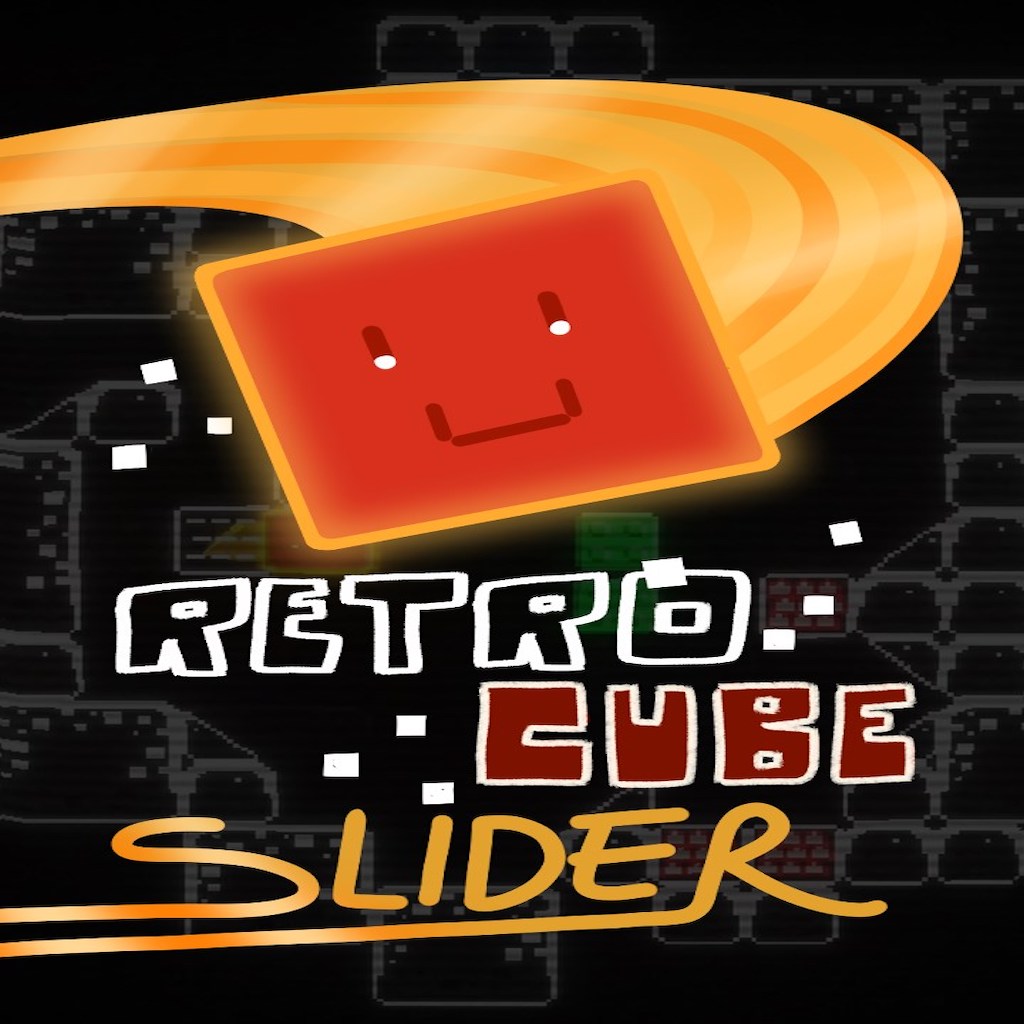
Developed and published by Sweet Bread Games, Retro Cube Slider takes the familiar sliding puzzle concept and wraps it in a colourful retro arcade aesthetic. The idea is beautifully simple. Press a direction and your cube moves continuously in that direction until something stops it. Your job is to work out the route, negotiate the obstacles and contraptions scattered across each stage, and eventually reach the goal tile. There are no complicated controls to master, and that accessibility is one of the game’s biggest strengths.
Simple Rules, Surprisingly Tricky Puzzles
The brilliance of Retro Cube Slider lies in how much mileage it gets from such a basic premise. At first, the levels feel almost effortless. You push the cube towards the target; it slides into position, and another puzzle appears. Before long, however, the game starts asking you to think several moves ahead, because once that cube starts moving, you do not have direct control over where it stops.
Walls and objects become your brakes, while each stage’s layout effectively becomes a miniature puzzle box. A move that initially seems completely logical can send the cube sailing into the wrong position, leaving you wondering exactly where you went wrong. The solution is often less about reacting and more about understanding the entire playing area before making that first move. That gives even the smallest stages a pleasing sense of purpose, because every piece of the environment can be important.
This is where Retro Cube Slider feels most satisfying. There is no need for elaborate mechanics when the basic movement system can create situations that make you stop, think and reconsider your approach. You might see the goal tantalisingly close, only to realise that reaching it requires approaching from an entirely different direction. The game does a good job of making those little moments of discovery feel earned rather than simply throwing arbitrary difficulty at the player.
Neon Nostalgia
Visually, Retro Cube Slider embraces its retro identity without making things needlessly complicated. The glowing cube and neon environments give the game a distinct arcade flavour, while the single-screen presentation ensures that everything you need to understand a puzzle is right there in front of you. There is something pleasing about the clarity of it all. You can look at a stage, take in the layout, and immediately start forming ideas about how you are going to tackle it.
The neon presentation also gives the game some personality. This could easily have been a very dry puzzle title consisting of little more than squares and arrows, but the glowing aesthetic adds a bit of energy to proceedings. It feels like the sort of game that could have happily sat inside an old arcade cabinet, albeit one that replaced frantic reflexes with quiet concentration.
That said, the presentation is deliberately lightweight, and players looking for a more elaborate visual experience are unlikely to find much here. Retro Cube Slider is not attempting to compete with technically impressive modern puzzle adventures. Its appeal comes from its simplicity, and the visuals exist primarily to make the puzzles attractive and readable rather than distract from them.
Easy to Pick Up, Harder to Put Down
One of the things I particularly appreciate about Retro Cube Slider is how quickly it gets out of your way. There is no complicated control scheme to memorise, and the basic movement mechanic is understood almost instantly. That makes it an ideal game for short sessions, particularly when you have ten or fifteen minutes to spare and simply want something that exercises the grey matter without demanding your full attention for hours.
There is also a nice rhythm to solving the levels. You make a move, watch the cube glide across the screen, and immediately know whether your plan has worked. When it has not, there is usually a clear reason, which encourages another attempt rather than frustration. When everything falls into place and the cube finally reaches its destination, there is that little spark of satisfaction that puzzle games do so well.
It is also easy to see why the game appeals to achievement hunters. The compact stages make progress feel measurable, while the straightforward controls mean the challenge comes from solving the puzzle rather than wrestling with the game’s interface. It is the kind of title that can sit comfortably alongside a more demanding game, providing a welcome mental palate cleanser between longer adventures.
Where the Simplicity Starts to Show
The same simplicity that makes Retro Cube Slider approachable also creates its biggest limitation. Once you are comfortable with the sliding mechanic, there is only so much the game can do with it. The various obstacles and stage contraptions help keep things interesting, but the core loop remains unchanged throughout the experience.
That is not necessarily a criticism of the design itself. Puzzle games often succeed by refining a single mechanic rather than constantly throwing new ideas at the player. The issue here is more about longevity. Once you have worked through the available stages, there is relatively little reason to return unless you particularly enjoy replaying puzzles, chasing achievements or trying to improve your own solutions.
This makes Retro Cube Slider feel much more like a compact puzzle diversion than a game designed to consume dozens of hours. Personally, I think that is perfectly acceptable for a title of this nature. Not every game needs to become your next hundred-hour obsession, and there is something refreshing about a release that understands its own limitations and simply focuses on delivering a clean, accessible experience.
The Joy of a Good Little Puzzle
Perhaps the greatest compliment I can pay Retro Cube Slider is that it understands why people enjoy puzzle games in the first place. It does not need an elaborate story or a cast of memorable characters to keep you interested. Instead, it presents you with a problem and lets you solve it yourself. There is a wonderful purity to that approach, particularly in an industry where games can sometimes be buried beneath layers of systems and mechanics.
The best puzzles here are those that make you think the answer is obvious, only to reveal that your first idea was completely wrong. That moment when you stop moving the cube around randomly and start studying the level is when the game comes alive. Suddenly, the walls are not just obstacles; they are tools, and the route to the goal becomes a small piece of logic waiting to be unravelled.
It is also the sort of game that benefits from being played at your own pace. There is no need to rush through a puzzle simply because the game expects you to. You can sit back, examine the screen and experiment until something clicks. For players who enjoy relaxed brainteasers rather than punishing tests of reflexes, that makes Retro Cube Slider an appealing little proposition.
Final Verdict
Retro Cube Slider is a modest game, but there is nothing wrong with modesty when the fundamentals are this clean. Sweet Bread Games has taken an incredibly simple idea and turned it into a collection of accessible, colourful and occasionally surprisingly tricky little puzzles. The glowing neon presentation gives it an attractive retro personality, while the single-screen design makes every stage easy to understand and encourages that wonderfully old-fashioned process of simply looking at a puzzle and figuring it out.
It does not have the depth or variety to become an essential long-term puzzle obsession, and the lightweight presentation means its appeal is likely to depend heavily on how much you enjoy this particular style of brainteaser. However, as a budget-friendly pick-up-and-play experience, it does exactly what it sets out to do. There is genuine satisfaction in watching that little cube slide into place after you have finally worked out the correct sequence of moves.
In an age of enormous open worlds and games that seem determined to occupy every spare hour of your life, Retro Cube Slider offers something rather different. It asks for your attention for a few minutes, gives your brain something to chew on, and then lets you walk away whenever you want. Sometimes, that is all a good puzzle game needs to do.