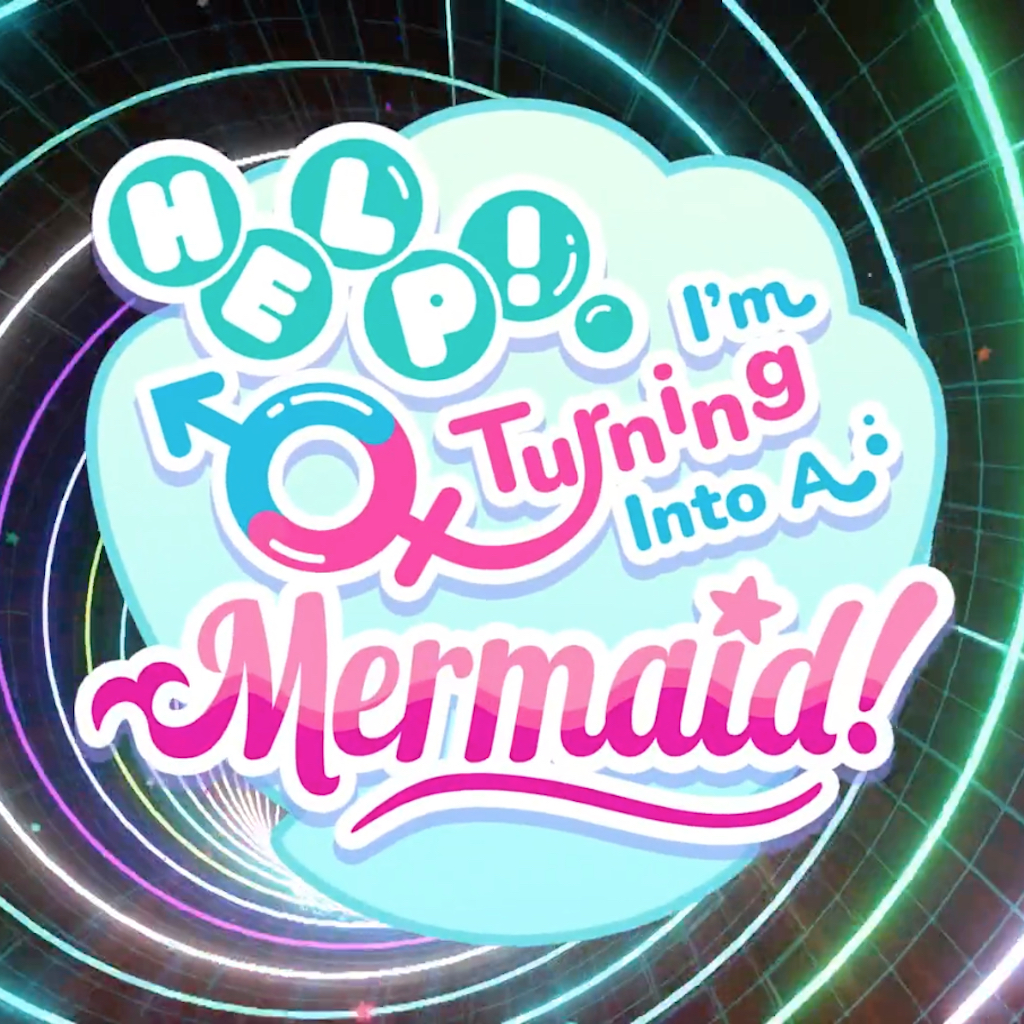
There’s a certain alchemy that happens when a game combines an imaginative hook with grounded emotional storytelling — and Help! I’m Turning Into A Mermaid! achieves that mix with refreshing charm. From the moment it introduces you to its slightly surreal premise — a seemingly ordinary protagonist beginning an unexpected transformation into a mermaid — you’re drawn into a world that’s as whimsical as it is sincere.
Developed as a narrative adventure with light slice-of-life and exploration elements, the game leans into character, mood, and thematic exploration more than intense mechanics or high-stakes action. It is, at its heart, a story about identity, change, acceptance, and the tides between those forces. That thematic current carries the experience for much of its runtime.
But while its heart is undeniably in the right place, Help! I’m Turning Into A Mermaid! isn’t flawless. Its pacing and light systems may not satisfy players seeking deep gameplay complexity. Instead, it succeeds best as a gentle, episodic journey rooted in quirky narrative and character interaction.
Premise and Narrative: Surreal Meets Heart
The game opens with what might seem like a bizarre setup: you wake up one morning to find that you’re slowly transforming into a mermaid. Scales… fins… and an increasingly aquatic life force that you just can’t quite explain.
It would be easy for this premise to tilt toward comedy or absurd satire, but the developers smartly anchor it in emotional reality. Instead of playing the transformation solely for laughs, the narrative explores how such a change affects relationships, routine, self-perception, and belonging.
This isn’t a high-stakes fantasy epic about saving the world — it’s a personal tale about what it feels like to change. And that emotional focus distinguishes the game from other narrative adventures.
Characters and Writing
One of the game’s standout strengths is its cast. NPCs range from empathetic companions to idiosyncratic townsfolk whose motivations and quirks provide warmth and complexity to small moments of dialogue.
Your protagonist — whose name is revealed through play rather than exposition — is open to interpretation. That’s not by accident. The script allows players to project a bit of themselves into the experience, while guiding them with well-written dialogue that balances humour, uncertainty, and genuine vulnerability.
Supporting characters are equally nuanced. A childhood friend who oscillates between disbelief and concern; a marine biologist with gentle curiosity; a weathered fisherman who has seen stranger things than your transformation — these relationships are your emotional anchors. They react not only to what is changing, but who you are becoming in their lives.
Gameplay: Exploration with Narrative Anchors
Mechanically, Help! I’m Turning Into A Mermaid! is a narrative-first experience. Its interactive systems are light by design: dialogue choices, environmental exploration, simple tasks, and occasional puzzles that nudge the story forward. There’s no combat to contend with, no convoluted systems to master, and no false difficulty spikes.
Instead, progression relies on:
- Conversations that unlock new paths and insights
- Exploration of environments — seaside towns, docks, marine labs, fog-shrouded coves
- Discovery of lore fragments that deepen the mystery of your change
- Daytime routines and choices that shape relationships
The result is a loop that’s relaxing and story focused. Whether you’re strolling along a moonlit shore or chatting with a worried family member in a cosy kitchen, every moment feels curated to reinforce tone and theme.
This design choice is a strength for players who seek immersive narrative engagement, but it may feel unsubstantial to those who crave deeper mechanical challenges or dynamic systems.
Visuals and Art Direction
Visually, the game adopts a stylised, painterly aesthetic that complements its emotional tone. Environments are lush with colour and detail, whether you’re in a vibrant seaside bazaar, a tranquil beach cove at golden hour, or an eerie underwater cavern lit only by phosphorescent algae.
Character sprites are expressive, and small animations — a nervous foot tap, a gaze toward the horizon, the subtle glimmer of scales under moonlight — all contribute to presence and mood without requiring technical flash.
The ocean itself feels like a character: calming, mysterious, alluring, and a little bit dangerous. Water effects, changing tides, and wave patterns are rendered with quiet beauty that enhances immersion instead of distracting from it.
Audio Design: Soundscapes and Subtlety
Sound in Help! I’m Turning Into A Mermaid! follows a similar philosophy of restraint and mood. The soundtrack is largely ambient and melodic, with gentle piano, soft strings, and occasional choral swells that underline emotional moments without forcing sentimentality.
Ambient effects — gulls in the distance, ebbing tide, creaking docks, and muffled underwater hums — add a tactile feeling to exploration. Dialogue is delivered crisply, without unnecessary embellishment, letting the writing itself carry weight.
This audio design reinforces the sense of place and enhances the narrative without ever becoming intrusive.
Pacing: Meandering or Meditative?
Here’s where the game’s design philosophy may divide opinions.
Help! I’m Turning Into A Mermaid! embraces a deliberate pace. It very rarely abandons serenity. Instead of quick punchlines or sharp action sequences, it invites you to sit with each emotional beat. Exploration doesn’t rush you. Dialogues unfold in measured rhythms. Even tension is tempered with patience.
For players seeking relaxation, contemplation, and emotional resonance, this pacing is a feature, not a flaw. Conversations feel meaningful, and quiet pauses between beats allow players time to reflect.
Yet for others who expect more mechanical momentum — frequent plot twists, escalating challenges, or rapid progress — the experience can feel slow. Midway through, there are stretches where narrative momentum lags slightly, and the rhythm can feel repetitive if you’re craving an external hook.
But for players willing to synchronize with its tempo, the journey is rewardingly meditative.
Themes: Identity, Acceptance, and Change
The real strength of Help! I’m Turning Into A Mermaid! lies in its thematic canvas. Beneath its whimsical premise is a story of identity and transformation that resonates far beyond scales and fins.
Characters respond to your change in ways that reflect real human behaviour:
- With empathy
- With fear
- With curiosity
- With denial
- With unconditional support
This spectrum makes emotional beats impactful without resorting to melodrama. It’s a story about becoming something other than what you expected — and the courage it takes to embrace that.
Narrative choices don’t radically alter the ending, but they shape how relationships unfold and how confident you feel in your transformation. The ending — whether metaphorical, literal, or a blend of both — feels earned and evocative.
Replayability and Longevity
Replay value isn’t rooted in branching complexity so much as interpretive nuance. Dialogue choices and character interactions have subtle variations that encourage a second playthrough, especially if you’re curious about alternate emotional outcomes.
That said, this isn’t a game designed for dozens of replays. Its strength lies in a satisfying, complete experience rather than countless divergent paths.
Final Verdict
Pros:
- A wonderfully unique and heartfelt premise
- Strong writing and expressive characters
- Beautiful art direction and immersive audio
- Thoughtful exploration and emotional resonance
Cons:
- Deliberate pacing may not appeal to all
- Relatively light mechanics for those seeking gameplay depth
- Narrative momentum softens in places
Summary:
Help! I’m Turning Into A Mermaid! is a lovely, introspective adventure that turns a whimsical concept into a meaningful narrative journey. Its strength isn’t thrilling combat or high-stakes tension — it’s the emotional nuance, engaging character dynamics, and serene exploration that make it memorable. This is a game to feel as much as to play, and for those open to its thoughtful pace, it offers waves of charm and reflection.