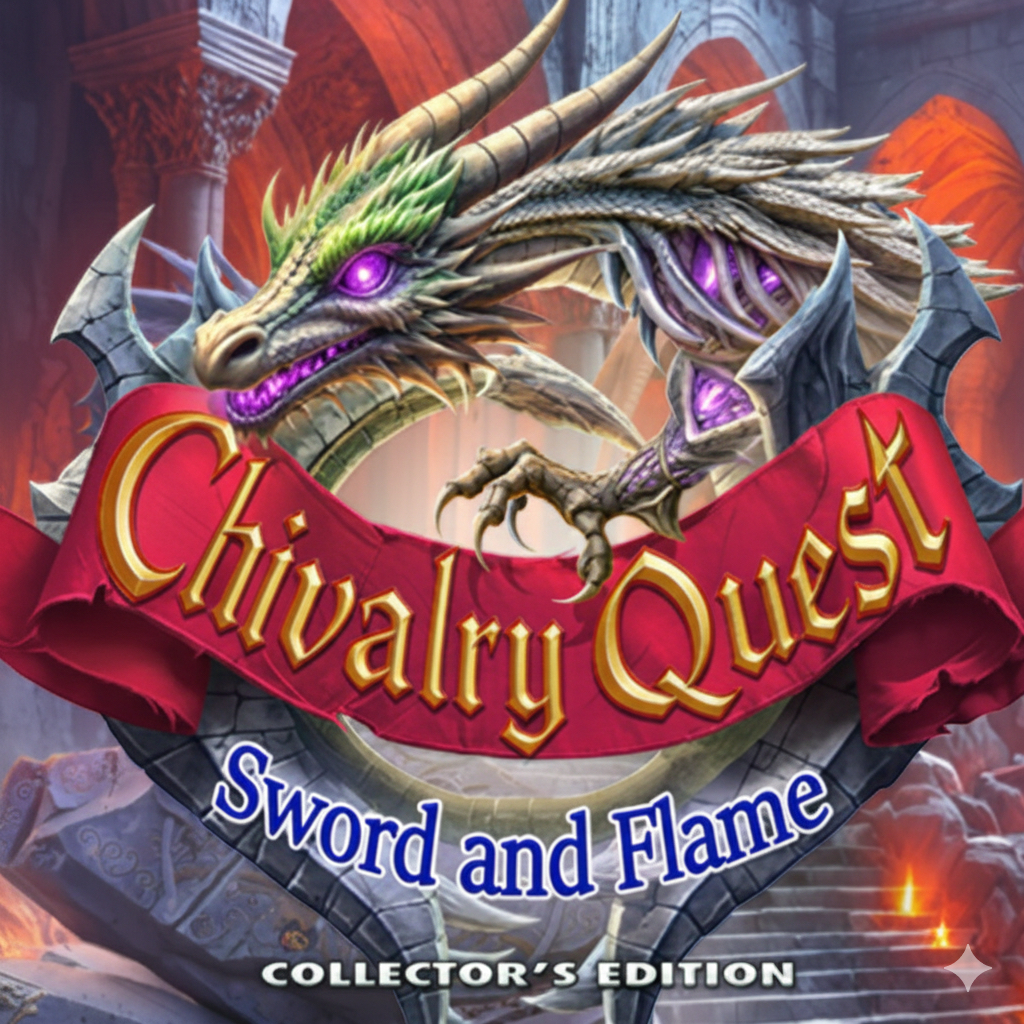
Few games wear their inspirations as proudly as Chivalry Quest: Sword and Flame Collector’s Edition. From its very title, this tactical RPG unabashedly evokes the classic fantasy epics of yesteryear — tales of honor, flame-deferred prophecy, and sword-clad wanderers struggling against both fate and ferocity. Developed and published by Do Games Limited, Chivalry Quest feels like a loving tribute to that tradition, blending strategic turn-based battles with narrative beats and exploration that harken back to beloved tabletop-inspired RPGs.
But while its inspirations are immediately apparent, Chivalry Quest carves out its own identity through character, charm, and thoughtful design. It isn’t flawless — at times, pacing and mechanical depth feel conservative — but it delivers a rewarding and engaging journey, especially for fans of tactical RPGs with heart.
Story and Worldbuilding: A Classic Tale Retold
At its core, Chivalry Quest is narrative-driven — but not overbearing. The story unfolds with a measured pace, introducing players to the war-torn realm of Eldara, a once-peaceful kingdom now caught in the throes of conflict. From the ash-ridden outskirts to crumbling castles and verdant, hidden groves, the world feels coherent and rich with history.
You play as Ser Marius, a knight haunted by a past defeat and burdened with reopening a forgotten path of unity between fractured factions. Along the way, you meet allies — clerics, rogues, mages, and fellow warriors — each with distinct personalities, motivations, and character arcs that intertwine with the main quest.
The dialogue is written with clarity and occasional wit, grounded in a tone that respects its fantasy roots without lapsing into melodrama. Characters often feel like they have a past beyond exposition text, and interactions — be they humorous banter or terse negotiations — are natural and engaging.
While the pacing is somewhat deliberate (more on that later), the narrative rewards patience, offering carefully placed revelations and character beats that resonate.
Combat and Tactical Depth: Swords, Fire, and Strategy
Combat is where Chivalry Quest truly shines. Battles are fought in classic turn-based tactical arenas, where positioning, synergy, and terrain matter as much as raw attack power. The game strikes a comfortable balance between accessibility and depth — you’ll quickly grasp the basics, but mastering battlefield dynamics takes time and intentional play.
Core Mechanics
- Action Points (AP): Units use AP each turn to move, attack, or use skills — forcing thoughtful choices about resource use.
- Terrain and Positioning: High ground grants attack bonuses, cover reduces damage taken, and hazards like fire or spikes can be used to the player’s tactical advantage.
- Synergy and Roles: Each character fills a clear role — frontline bruiser, ranged support, magical controller — and pairing abilities creates powerful combinations.
For example, a mage’s area-of-effect fire spell can force enemies into predictable movement paths, where a warrior’s cleave can finish them off. Such interactions are satisfying and deepen tactical considerations beyond mere “attack until dead.”
Difficulty and Scaling
The game’s difficulty curve generally feels fair. Early encounters function as practical tutorials, introducing mechanics and enemy types gradually. As the story progresses, enemy compositions grow more complex, demanding layered strategies and punitive awareness of terrain.
Veteran tactical RPG players might find some later encounters predictable, but the majority of battles encourage adaptive thinking rather than rote repetition. There’s also an optional difficulty setting for players who crave greater challenge.
Exploration and Quests: Roaming an Ancient Kingdom
Between battles, Chivalry Quest encourages exploration. The world map reveals key regions and optional side paths where hidden treasures, lore fragments, and bonus fights await. Exploration feels intentional rather than aimless — places feel lived in, and discovering them often yields mechanical or narrative rewards.
Quests are clearly marked, with optional side quests that flesh out the world without feeling like pointless fetch tasks. Some side content reveals character backstory; others reward rare equipment or unlock unique skills. The balance between mainline and optional content helps pacing, even if it sometimes creates lulls.
Visuals and Audio: Nostalgic Yet Polished
Chivalry Quest embraces a hand-drawn art style that suits its setting beautifully. Environments are richly detailed, with varied palettes that distinguish forests from ruins, villages from battlefields. Character art is expressive, and battle animations — while not ostentatious — communicate impact and motion effectively.
Enemy designs are equally distinct: corrupted knights, flame-borne wraiths, and hulking brutes each bring personality. While the visuals aren’t cutting-edge, they strike a compelling balance between recognisable style and functional readability — especially important in tactical combat where clarity is key.
Audio complements this well. The soundtrack blends orchestral flourishes with thematic motifs that evoke both medieval fantasy and personal struggle. Sound effects — sword clangs, spell swirls, and battlefield ambience — provide satisfying feedback without overwhelming the senses.
Narrative Pacing and File Structure
If there’s a weakness in Chivalry Quest, it’s pacing. The narrative unfolds deliberately, which suits its contemplative tone, but this can feel slow during stretches where exploration or battles lack the narrative urgency that might better tie them together.
Some side quests, while conceptually interesting, meander without delivering satisfying payoffs, and a few late-game sections linger longer than needed. These pacing quibbles don’t undermine the core experience, but they do make the middle act feel less compelling than its promising opening.
Additionally, while combat encounters are robust, the absence of more diverse campaign objectives — such as puzzle mechanics, stealth elements, or objective variety beyond “defeat all enemies” — leaves moments where the loop feels too homogeneous.
Accessibility and Learning Curve
Accessibility is a strong point. The game eases players into its systems with clear tutorials and tooltips. Menus are well-organised, and color-coded indicators help keep track of statuses and buffs/debuffs.
Beginners to tactical RPGs will find Chivalry Quest welcoming without being trivial. The option to adjust difficulty or toggle tactical assists ensures that a broad spectrum of players can enjoy the experience without frustration.
Replayability and Longevity
In terms of replay value, Chivalry Quest offers moderate longevity. Once the main campaign concludes, players can revisit completed battles to refine strategies, pursue missing loot, or experiment with different party compositions.
However, it doesn’t lean heavily into New Game+ features, excessive branching paths, or divergent endings. This gives it a more linear feel compared to other tactical RPGs that rely on variability to fuel repeat playthroughs.
Final Verdict
Pros:
- Engaging, thoughtful tactical combat
- Charming world and character writing
- Accessible yet rewarding progression systems
- Strong visual identity and solid audio design
Cons:
- Pacing can feel slow or uneven at times
- Encounter variety could benefit from more diversity
- Limited post-game branching or long-term incentives
Summary:
Chivalry Quest: Sword and Flame Collector’s Edition is a delightful love letter to classic tactical RPGs, woven with enough narrative and exploratory warmth to stand on its own. It may not redefine the genre, but it delivers a well-crafted, thoughtful adventure that respects both player agency and mythic tradition. Its strengths in combat design, worldbuilding, and characterisation outweigh its pacing stumbles, making it a worthy recommendation for fans of thoughtful strategy games with heart.