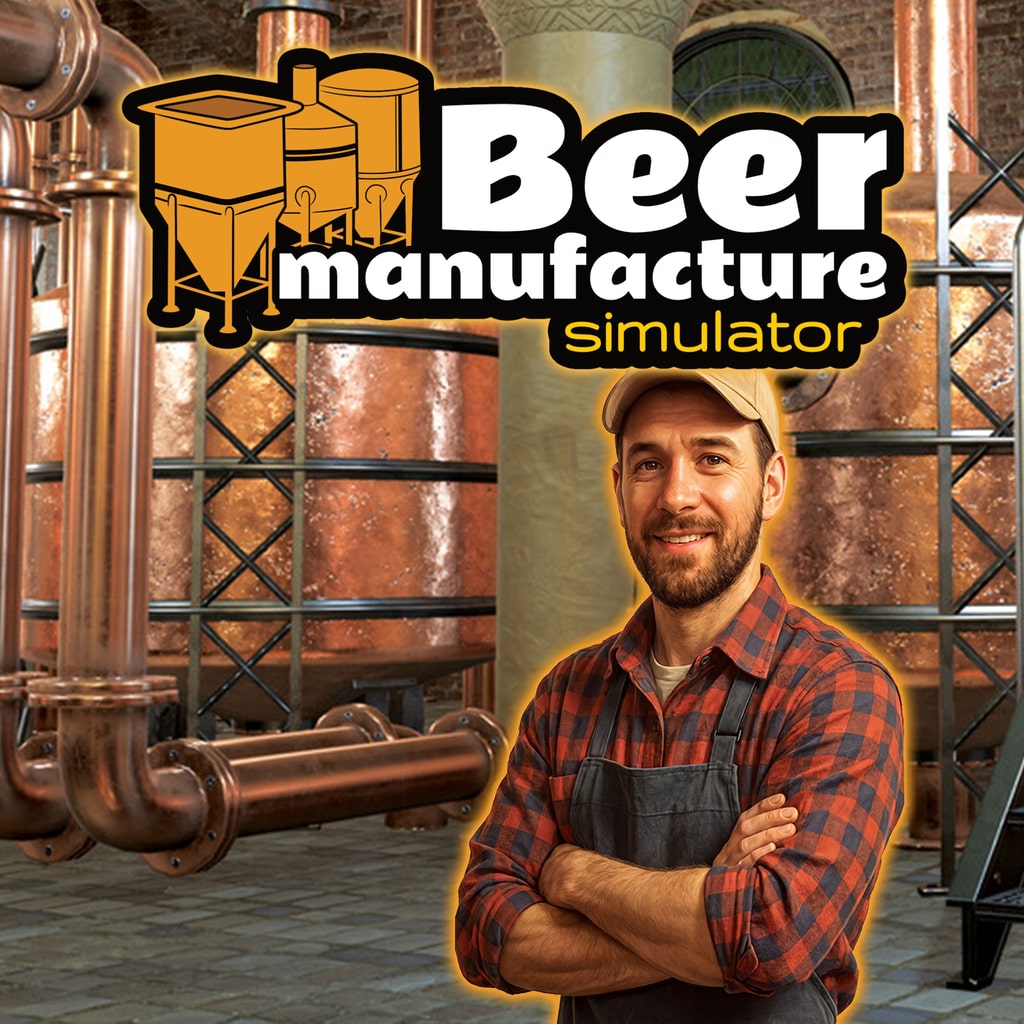
Brewing your own beer is increasingly popular these days, and with microbreweries popping up in seemingly every town, there is clearly money to be made turning hops, grains and water into something people are prepared to pay ever more for. Perhaps it is the price of a pint, perhaps it is the decline of the traditional local pub, or perhaps people simply like the idea of making something they can eventually drink themselves. I actually tried brewing my own beer once, although calling it a successful experiment would be stretching the truth somewhat. It was one of those do-it-yourself kits where you pour the ingredients into a container, add 20 litres of water and then leave it for a few weeks. One day, completely out of the blue, the thing exploded everywhere, flooded the kitchen and left the entire house smelling of beer for weeks despite multiple attempts at cleaning. So when I say that Beer Manufacture Simulator offers a safer way of becoming a brewer, I am speaking from personal experience.
Thankfully, Games Incubator’s simulation does not require me to mop fermented beer from the ceiling. Instead, it allows me to start with a tiny workshop, some basic equipment and a simple recipe before gradually turning that humble operation into a fully functioning beer manufactory. What begins as a hands-on hobby eventually develops into a surprisingly involved business simulation, with brewing, production, resource management, recipe experimentation and automation all becoming increasingly important. It is a familiar simulator formula, but the subject matter gives it plenty of personality. There is something inherently satisfying about watching raw ingredients become a finished product, especially when you are also watching your little brewery grow into something considerably more ambitious.
Welcome To The Brewery
The opening hours of Beer Manufacture Simulator are deliberately modest. You do not begin with a gigantic factory filled with gleaming stainless-steel tanks and automated production lines. Instead, you learn the brewing process from the ground up, getting your hands dirty and performing many of the jobs yourself. There is genuine charm in this, as your early brewery feels more like somebody’s ambitious hobby than a professional operation.
That sense of starting small is important because it gives the progression somewhere meaningful to go. You begin by producing relatively simple batches, completing orders and earning enough money to improve your equipment. Before long, you are thinking about how much space you have, which machines you need and how you can increase production without turning your brewery into a complete organisational nightmare.
It is a satisfying progression loop because every upgrade has a purpose. You are not simply buying something because the game tells you that you have unlocked it. Better equipment means more efficient production, greater capacity and eventually the ability to take on much larger orders. Watching your little workshop slowly evolve into a serious manufacturing business is one of the best things Beer Manufacture Simulator does.
Brewing From Grain To Glass
The brewing process itself is surprisingly detailed without becoming completely inaccessible. You start by mashing the grains, then move through boiling the hops, cooling the wort and managing fermentation before finally getting your beer into bottles or kegs. Each stage feels like part of a connected process rather than a collection of unrelated minigames, which helps make the whole thing feel like an actual production chain.
There is something wonderfully tactile about working through the stages yourself. At first, you are responsible for almost everything, so the brewery can feel quite hands-on. You need to pay attention to what you are doing, keep an eye on the production process and make sure the beer makes it through the various stages without anything going horribly wrong.
This is where the game succeeds in making what could easily have been a rather dry subject surprisingly engaging. Brewing is not simply a matter of pressing a button and waiting for a finished product. There is a feeling that your decisions matter, which gives even the more routine jobs a sense of purpose during the early stages.
The Great Beer Experiment
Of course, brewing would be considerably less interesting if every beer tasted exactly the same. Fortunately, Beer Manufacture Simulator gives you plenty of room to experiment, with different styles and ingredients allowing you to produce everything from light lagers to hoppy IPAs and heavier stouts. There are also opportunities to move away from traditional recipes and start creating your own combinations.
This is probably my favourite part of the experience because experimentation gives the brewery a personality. You can follow established recipes and concentrate on producing reliable favourites, or you can start throwing unusual ingredients into the mix and see whether you have created the next great craft beer or something that should probably never be served to another human being.
There is a nice balance between creativity and commercial thinking here. A strange experimental beer might be interesting, but if customers do not want to buy it, your bank balance is going to make that clear. Suddenly, recipe creation is not simply about personal taste. You need to consider what people want, what you can produce efficiently, and whether your latest brewing masterpiece is actually going to make any money.
From Hobby To Business
This is where Beer Manufacture Simulator gradually changes character. What starts as a fairly personal brewing experience becomes a business management game, and as your operation grows, efficiency becomes increasingly important. Resources need to be managed, orders fulfilled, and production carefully organised if you want to keep the money flowing.
The game does a good job of making expansion feel earned. You can see your brewery physically becoming more sophisticated as new equipment arrives and production capacity increases. Eventually, the workshop you started with can become a much larger industrial operation capable of handling orders on a completely different scale.
There is something particularly satisfying about this transformation because it mirrors the fantasy at the heart of the game. You begin as somebody who simply wants to make beer. Before long, you are effectively running a small manufacturing company and worrying about supply chains, production capacity and delivery schedules. It is a natural escalation, and it gives you a reason to keep pushing forward.
Automation Is Your Friend
Eventually, the game introduces more advanced machinery and automation, and this is where the experience starts to feel considerably more rewarding. There is a certain charm to manually handling every part of the brewing process when your business is tiny, but nobody wants to spend dozens of hours repeating exactly the same actions forever.
Automation changes the rhythm of the game. Tasks that once required your constant attention can gradually be streamlined, allowing you to focus on expansion and management rather than spending all your time on the digital equivalent of washing up.
More importantly, automation feels like a reward for progression rather than something simply handed to you. You have experienced the hard work first, so when your production lines eventually become more efficient, there is a genuine sense of accomplishment. You have built a business capable of running at a scale that would have seemed ridiculous when you were standing in that tiny starting workshop.
When The Orders Start Piling Up
Not everything is quite as relaxing as it first appears, however. The early game can be surprisingly demanding when orders arrive faster than your basic equipment can handle. Timed orders, in particular, can create a fair amount of pressure, especially when you have not yet unlocked the automation and machinery that will eventually make the whole operation run smoothly.
There is nothing inherently wrong with deadlines. They give the business side some much-needed urgency and prevent the game from becoming nothing more than a peaceful brewing screensaver. The problem is that early production bottlenecks can occasionally make you feel as though you are being punished for not having equipment you simply have not unlocked yet.
This can also make some of the manual order fulfilment feel repetitive. You know that eventually you will have better equipment and more efficient systems, but reaching that point sometimes requires doing the same jobs a few too many times. It is a relatively minor problem in the larger picture, but it does stop the early game from being quite as relaxing as the subject matter might suggest.
A Factory Full Of Beer
Visually, Beer Manufacture Simulator prioritises functionality over spectacle. The brewery gradually fills with tanks, kettles, storage areas, equipment and production machinery, and watching those pieces come together provides much of the visual satisfaction.
It is the kind of game in which the environment becomes more interesting because of what you have done to it. An empty workshop is transformed into a busy production facility, and each new machine marks another step in your business journey. There is no need for grand scenery when your own brewery is constantly changing around you.
The overall presentation also suits the subject matter. It feels like a practical simulation rather than a glossy fantasy about running a brewery. That works because the appeal is not really about looking pretty. It is about seeing something you have built actually function.
There Is Something Oddly Satisfying About It
What makes Beer Manufacture Simulator work is the same thing that makes many good simulation games so difficult to put down. There is always another improvement to make. There is always another recipe to try, another piece of equipment to unlock, or another production problem to solve.
You start with a basic recipe and a tiny workspace, then gradually find yourself thinking about production efficiency and commercial demand. Eventually, you stop worrying about making one good batch of beer and start wondering how many batches you can produce before the next shipment needs to leave the factory. That change in mindset happens naturally, and it is a sign that the underlying progression system is doing its job.
It also helps that the game does not force you to approach brewing in exactly one way. You can concentrate on traditional beers, experiment with unusual recipes, or focus on becoming an efficient manufacturer. That flexibility gives the experience more longevity and makes it easier to play in the way you find most enjoyable.
Final Verdict
Beer Manufacture Simulator is a surprisingly enjoyable simulator that turns something as ordinary as brewing beer into an engaging mix of production management, experimentation and business development. The hands-on brewing process gives the opening stages a satisfying sense of involvement, while the gradual introduction of larger equipment and automation provides a rewarding sense of progression.
It does have its frustrations. The early game can be slower than necessary, manual order fulfilment becomes repetitive, and timed deliveries can create unnecessary pressure when your brewery is still working with basic equipment. These issues are noticeable, particularly if you are expecting a calm, completely stress-free simulation.
Fortunately, the game’s progression keeps pulling you forward. There is genuine satisfaction in watching your little workshop evolve into a serious manufacturing operation, and the freedom to experiment with recipes gives the experience a welcome dose of personality. The brewing mechanics are detailed enough to keep simulation fans interested without becoming so complicated that newcomers immediately reach for a chemistry textbook.
Most importantly, Beer Manufacture Simulator understands that the best part of a management game is watching something you built become bigger and better. You start with almost nothing and slowly create a brewery capable of producing beer on an industrial scale. That journey is satisfying, occasionally frustrating, and, more often than not, rather addictive.
As for me, I think I will leave the actual home brewing to the professionals. I have already flooded one kitchen and spent far too long wondering why the entire house smelled like a brewery. In Beer Manufacture Simulator, however, I can happily make as much beer as I like without risking another domestic disaster, and that alone feels like progress.