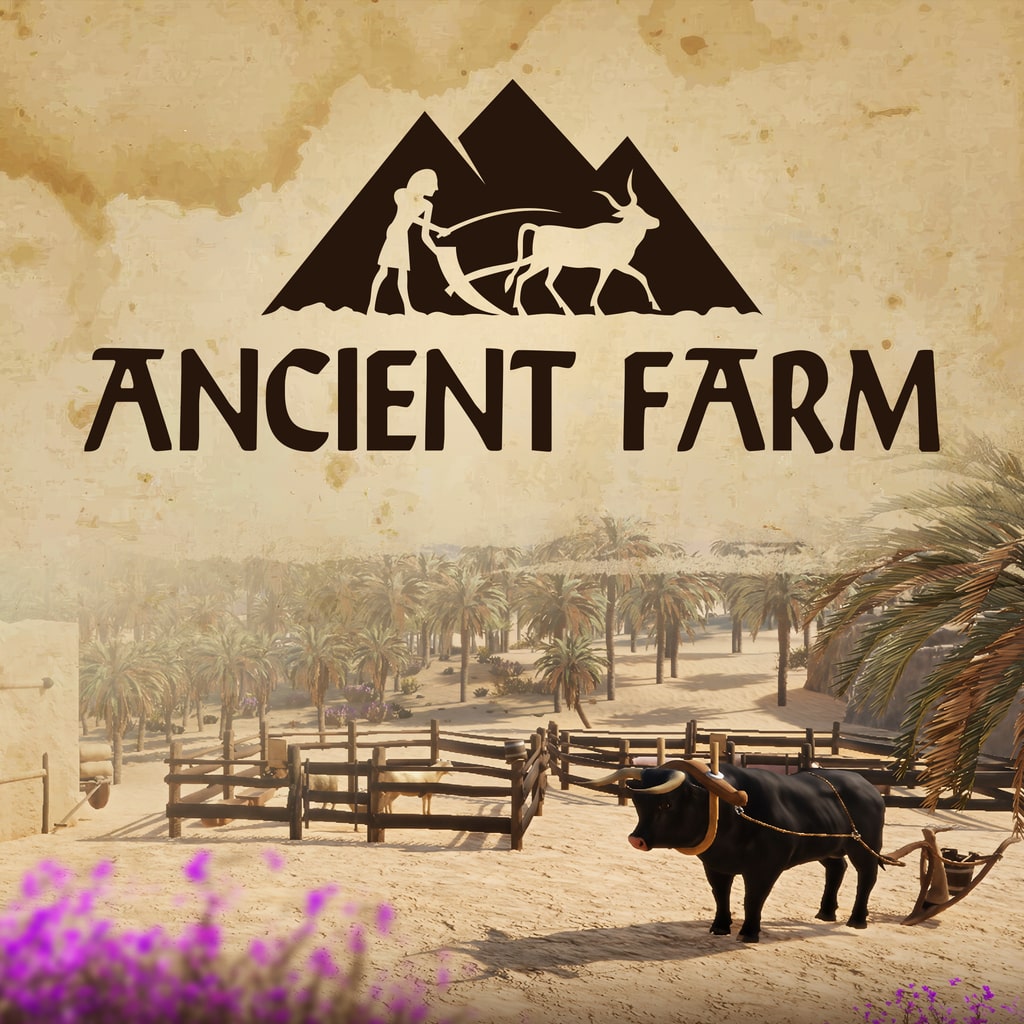
There is something undeniably appealing about the idea of building a farm beside the Nile in ancient Egypt. Before the sprawling settlements, grand temples and bustling trade routes, there was simply land, water, sunlight and someone willing to put in the work. Ancient Farm takes that simple idea and turns it into a hands-on farming simulator where almost everything has to be done by you. There are no convenient shortcuts waiting around the corner, no army of workers ready to take over the boring jobs, and very little that happens without your direct involvement.
That hands-on approach is both the game’s greatest strength and, eventually, one of its biggest weaknesses. At first, there is genuine satisfaction in taking a patch of barren Egyptian land and slowly turning it into something productive. You plough the earth, plant your crops, water and fertilise them, and eventually reap what you have sown. It feels humble and surprisingly peaceful, particularly as you begin to see the landscape change around you. Unfortunately, that sense of achievement becomes harder to maintain once the repetition starts to outweigh the reward.
Welcome To Ancient Egypt
Ancient Farm begins with very little, which is precisely the point. You are given basic tools and a piece of land, and from there it is up to you to create something that resembles a functioning agricultural settlement. There is no grand heroic quest pulling you forward, nor is there an immediate crisis demanding your attention. Instead, the game asks a much simpler question: what can you build if you are prepared to put in the work?
It is a refreshing change of pace from farming games that throw dozens of systems, characters and objectives at you within the first hour. Here, progression feels much more grounded. You start by learning the fundamentals, gather resources, craft better tools and gradually unlock buildings that make your little patch of Egypt increasingly productive. Watching a previously empty piece of land fill with fields, structures, animals and production facilities provides a modest but genuine sense of progress.
There is something rather lovely about that simplicity. Ancient Farm does not need to shout about everything it is doing. There is a quiet pleasure in walking across your fields, checking crops and deciding what needs attention next. For a while, it captures that satisfying rhythm of work, reward and gradual improvement that makes farming simulators so easy to lose track of time in.
Farming The Hard Way
The central farming mechanics are deliberately hands-on. You are responsible for ploughing your fields, planting seeds, watering crops, and ensuring everything receives the care it needs before harvest. Fertilising also becomes important, particularly when you are trying to maximise what your land can produce. Crops can decay if they are neglected, so you cannot simply plant something and wander off to do something else for half an hour.
In principle, this is an excellent approach. It makes the player feel like an actual farmer rather than a manager clicking through menus. You physically perform the tasks that keep your settlement alive, and there is a tangible connection between your actions and the final harvest. The problem is that Ancient Farm sometimes mistakes repetition for immersion.
Watering is the most obvious example. Rather than feeling like an interesting part of agricultural planning, it can become a chore that you are obliged to repeat. Water jugs can also break with frustrating frequency, meaning that what should be a straightforward farming task can turn into an exercise in constantly replacing equipment. Once you have been doing the same thing for hours, the romance of traditional farming begins to fade quickly.
Growing More Than Crops
Thankfully, the agricultural side of Ancient Farm offers more than simply planting rows of grain. Different crops serve different purposes, while fruit trees provide a longer-term investment. Riverside plants such as papyrus and sugar cane add another layer to planning your farm, as their positioning and access to water become important considerations.
Livestock also helps the settlement feel more alive. Cows, sheep, pigs and hens can all be raised for useful resources, while oxen play a practical role in making the work of preparing your fields more efficient. It is a nice touch, as these animals are not merely decorative additions to the landscape. They form part of the wider production loop and give you another reason to expand and organise your farm.
Crafting follows a similarly straightforward path. You gather materials, create tools and use them to make further progress. As the settlement develops, basic structures give way to workshops and more advanced production buildings. Eventually, even temples become part of your growing community, giving the later stages a greater sense of scale than the humble beginnings might suggest.
From Farm To Settlement
This is where Ancient Farm begins to show glimpses of what it could be. There is a satisfying progression from raw materials to useful products, with cooking, processing and trading gradually becoming more important. Your farm stops being simply somewhere you grow food and becomes a small economic ecosystem.
The basic loop is quite enjoyable when all the pieces are working together. Grow something, process it, turn it into something more valuable, and use the proceeds or resources to improve your settlement. It is not a revolutionary formula, but it works because the progression is easy to understand. Every new building feels like another small step towards something much larger.
The trouble is that the surrounding world does not always provide enough life to support that ambition. Ancient Egypt is an extraordinary setting, yet Ancient Farm often feels strangely static. There is plenty of potential in the landscape, particularly given the importance of the Nile to ancient Egyptian civilisation, but the environment rarely feels as dynamic or alive as it could.
A Beautiful Idea That Feels Too Quiet
The Egyptian setting is one of the game’s strongest elements. There is a warmth to the visual presentation, particularly when the sun hangs over the sandy landscape and your cultivated fields offer a welcome splash of life. The aesthetic establishes the location without becoming overly complicated, and the setting gives the otherwise familiar farming formula a distinctive identity.
The music deserves particular praise. There is something wonderfully nostalgic about the soundtrack, with an old-school strategy game feel that occasionally made me think of Age of Empires. It suits the setting surprisingly well and helps create the feeling that you are building something that belongs to a much older world.
Sadly, the world itself does not always match the atmosphere created by the music. The absence of a proper day-and-night cycle is particularly noticeable in a game built around agriculture and the changing conditions of the land. You also do not get bustling NPC communities, environmental events or dynamic Nile flooding that could have transformed the setting from a backdrop into a living part of the experience.
That feels like a missed opportunity. Imagine preparing your fields knowing the river will soon rise, planning your crops around the changing seasons or watching other inhabitants arrive as your settlement grows. Those systems could have made the ancient Egyptian setting feel genuinely special rather than simply providing an attractive theme for a farming simulator.
When Work Becomes A Chore
The biggest issue with Ancient Farm is its balance between relaxation and repetition. Farming games naturally involve repetition, and there is nothing inherently wrong with that. The best examples understand that repetitive work needs to be accompanied by meaningful progression, changing circumstances, or little surprises that keep the routine interesting.
Ancient Farm does not always provide enough of those moments. Tool degradation, repeated watering, and resource gathering can begin to feel like obstacles rather than enjoyable parts of the farming process. There are times when you spend more energy maintaining your ability to farm than actually enjoying the farming itself.
Input delay can also take some of the shine off the experience. When a game revolves around performing relatively simple physical actions, controls need to feel immediate and responsive. Even small delays become noticeable when you are repeating the same actions hundreds of times.
Yet I would not call Ancient Farm a failure. There is a solid foundation here, and beneath the rough edges is a game that clearly understands the basic appeal of starting with nothing and building something of your own. The progression works, the setting is appealing, and there is a peaceful quality to the whole experience that makes it easy to appreciate what the developers were trying to achieve.
The Farm That Could Have Been
What makes Ancient Farm slightly frustrating is that you can see a better game hiding beneath it. The ingredients are already there. Ancient Egypt is a fantastic setting; the farming systems have a satisfying physicality; the production chain gives you reasons to expand; and the gradual development of your settlement creates a genuine sense of accomplishment.
What is missing is the extra layer of life and dynamism that could have brought everything together. More environmental changes, a proper day-and-night cycle, stronger settlement interactions, and more meaningful consequences for your decisions would all help. Even something as simple as making the Nile feel like a living force rather than a static body of water could have transformed the experience.
Instead, Ancient Farm is a pleasant but rather lonely place. There is something satisfying about its simplicity, but there is also a nagging feeling that you are doing all this work in a world that is not quite interested enough in what you are building.
Final Verdict
Ancient Farm is an enjoyable farming simulator with a genuinely appealing premise, but it never quite turns that premise into the memorable ancient Egyptian farming adventure it could have been. Its hands-on approach gives the early game a satisfying sense of involvement, while the combination of crops, livestock, crafting, production and settlement building provides enough variety to keep things moving for a while.
The trouble is that the further you progress, the more obvious the repetition becomes. Manual watering, fragile tools and resource gathering can turn relaxation into routine, while the static world leaves the impressive Egyptian setting feeling strangely empty. There are no major threats forcing you forward, which can be a welcome change, but there are also not enough environmental or social systems to give you reasons to care about what exists beyond your own fields.
There is still plenty to like here. The gradual progression is rewarding, the soundtrack has a wonderfully nostalgic charm, and there is a quiet satisfaction in watching your barren patch of land slowly become a functioning farm. For players who enjoy slow-paced sandbox experiences and do not mind doing the same jobs repeatedly, Ancient Farm may provide a peaceful few evenings beside the Nile.
For everyone else, though, it feels like a promising first harvest rather than a fully grown crop. The foundations are there, and with more life, variety and environmental interaction, this could have become something genuinely special. As it stands, Ancient Farm offers a pleasant agricultural sandbox that occasionally lets its potential peek through the dust.