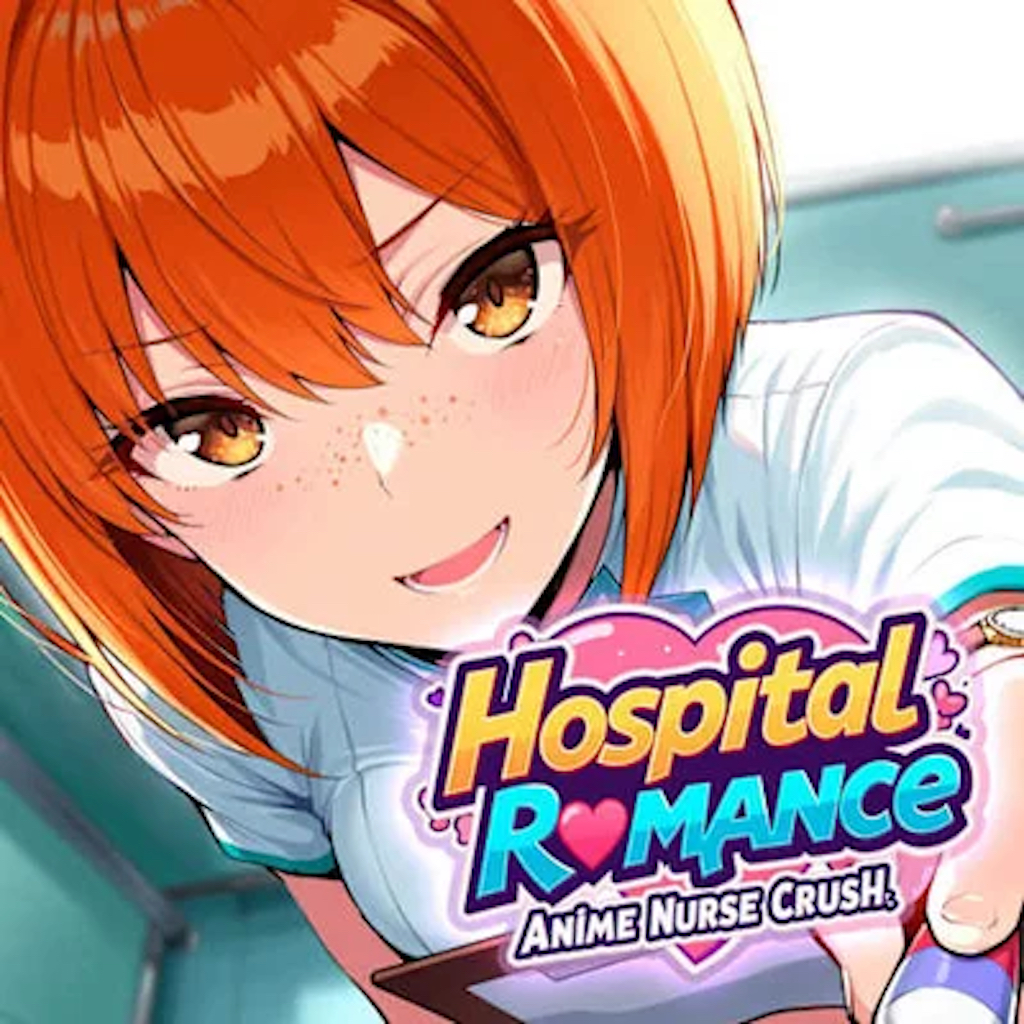
There are plenty of places you might expect to find romance. A candlelit restaurant, perhaps. A quiet beach at sunset. Somewhere with considerably fewer beeping machines, uncomfortable beds and people constantly checking your temperature. Yet Hospital Romance: Anime Nurse Crush decides that a hospital is exactly where your next great love story should begin. To be fair, there is something rather amusing about being told that your recovery depends less on following medical advice and more on saying the right thing to an attractive anime nurse.
Developed and published by Red Fables, Hospital Romance: Anime Nurse Crush is a curious little hybrid that combines visual-novel-style romance with quiz questions and simple arcade-inspired reflex challenges. You take on the role of a patient recovering in hospital, where your interactions with the nursing staff gradually develop into something considerably more personal. There are different personalities to get to know, choices to make, interruptions to fend off and special illustrations to unlock, all wrapped up in a surprisingly playful package.
It certainly does not pretend to reinvent the romance genre, but it has enough personality to make the concept work. The problem is that once the novelty of flirting from a hospital bed begins to wear off, the relatively shallow gameplay starts to show through. There is fun to be had here, particularly if you enjoy light visual novels and character-driven romance, but Hospital Romance: Anime Nurse Crush sometimes feels like it has just enough ideas for a much bigger game without quite having the depth to make them last.
Welcome To The Ward
The basic premise is wonderfully silly. You are confined to hospital, but instead of simply concentrating on getting better, you have another important task: getting to know the nurses looking after you. Each character has her own personality and approach to conversation, so the right answer for one nurse may not be the right answer for another.
That is where the game’s question-and-answer system comes into play. Conversations present you with choices, and your responses influence how the nurses perceive you. It is a familiar visual novel mechanic, but it works reasonably well here because the personalities are deliberately distinct.
There is something enjoyable about figuring out what makes each character tick. The strict head nurse naturally demands a different approach from the bubbly intern, and the game encourages you to pay attention rather than simply hammering through dialogue. Whether your answers genuinely reflect an understanding of the characters is another matter, but the basic idea is sound.
Getting To Know The Nurses
The cast is undoubtedly one of the game’s biggest strengths. Rather than presenting a collection of characters who all feel like variations on the same personality, Hospital Romance gives each nurse a recognisable identity.
The strict nurse serves as the stern authority figure, while the more cheerful characters bring energy and humour to proceedings. There is enough variety among the archetypes to make switching between routes worthwhile, particularly if you enjoy the familiar conventions of anime romance.
The characters also have stories beneath their initial appearances. As you build rapport, you gradually discover more about them, and the game does a decent job of making those moments feel like rewards rather than simply another dialogue box. It is not especially deep character writing, but there is enough here to encourage you to see what lies behind the first impression.
That matters because romance games live or die on whether you care about the characters. Hospital Romance does not always make its relationships feel genuinely meaningful, but it gets close enough often enough to keep the curiosity alive.
Say The Right Thing
The Q&A sections form the backbone of the experience. You will be presented with questions and choices, and your answers will affect your relationship with the nurse you are trying to impress.
On paper, this sounds straightforward, and it is. There is no particularly complicated relationship system to learn, nor does the game expect you to manage a huge number of statistics. Instead, it asks you to listen, understand the character in front of you, and make decisions accordingly.
For the first few encounters, this is surprisingly effective. There is a small sense of satisfaction when you pick an answer that feels appropriate and see the relationship move in the right direction. Unfortunately, the novelty does not last forever.
The biggest weakness of the Q&A system is repetition. Over longer sessions, the format begins to feel increasingly mechanical, and the excitement of discovering a new character can be diluted by having to work through similar question sequences repeatedly. The game clearly wants you to take your time and get to know these characters, but its structure does not always provide enough variety to make that process feel fresh.
Don’t Let Them Interrupt
To break up the conversations, Hospital Romance introduces a second gameplay component. Suddenly, it is not just about choosing the right words. You also need to defend your romantic progress against interruptions, rival patients and unexpected visitors.
These reflex-based minigames are a strange but welcome addition. They provide a brief burst of action between conversations and prevent the experience from becoming nothing more than an extended sequence of dialogue choices.
The problem is that they are extremely simple. There is a certain novelty in having to react to an interruption while you are trying to charm a nurse, but the mechanics rarely develop into anything particularly demanding. Once you understand what the game expects, most of the challenge disappears.
Still, I would rather have these little diversions than not have them at all. They may not offer much mechanical depth, but they give the overall experience a slightly more playful rhythm.
Romance With Rewards
As your relationships develop, you can unlock special images and unique illustrations for each character. These CGs offer a tangible reward for progressing through the various routes, and the gallery gives completionists another reason to keep playing.
There is an old-fashioned pleasure in unlocking artwork in games like this. Every new image feels like a small trophy marking your progress with a particular character, and it encourages you to explore different choices to see what you might have missed.
The multiple endings also add replay value. Your results depend on your answers, your reactions during the minigames, and how well you understand the character, so there is reason to revisit routes after reaching an ending.
It is not the sort of branching narrative where every decision sends the story hurtling in a radically different direction, but there is enough variation to make experimentation worthwhile.
The Magic Number
Then there is question 150. The game promises a special final moment for players who make it all the way to that point, effectively turning persistence into its own reward. It is a clever little incentive, giving players something concrete to work towards beyond simply completing individual character routes.
Whether reaching that milestone feels rewarding will depend heavily on how much you enjoy the core Q&A gameplay. If you are already finding the questions repetitive, getting to 150 can feel more like a commitment than an adventure.
For players who enjoy collecting everything and seeing every available scene, however, it provides exactly the kind of long-term objective that can keep a relatively simple game ticking over.
A Hospital Full Of Personality
Visually, Hospital Romance sticks closely to the familiar anime aesthetic you would expect from the premise. The nurses are colourful and clearly designed around recognisable character archetypes, while the illustrations offer some of the game’s more polished moments.
There is nothing especially groundbreaking about the presentation, but it does what it needs to do. The artwork is attractive enough to make you want to unlock the additional scenes, and the character designs give the cast enough visual distinction to match their personalities.
The hospital setting itself is also used effectively as a backdrop. It is hardly the most romantic location imaginable, but there is something amusing about the contrast between the clinical environment and the game’s increasingly flirtatious conversations. That contrast gives the whole thing a slightly cheeky personality.
When The Formula Starts To Show
Unfortunately, Hospital Romance: Anime Nurse Crush cannot escape the limitations of its own design. The two gameplay systems are simple, and neither develops sufficiently to sustain interest throughout a long play session.
The Q&A sections are the bigger issue. Romance games can get away with relatively simple mechanics when their writing is strong enough to carry the experience, but repetition becomes noticeable when conversations follow familiar patterns.
Likewise, the reflex challenges provide variety without delivering much depth. They are perfectly adequate as brief distractions, but they never become something you would play the game for in their own right.
The result is a game that works better in shorter sessions. Play for a while, get to know a character, unlock some artwork, and move on. Trying to consume the entire experience in one sitting risks exposing just how repetitive the underlying structure can become.
Final Verdict
Hospital Romance: Anime Nurse Crush is an amusing and reasonably charming romance hybrid that understands the appeal of pairing character relationships with a little extra gameplay. Its cast of distinct nurses gives the experience personality, while multiple endings, unlockable illustrations and a hidden final scene provide reasons to explore beyond a single playthrough.
There is also something refreshingly uncomplicated about it. This is not trying to be a sweeping romantic epic or a hugely complicated visual novel. It knows that part of its appeal comes from the ridiculous premise and the simple pleasure of seeing where each relationship leads.
Unfortunately, the simplicity works against it as much as it works in its favour. The Q&A sections become repetitive, the reflex minigames lack meaningful challenge, and the character stories do not always have enough depth to fully compensate for those shortcomings.
Even so, there is a certain guilty pleasure in the whole thing. It is colourful, playful and occasionally surprisingly sweet, and if you approach it expecting a lightweight romance game rather than a genre-defining experience, there is enough here to keep you entertained. Just remember to listen carefully, choose your answers wisely, and try not to let anyone interrupt your recovery.