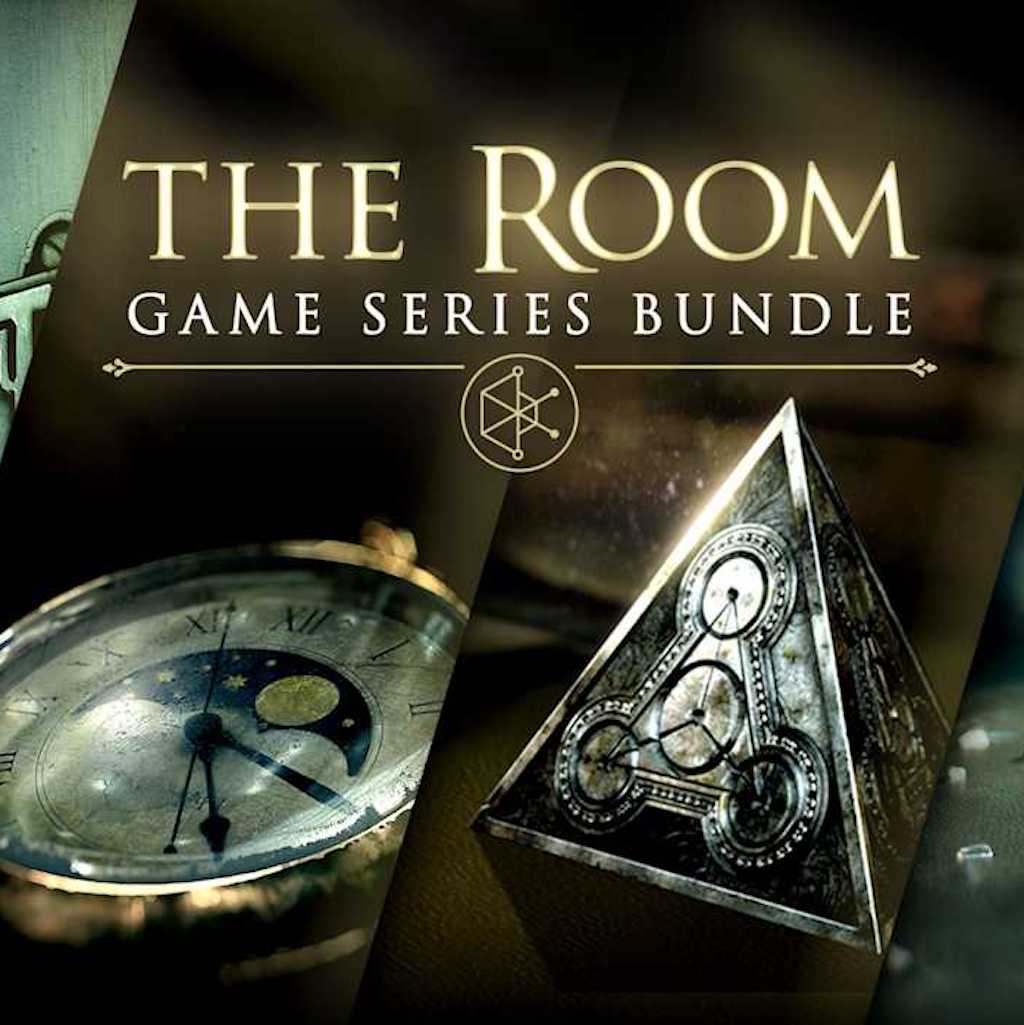
There are puzzle games, and then there are games that make you feel as though you have actually got your hands on the machinery. Fireproof Games’ The Room series has always firmly belonged to the latter category, turning locks, boxes, gears, hidden compartments and mysterious contraptions into the stars of the show. With The Room Bundle, Nintendo Switch players get all four mainline adventures in one package, offering an opportunity to experience the evolution of one of the most respected puzzle series in modern gaming, from its humble beginnings to its remarkably ambitious later chapters.
What makes this collection particularly appealing is that it does not simply throw four unrelated puzzle games into the same box. There is a clear progression running through the series, both mechanically and narratively. The original The Room begins with a single mysterious puzzle box and a sense of claustrophobic curiosity, while The Room Two expands that formula into more elaborate environments. The Room Three opens the world considerably further, and The Room 4: Old Sins brings everything together in one of the most impressive puzzle environments Fireproof Games has created. Played as a complete journey, it becomes surprisingly easy to appreciate how much the studio has refined its craft.
Where the Mystery Begins
The original The Room remains a remarkably effective introduction to the series because it initially gives you so little. You are presented with an elaborate box, a handful of clues, and the distinct feeling that far more is going on than meets the eye. There is no need for explosions, frantic action, or endless dialogue, because the box itself is enough to spark curiosity. Every hinge, dial, keyhole, and concealed panel feels placed there for a reason.
That simplicity is one of the game’s greatest strengths. You are encouraged to rotate the box, examine its surfaces, and experiment with anything that looks even remotely suspicious. Eventually, something clicks, a panel opens, and another layer of the mystery reveals itself. It is an incredibly satisfying process because the game makes you feel as though you have physically solved something rather than merely selecting the correct answer from a menu.
There is also a wonderfully unsettling atmosphere beneath the puzzle-solving. Strange letters begin to reveal a story of secrets, deception, and the mysterious Null element, but Fireproof Games wisely keeps the details just out of reach. The narrative never overwhelms the puzzles, instead providing just enough intrigue to make you want to keep opening another compartment.
The Room Two Opens the Door
The Room Two builds on the original, pulling it apart in fascinating ways. Rather than being confined primarily to a single puzzle box, the player is given larger spaces to explore and more elaborate mechanisms to understand. The mysterious scientist known as AS adds another layer to the story, while the puzzles become increasingly interconnected.
This is where you begin to see the series’ real potential. Objects no longer simply exist as isolated curiosities. One mechanism can reveal an item needed elsewhere, while a seemingly insignificant symbol can suddenly become important several minutes later. The games are very good at making you mentally catalogue what you have seen without turning the experience into a tedious checklist.
The atmosphere also becomes richer. The environments feel more substantial, the sound design becomes increasingly important, and the mysterious story starts to take on a darker character. There is always the impression that you are following a trail deliberately left behind by somebody who knows considerably more than you do.
The Room Two is also a good demonstration of Fireproof Games’ understanding of pacing. The puzzles are allowed to breathe, giving you time to examine things properly rather than constantly pushing you towards the next objective. That slower rhythm might not appeal to players accustomed to fast-paced adventures, but for puzzle fans it is precisely what makes the experience so absorbing.
The Series Finds Its Confidence
By the time you reach The Room Three, the series has developed considerably. The single puzzle box concept has evolved into an entire mysterious world, with the player exploring Grey Holm and navigating increasingly complex mechanisms. The mysterious Craftsman adds another layer of intrigue, while the environments themselves become part of the puzzle.
This is arguably where the collection demonstrates its greatest sense of progression. Fireproof Games does not simply make the puzzles harder. It makes the environments more interesting. You begin to move between different areas, examine objects from multiple perspectives, and use the supernatural eyepiece to uncover details that would otherwise remain hidden.
The eyepiece is particularly clever because it changes how you perceive the world. An ordinary-looking object can contain an entire mechanism within it, creating that wonderful moment when you realise the game has hidden a puzzle inside another puzzle. It is the sort of idea that sounds simple when described, yet becomes enormously satisfying when you discover it for yourself.
The Room Three also introduces multiple endings, giving the player another reason to revisit the experience. By this point, the series has moved a long way from the original puzzle box, but it has not forgotten the fundamental principle that made the first game so enjoyable. Look closely, experiment, think, and trust your instincts.
Old Sins and a Dollhouse Full of Secrets
The Room 4: Old Sins might be the most impressive demonstration of what Fireproof Games can do with this formula. The disappearance of an ambitious engineer and his wife leads you to an unusual dollhouse hidden in their attic, and naturally, it is not the sort of dollhouse you would find in an ordinary home.
The dollhouse becomes the centrepiece of the entire adventure, allowing you to explore a series of miniature environments packed with mechanisms, hidden passages and secrets. It is an inspired concept, giving the game an almost magical sense of scale. You are exploring a physical object and the much larger world contained within it.
There is a genuine sense of discovery every time another section of the dollhouse opens. Rooms transform, mechanisms reveal themselves, and previously inaccessible areas become available. It feels almost like being handed a strange antique toy that nobody else has been able to understand, only to gradually discover exactly how it works.
Old Sins also demonstrates how far the series has come. The original The Room was clever for its restraint, whereas Old Sins can throw far more elaborate ideas at the player without losing that same tactile quality. The result is a fitting culmination of the four mainline games.
The Joy of Touch
The Nintendo Switch version deserves particular attention because the hardware is a natural fit for The Room. Using the touchscreen to manipulate objects feels wonderfully intuitive, especially when rotating mechanisms or interacting with smaller components. There is something deeply satisfying about physically dragging a piece into position and watching the mechanism respond.
Joy-Con controls offer another option, and motion interaction can lend a pleasing physical quality to certain actions. Neither approach turns the game into an exercise in frantic movement, because that simply is not what The Room is about. Instead, the controls encourage you to slow down and examine the object in front of you.
This is important because tactile feedback is central to the series’ identity. Even though you are ultimately interacting with a screen, Fireproof Games does an exceptional job of making the mechanisms feel tangible. You can almost imagine the weight of a metal key, the resistance of a stubborn lever, or the satisfying movement of a gear as it finally falls into place.
Atmosphere That Gets Under Your Skin
The visual presentation across the collection remains impressive, particularly given that these games are fundamentally puzzle adventures rather than graphical showcases. Dark rooms, old wood, brass machinery and carefully positioned lighting create an atmosphere that is both beautiful and unsettling. The environments feel lived-in, even when there is nobody else around.
Sound plays an equally important role. The creak of machinery, the movement of mechanisms and the subtle musical accompaniment create a constant sense that something is happening just beyond your field of view. The series understands that silence can sometimes be more effective than noise, and it frequently allows the environment to speak for itself.
The overarching story remains deliberately mysterious throughout the collection. The Null element and the strange forces surrounding it provide a supernatural thread connecting the adventures, but Fireproof Games never feels compelled to explain every detail. Some players will appreciate that ambiguity, while others may want more concrete answers. For me, the uncertainty works because it leaves room for imagination and keeps the focus where it belongs, on the puzzles and the atmosphere.
Four Games, One Remarkable Journey
Playing The Room Bundle as a complete collection reveals one minor weakness. When you move directly from one game to the next, certain mechanical ideas and interaction patterns become familiar. You begin to recognise the language of Fireproof Games’ puzzles, and some of the surprises naturally lose their impact once you have encountered similar tricks elsewhere.
Yet there is something satisfying about watching those ideas evolve. What begins as a single elaborate box eventually becomes a series of interconnected environments and miniature worlds. The developers repeatedly take familiar concepts and present them in new ways, which prevents the collection from feeling like four identical games wearing different coats.
The real appeal is the sense of progression. You can see Fireproof Games learning what works, expanding its ambitions and growing increasingly confident in its environmental design. By the time you reach Old Sins, you can look back at the original and appreciate just how much the series has grown.
Final Verdict
The Room Bundle is an exceptional collection for anyone who enjoys puzzles, mystery and the simple pleasure of working things out for themselves. Across four full adventures, Fireproof Games demonstrates an impressive ability to turn ordinary objects into fascinating mechanical puzzles, while increasingly ambitious environments give the series a genuine sense of evolution.
The original The Room remains wonderfully focused. The Room Two expands the formula. The Room Three gives it greater scope, and The Room 4: Old Sins delivers a beautifully elaborate culmination. There are recurring mechanical ideas across the collection, and the deliberately cryptic supernatural storyline will not provide every answer some players might want, but neither issue seriously undermines the overall experience.
What makes the collection special is its confidence in the player. It does not constantly shout instructions at you or rush you towards the next objective. Instead, it places a strange object in front of you and essentially says, “Have a look. Work it out.” In an industry increasingly obsessed with spectacle, there is something wonderfully refreshing about a series that understands the satisfaction of simply opening a locked box.
The Room Bundle is more than four excellent puzzle games bundled together. It is a fascinating record of Fireproof Games refining an idea, expanding its scope and demonstrating just how atmospheric and immersive a puzzle adventure can become. On Nintendo Switch, the tactile controls make that experience feel even more natural, and whether you are a returning fan or discovering The Room for the first time, there is a tremendous amount here to lose yourself in.