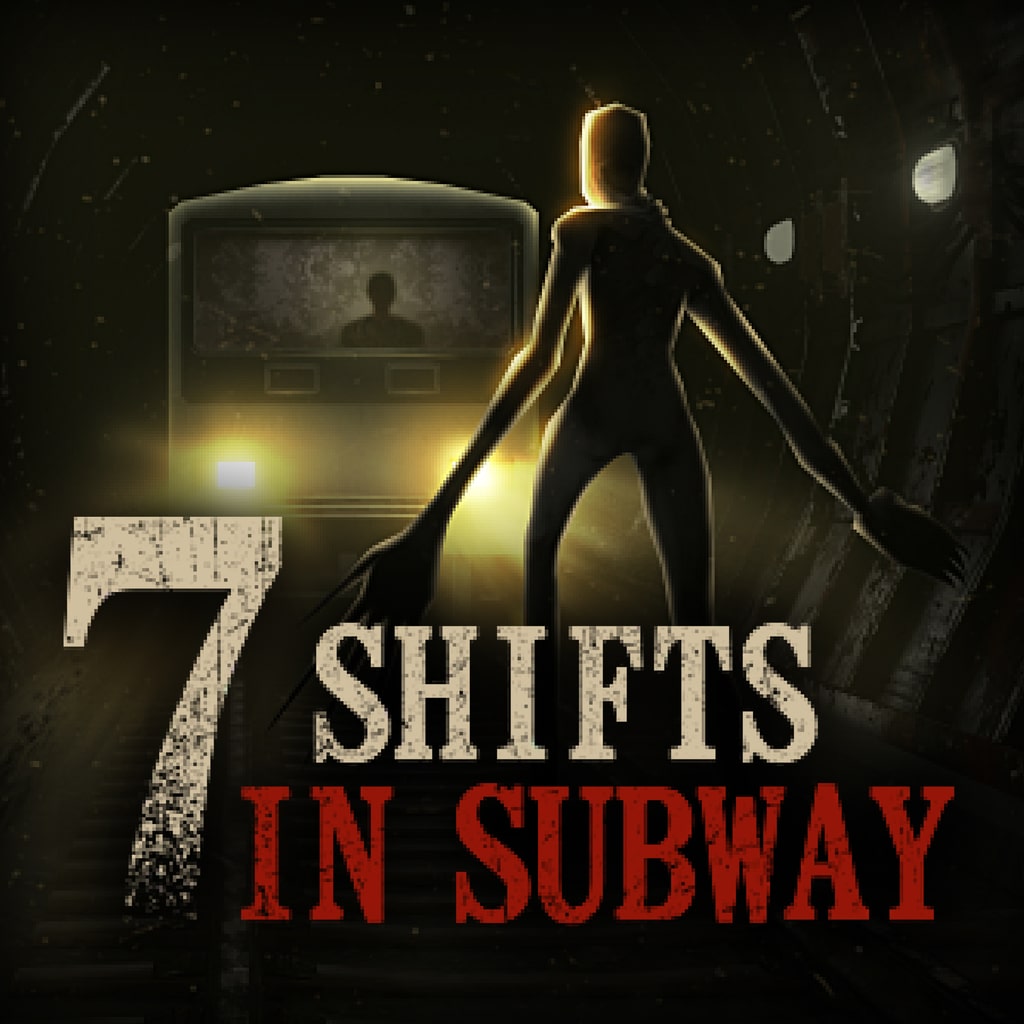
Psychological horror often thrives on the unknown. Some games throw grotesque monsters into your path from the outset, while others slowly tighten the screws until you start questioning every shadow and every sound. 7 Shifts in Subway firmly belongs to the latter category. Instead of handing you weapons or asking you to outrun terrifying creatures, it places you in one of the most ordinary jobs imaginable. You’re simply a night subway driver trying to complete your shift. Of course, nothing stays ordinary for long.
Developed by Own It Studio, this first-person horror experience transforms routine train operations into a slow-burning nightmare built around observation, memory, and anxiety. Every station feels familiar until something isn’t quite right. Every passenger appears normal until they aren’t. Before long, you’re no longer driving a train. You’re trying to survive a set of rules that seem to change with every passing shift.
It’s an intriguing premise that doesn’t rely on jump scares every few minutes. Instead, it builds tension through uncertainty, encouraging players to second-guess even the smallest details. While its relatively brief running time and repetitive structure prevent it from reaching the heights of the genre’s best, there’s enough atmosphere here to leave a lasting impression.
Gameplay
Unlike traditional horror games, movement isn’t the primary challenge. Your responsibilities centre on operating the subway correctly, stopping at stations, opening and closing the doors, monitoring passengers, and following increasingly unsettling protocols.
At first, everything feels almost mundane. The stations are quiet, passengers board without incident, and your job seems refreshingly straightforward. That illusion doesn’t last long. As the nights progress, strange abnormalities begin to creep into your routine. Someone who boarded moments ago suddenly seems… different. A passenger may be sitting where they shouldn’t be. Another might simply be staring a little too long.
The brilliance lies in how subtle many of these changes are. Rather than overwhelming you with monsters, the game poses a far more uncomfortable question. “Did you notice what just changed?” That simple idea becomes the backbone of the entire experience. Every decision suddenly carries weight because overlooking even a minor detail can prove fatal. Success depends less on reflexes and far more on concentration. You begin studying every carriage with increasing paranoia, searching for anything that feels even slightly out of place.
The gameplay loop remains fairly consistent across all seven shifts, but the escalating complexity keeps things engaging for most of the adventure. New rules appear, fresh anomalies emerge, and situations become increasingly unpredictable. What initially feels manageable gradually evolves into a stressful mental checklist that constantly challenges your awareness.
There is some inevitable repetition. After several shifts, the process of stopping, observing, and moving forward settles into a familiar rhythm. Thankfully, the growing tension helps disguise much of that repetition, since every new station carries the possibility of another unexpected surprise.
Atmosphere
If there’s one area where 7 Shifts in Subway excels, it’s atmosphere. Subway systems already possess an unsettling quality late at night. Long, empty platforms, flickering fluorescent lights, echoing tunnels, and distant mechanical noises naturally create unease. The developers understand this well and lean into those feelings without overcomplicating the presentation. Silence becomes one of the game’s strongest weapons.
There are extended moments when almost nothing happens, yet your nerves remain stretched because you’re constantly expecting something to go wrong. The sound of the train rolling through dark tunnels becomes strangely hypnotic, while the occasional announcement or metallic creak breaks that silence at exactly the right moment.
The lighting also deserves praise. Rather than bathing environments in complete darkness, the game relies on imperfect illumination. Dim carriage lights, partially lit platforms, and distant tunnel lamps create just enough visibility to make you question what you’re seeing. That uncertainty becomes the true source of fear. Rather than asking whether something terrifying is about to appear, the game repeatedly asks whether it was already there and you simply failed to notice. Few horror concepts are quite as effective.
Presentation
Visually, 7 Shifts in Subway favours realism over spectacle. The environments aren’t overloaded with graphical detail, yet they’re convincing enough to sustain the oppressive atmosphere. Train interiors feel authentic, stations possess distinct identities, and the restrained colour palette reinforces the bleak tone throughout.
Character models can occasionally appear stiff, which sometimes works in the game’s favour. When every passenger seems slightly unnatural, distinguishing between normal commuters and genuine threats becomes even more difficult.
Animations remain relatively simple but functional. Since much of the horror revolves around observation rather than action, smooth animation isn’t always essential. Small movements, lingering stares, or unexpected changes often prove more disturbing than elaborate cinematic sequences.
Performance remains stable for most of the experience. Given the contained environments and measured pacing, technical issues rarely interfere with immersion, allowing the carefully constructed tension to remain intact.
Horror Without Combat
One of the most refreshing aspects of 7 Shifts in Subway is its refusal to become an action game. Modern horror sometimes struggles with restraint. Developers often feel compelled to introduce combat or lengthy chase sequences to keep players engaged. Here, survival depends almost entirely on paying attention. There are no elaborate weapons to collect. No ammunition to conserve. No heroic last stands. Instead, you’re left alone with your own judgement.
That design philosophy makes every mistake feel personal. If something goes wrong, it’s rarely because the controls failed you. More often, it’s because you missed an important clue or forgot an essential rule. The resulting tension feels remarkably organic, rewarding careful observation rather than mechanical skill.
Players who enjoy anomaly-spotting games, escape-room puzzles, or psychological horror experiences built around environmental storytelling will likely appreciate this slower pace. Those expecting constant action may find the deliberate structure a little too restrained.
Replay Value
Although the campaign itself isn’t especially long, replayability comes from mastering its systems rather than discovering radically different content. Once you understand the game’s rules, subsequent playthroughs become opportunities to sharpen your awareness and minimise mistakes. There’s satisfaction in recognising anomalies that completely fooled you in earlier attempts.
That said, the experience inevitably loses some of its mystery after completion. Much of the horror depends on uncertainty, and familiarity naturally diminishes that effect. Fortunately, the oppressive atmosphere remains strong enough to make revisiting the subway worthwhile, even after the biggest surprises have been revealed.
Final Verdict
7 Shifts in Subway proves that horror doesn’t always require elaborate monsters or explosive set pieces. Sometimes all it takes is a quiet subway carriage, an uneasy silence, and the growing suspicion that someone three seats away isn’t quite human.
Its greatest strength is how effectively it weaponises routine. Performing simple tasks gradually becomes exhausting as paranoia seeps into every decision. Watching passengers, memorising strange rules, and questioning every tiny detail create a wonderfully uncomfortable experience that lingers long after the final station.
The repetitive gameplay loop and relatively short campaign prevent it from becoming an instant classic, but those shortcomings are outweighed by its superb atmosphere and genuinely clever psychological design. This is horror built on observation rather than violence, and it succeeds because of that confidence.
Fans of slow-burn psychological horror should absolutely keep this one on their radar. It may not be the longest journey, but it’s one you’ll remember every time you step onto a late-night train.