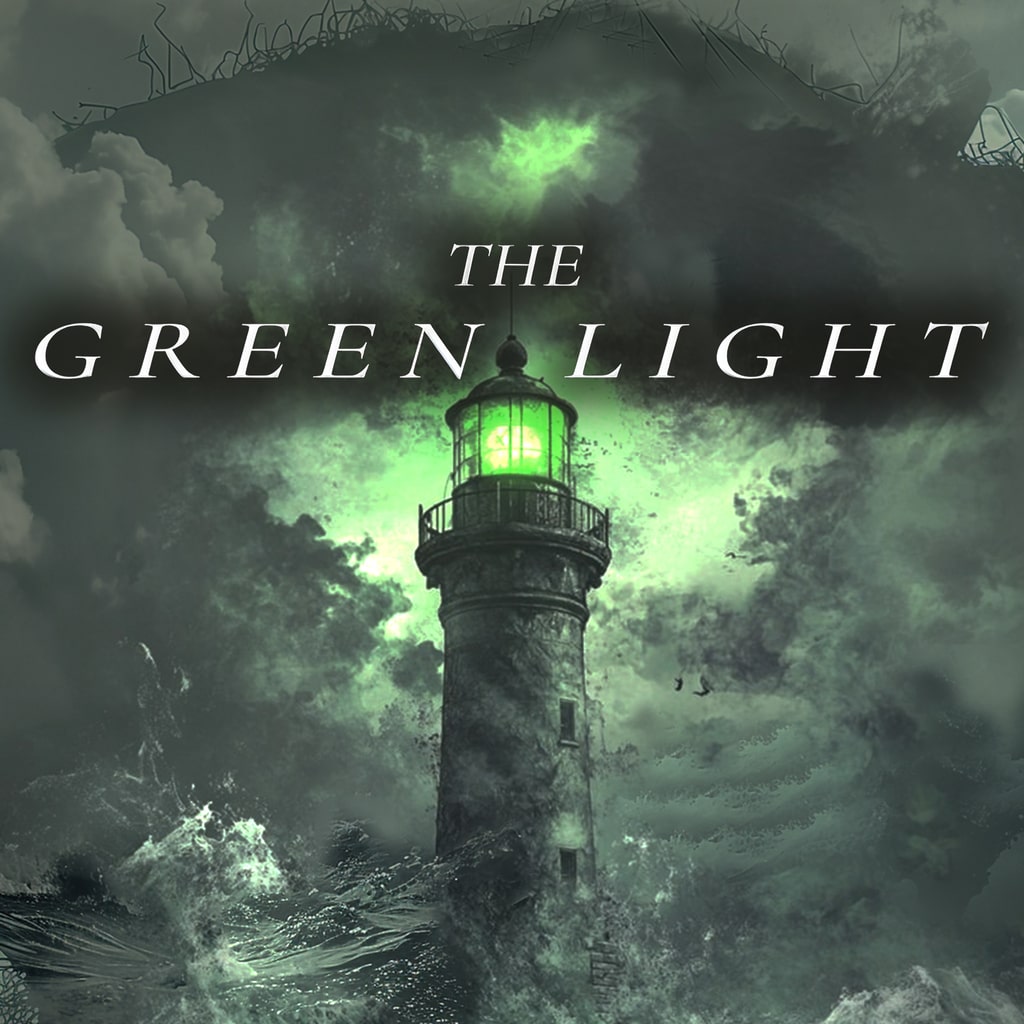
Psychological horror has become an increasingly crowded genre, with countless indie developers seeking to tell deeply personal stories through unsettling imagery and an oppressive atmosphere. Some lean heavily on jump scares, others on cryptic symbolism, while a select few focus on the quiet fears that linger long after the credits roll. The Green Light firmly belongs in that final category. It isn’t interested in startling you every few minutes. Instead, it wants to place you inside the exhausted mind of a man whose life has become an endless cycle of disappointment.
Fred isn’t a superhero, detective, or chosen saviour. He’s simply someone trapped in a job he despises, working late into another miserable night while questioning what any of it is for. When a mysterious voice crackles through his radio, promising freedom at a distant lighthouse, his ordinary existence begins to fracture. What follows is a short but surprisingly thoughtful psychological horror experience that explores burnout, hopelessness and the dangerous allure of escape.
With a runtime of less than an hour, The Green Light knows it cannot rely on scale. Instead, it places all its confidence in mood, pacing and storytelling. While it doesn’t always succeed, it delivers enough memorable moments to leave an impression once the journey comes to an end.
Gameplay
Mechanically, The Green Light is incredibly straightforward. Players explore environments from a first-person perspective, searching for pathways forward while solving a handful of simple environmental puzzles. Interaction is intentionally limited, keeping the narrative and atmosphere the central focus throughout.
The game rarely challenges you mechanically, which feels like a deliberate design choice. Rather than creating tension through difficult puzzles or hostile enemies, the developers build unease through uncertainty. Every corridor feels slightly off. Every room seems familiar yet somehow distorted. Even something as ordinary as flickering lights or an empty office begins to feel threatening once the game’s atmosphere settles in.
Progression follows a linear path, guiding Fred towards the mysterious lighthouse as the world slowly becomes increasingly surreal. Hallucinations blend seamlessly into reality, making it difficult to tell whether what you’re seeing is truly happening or exists only within Fred’s deteriorating mental state.
Although the puzzles never become particularly inventive, they rarely interrupt the pacing. Instead, they provide just enough interaction to prevent the experience from feeling like a passive walking simulator. The result is a game that remains engaging despite its simplicity.
Atmosphere and Horror
This is where The Green Light shines brightest. The horror isn’t built around monsters chasing you through corridors or elaborate set pieces. Instead, it grows from loneliness and emotional exhaustion. The quiet stretches are often far more unsettling than the louder moments, leaving room for your imagination to fill the gaps.
The mysterious radio broadcasts become one of the game’s strongest storytelling tools. The voice offering salvation feels comforting at first, almost reassuring. Gradually, however, its intentions become less certain. Is it genuinely trying to help Fred, or simply exploiting someone desperate enough to listen?
The environments reinforce these questions beautifully. Offices, empty roads, industrial spaces and dark forests feel grounded enough to be believable before subtle visual distortions begin creeping into view. Objects appear where they shouldn’t. Shadows linger longer than expected. Familiar locations slowly become alien without ever abandoning realism entirely.
Sound design deserves particular praise. Rather than overwhelming players with loud musical cues, the audio remains restrained for much of the experience. Ambient noises, distant echoes and uncomfortable silence combine to create a lingering sense of unease that proves remarkably effective. When the soundtrack finally emerges, it does so sparingly, giving emotional scenes considerably more impact than constant background music ever could.
Story
At its heart, The Green Light is less about horror than about mental exhaustion. Fred represents countless people trapped in routines that slowly consume them. His frustrations with work, his resentment towards authority and his desperate search for something better immediately make him a relatable protagonist. The supernatural elements enhance these themes rather than replace them.
The lighthouse itself becomes an intriguing symbol throughout the adventure. Depending on how players interpret the narrative, it can represent hope, escape, acceptance or something considerably darker. The game wisely avoids spelling everything out, allowing players to reach their own conclusions rather than providing easy answers.
That ambiguity works in the story’s favour. While some players may prefer clearer explanations, psychological horror often thrives when uncertainty remains. The lingering questions stay with you far longer than explicit exposition would.
Considering its brief runtime, the narrative accomplishes far more than expected. Character development is subtle yet effective, and Fred’s emotional journey remains believable throughout.
Visual Presentation
Visually, The Green Light embraces simplicity. Rather than chasing photorealism, it focuses on creating believable environments that support its oppressive mood. Lighting plays a particularly important role, with darkness used carefully rather than simply hiding everything from view.
The gradual introduction of visual distortions proves especially effective. Hallucinations don’t immediately announce themselves with dramatic effects. Instead, small environmental inconsistencies slowly accumulate until players begin to question everything they see.
Performance remains stable throughout, which is particularly important for a horror game dependent on immersion. Technical issues would have broken much of the carefully crafted tension, but thankfully they rarely become an issue.
Some environmental textures appear fairly basic, and certain areas could benefit from additional visual detail. However, these shortcomings are easier to forgive given the game’s independent scope and relatively modest ambitions.
Audio
If visuals establish the atmosphere, audio completes it. The radio transmissions immediately capture attention, delivering performances that balance reassurance with quiet menace. Fred himself feels believable as an exhausted protagonist whose emotional state gradually deteriorates throughout the experience.
Ambient sound is arguably the true star here. Empty rooms never feel completely silent. Wind, distant machinery, subtle echoes and environmental creaks constantly remind you that something feels wrong, even when nothing visibly threatens you.
The soundtrack remains understated throughout most of the game, opting for carefully chosen emotional moments rather than overwhelming every scene with music. That restraint ultimately strengthens the overall experience.
Replay Value
Given its short length, replay value is naturally limited. Most players will experience everything the game has to offer in a single sitting. There are interesting narrative details worth revisiting once you grasp the story’s broader themes, but this isn’t the kind of horror game built around multiple endings or hidden gameplay systems.
Instead, its value lies in delivering a focused psychological experience that respects players’ time. Not every horror game needs to last ten hours. Sometimes a concise, well-paced journey proves far more memorable.
Final Verdict
The Green Light won’t appeal to players seeking constant action or elaborate survival-horror mechanics. It deliberately favours atmosphere over adrenaline, introspection over spectacle, and psychological discomfort over traditional scares. Those willing to embrace its slower pace will find a surprisingly thoughtful exploration of burnout, loneliness, and the dangerous temptation to believe there’s an easy escape from life’s disappointments.
Its simple gameplay occasionally limits player engagement, and some environmental interactions could have been developed further. Yet those shortcomings rarely overshadow what the game does exceptionally well. The atmosphere remains consistently oppressive, the sound design is remarkably effective, and Fred’s personal story resonates because it feels painfully human.
This is a horror game that whispers rather than screams. It trusts players to sit with uncomfortable emotions rather than distracting them with endless shocks. That confidence makes The Green Light stand out among many short indie horror experiences, even if it never fully reaches the heights its premise promises.