There is something deeply unsettling about an empty corridor. Add a flickering light, a strange noise in the distance, and the faint suggestion that somebody was here long before you arrived, and suddenly walking from one room to another becomes an act of courage. BLACKSHARD understands this beautifully. It takes the familiar language of first-person exploration and drops it into a gigantic, impossible structure where every corridor feels like it leads somewhere important, even when you have absolutely no idea where that somewhere might be.
The Labyrinth is not simply the setting for BLACKSHARD. It is the game. It is the mystery, the puzzle, the threat, and, in many ways, the character you spend the entire experience trying to understand. This is a place built around order, causality, and something far more abstract than simple physical danger. The further you travel into its cold architecture, the more you begin to question whether you are exploring the Labyrinth or whether the Labyrinth is exploring you.
BLACKSHARD is not interested in holding your hand. There are no convenient markers constantly telling you where to go, no friendly voice explaining every strange object you discover, and no neatly packaged answers waiting at the end of each corridor. Instead, you are given a strange world, a handful of clues, and the freedom to make sense of it yourself. For anyone who enjoys games that trust the player to think, observe, and occasionally get completely lost, that is an extremely appealing proposition.
A World That Should Not Exist
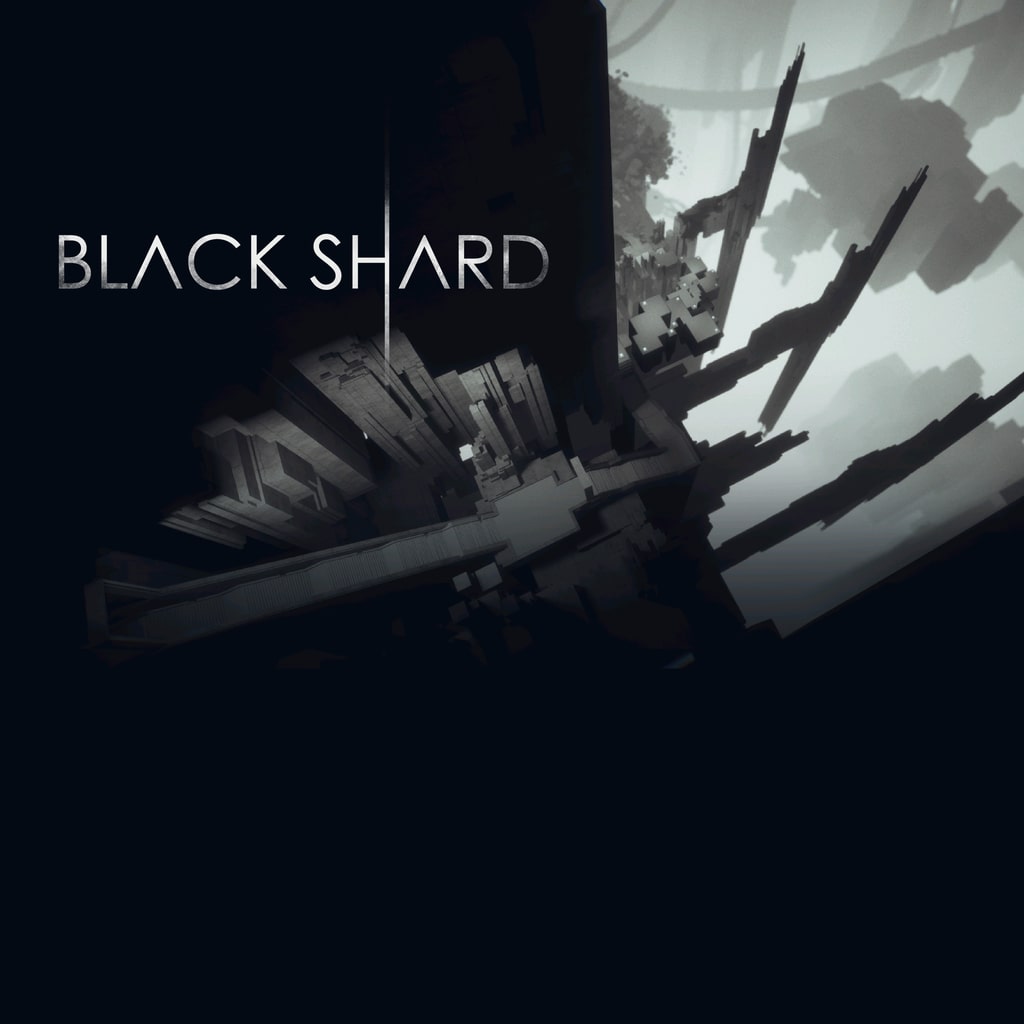
The first thing that grabs you about BLACKSHARD is its architecture. The Labyrinth is an enormous, surreal megastructure filled with corridors, chambers and spaces that seem to obey their own rules. It has an almost clinical sterility, yet something ancient hides beneath that cold exterior. The contrast between the clean, ordered surfaces and the strange things that occupy them creates an atmosphere that is difficult to shake.
This is a world that feels both enormous and claustrophobic. You can stand in a gigantic chamber and feel completely insignificant, then turn a corner into a narrow passage and suddenly feel as though the walls are closing in around you. The scale constantly plays tricks on your perception, making the Labyrinth feel less like a building and more like an impossible machine whose purpose was never meant to be understood by human beings.
The visual design also benefits from knowing when to hold back. BLACKSHARD does not need to throw monsters at you every five minutes to make its environments unsettling. Sometimes a seemingly ordinary room is more disturbing precisely because nothing is happening. You start looking for patterns, changes in the architecture and little details that might explain where you are, and before long you realise you are paying attention to things you would normally walk straight past.
Getting Lost Is The Point
There is a particular pleasure in playing a game that refuses to give you a map marker. Modern games are very good at ensuring players never get lost, but BLACKSHARD goes in the opposite direction. Here, getting lost is not a design failure. It is part of the experience.
The semi-open structure gives you room to explore and make your own decisions about where to go next. You might discover a corridor that seems insignificant and spend the next twenty minutes wondering where it leads, only to stumble across something that completely changes how you understand the surrounding area. Alternatively, you might walk past something without recognising its significance until much later, when another discovery suddenly makes that earlier moment click into place.
That freedom creates a lovely sense of ownership over the journey. You are not simply following a predetermined route through a series of rooms. You are constructing your own understanding of the Labyrinth, and that makes every discovery feel personal. When a game trusts you enough to let you be confused, there is a strange satisfaction in eventually finding your own way through that confusion.
Memories Of Those Who Came Before
Scattered throughout the Labyrinth are shards of memory belonging to those who came before you. These fragments offer pieces of a much larger story, but BLACKSHARD wisely avoids dumping everything into your lap. You have to assemble the bigger picture yourself, which means some players will probably come away with very different interpretations of what they have experienced.
There is something wonderfully old-fashioned about this approach to storytelling. Rather than constantly interrupting exploration with lengthy exposition, the game lets the environment and its fragments do the talking. A strange object, a distant voice or a fragment of memory can be more effective than a ten-minute cinematic because your imagination fills in the gaps.
Of course, this approach will not work for everyone. BLACKSHARD is deliberately cryptic, and there will be moments when you are staring at something important without the slightest idea what it means. There is a fine line between mysterious and opaque, and the game occasionally wanders across it. Personally, I found that uncertainty part of the attraction, because the unanswered questions kept the Labyrinth in my thoughts even after I had stopped playing.
The Labyrinth Changes With You
One of the more intriguing ideas is that your behaviour actually influences the world around you. BLACKSHARD is not simply asking you to walk through the Labyrinth and uncover its secrets. It wants your actions to matter, with your choices helping to determine the eventual outcome of your journey.
The possibility of transforming the Labyrinth through strange powers adds another layer to exploration. You can accept the order imposed upon this place or attempt to challenge it, and that philosophical choice is reflected in the way you interact with the environment. It creates the feeling that the Labyrinth is not an entirely fixed location, but something that can respond to the person moving through it.
There is a particularly nice tension between preserving the Labyrinth’s cold complexity and attempting to alter it. One path represents acceptance, while the other represents resistance, and neither feels like an obviously correct answer. The game is at its most interesting when it leaves you wondering whether you are genuinely making the Labyrinth better or simply breaking something you were never supposed to touch.
A Soundtrack For The Unknown
Sound is crucial in a game like this, because silence can be as effective as music. BLACKSHARD understands that empty spaces need room to breathe, and the sound design often creates an unsettling sense of isolation. Distant noises, subtle environmental effects and carefully placed audio details make the Labyrinth feel considerably larger than what you can see.
Headphones are particularly effective here. There is something wonderfully unnerving about hearing a sound behind you when you know there is absolutely no reason for anyone else to be there. The game uses audio to make you question the environment rather than simply decorating it, adding another layer of uncertainty to exploration.
The result is an experience that can feel strangely meditative one moment and deeply uncomfortable the next. BLACKSHARD does not constantly scream for your attention. Instead, it whispers, and sometimes a whisper is much more effective.
You Were Not Made For This
That line from the game’s description feels increasingly apt the deeper you travel. BLACKSHARD repeatedly suggests that the Labyrinth was never designed for someone like you, and perhaps that is the point. Its corridors feel too precise, its systems too ancient, and its logic too alien.
The game’s greatest strength is its confidence. It knows that some players will hate being lost, dislike cryptic storytelling, and want clearer direction, but it does not compromise its identity to accommodate them. BLACKSHARD is built around uncertainty, curiosity, and interpretation, and those qualities are woven into nearly every aspect of the experience.
There are moments when the lack of explanation can be frustrating, and the deliberate pacing will not appeal to anyone seeking constant action. This is not a game about clearing rooms or chasing high scores. It is about walking somewhere strange, noticing something that does not make sense, and deciding whether you are brave enough to keep going.
A Journey That Stays With You
What I appreciate most about BLACKSHARD is that it does not feel disposable. There are plenty of games you finish, put down and immediately forget. BLACKSHARD has the opposite effect. Its unanswered questions and strange environments linger, prompting you to replay moments in your head and wonder whether you missed something.
That is the real power of a good mystery. The answer is not necessarily as important as the desire to discover it. BLACKSHARD understands this, and while its storytelling can occasionally become too cryptic for its own good, the atmosphere is strong enough to keep pulling you forward.
There is also something refreshing about an exploration game that does not constantly reward you with upgrades, collectibles and artificial progress indicators. Sometimes the reward is simply finding somewhere you have never seen before. Sometimes it is understanding a tiny piece of the story. Sometimes it is standing in a huge, silent chamber and realising that you have absolutely no idea what is going on.
Final Verdict
BLACKSHARD is a strange game, and I mean that as a compliment. It is atmospheric, mysterious and confident enough to let the player become genuinely lost in its enormous Labyrinth. The architecture is striking, the sound design evokes a wonderful sense of isolation, and the decision to let players influence the world gives exploration a purpose beyond simply reaching the next room.
Its biggest weakness is also one of its defining characteristics. The cryptic storytelling and refusal to provide clear guidance will inevitably frustrate some players, particularly those who prefer their mysteries to come with explanations. There are moments when BLACKSHARD seems almost determined to leave you scratching your head, but for me that uncertainty is part of what makes the experience memorable.
This is not a game you play while half watching television or casually checking your phone. BLACKSHARD demands attention, patience and a willingness to accept that you may not understand everything immediately. In return, it offers something increasingly rare: a world that feels genuinely mysterious.
The Labyrinth is cold, sterile and intimidating, but it is also fascinating. Every corridor feels as if it might contain an answer, every strange figure seems to have a story, and every decision carries the possibility of changing what comes next. BLACKSHARD may not tell you what to think, but it gives you plenty to think about.