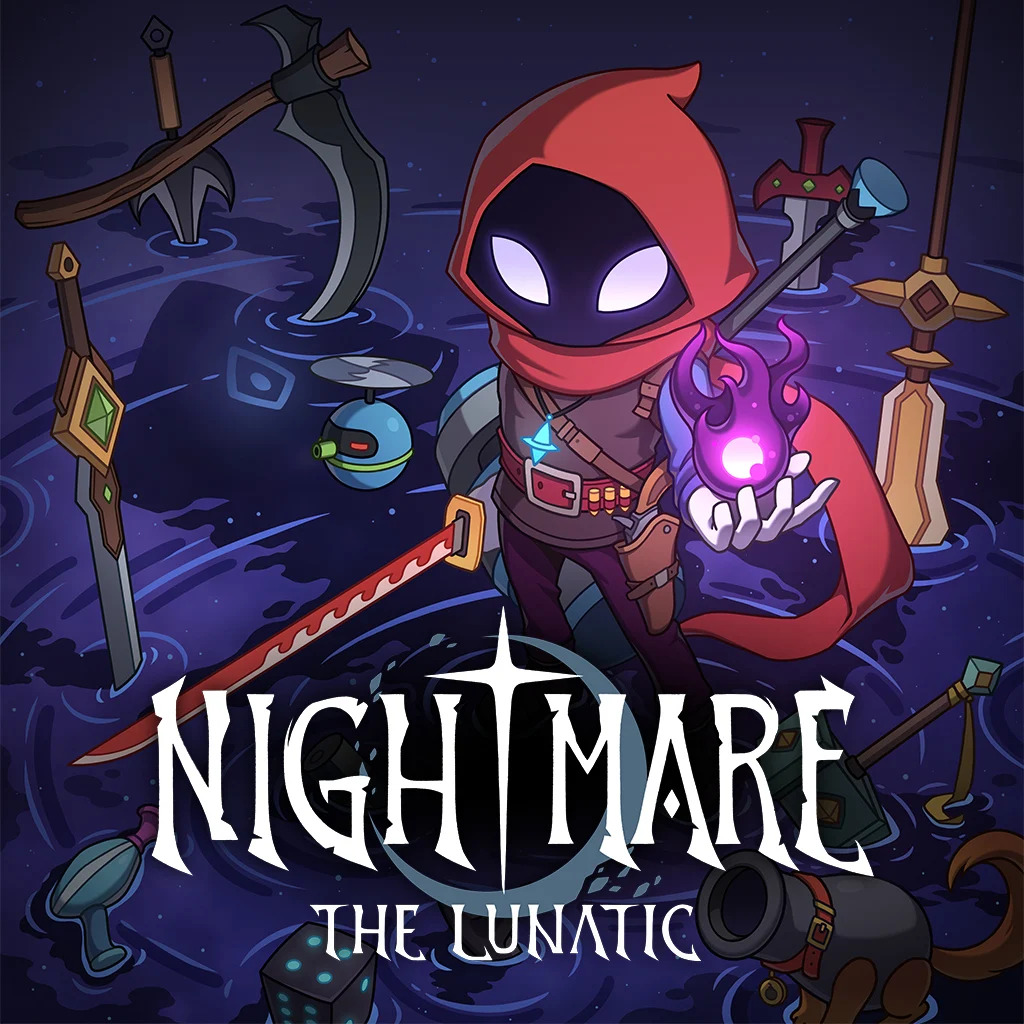
Some games aim to unsettle you with cheap jumpscares. Nightmare: The Lunatic has something different in mind. It wants to crawl under your skin, linger in the recesses of your imagination, and make every decision feel like the thread holding your sanity together might snap at any moment. This is psychological horror delivered through precision, tension, and surreal storytelling rather than loud jolts and predictable beats.
In Nightmare: The Lunatic, reality is a fragile concept. You play as a trapped dreamer navigating a shifting nightmare realm where logic dissolves, environments twist on a whim, and the rules of survival are as unstable as the creatures hunting you. What begins as a simple escape scenario slowly unravels into a story about identity, trauma, memory, and the fragility of perception.
This isn’t a horror game content to simply scare you—it wants to disturb you. And in that pursuit, it succeeds.
A World That Feels Alive in All the Wrong Ways
The standout feature of Nightmare: The Lunatic is its world design. The environments are oppressive, labyrinthine, and uncannily alive, constantly challenging your expectations. One corridor may stretch infinitely while another loops back to where you started. Rooms morph when you’re not looking. Familiar shapes appear distorted, like memories misremembered or dreams falling apart.
Lighting plays a huge role. Soft pools of colour illuminate just enough to make you wonder what hides in the darker corners. Flickering fluorescent tubes reveal glimpses of movement, shadows that don’t match your own, and shapes that dissolve when you focus on them. The world is built to make you doubt yourself, and that psychological erosion is exactly what gives it power.
This is not a game where the environment supports the horror—the environment is the horror.
Gameplay Built on Tension and Uncertainty
While the narrative leans into surrealism, the gameplay is surprisingly structured. At its core, Nightmare: The Lunatic is a hybrid of stealth, exploration, and puzzle-solving wrapped in a persistent sense of dread.
The stealth mechanics are simple but brutally effective. Monsters patrol in patterns that appear predictable until they aren’t, and noise management becomes essential. Running is rarely an option unless you’re prepared to gamble with your life. More often, survival is about patience—waiting for an opening, squeezing through narrow passages, reading enemy behaviour, and trusting your instincts when logic feels unreliable.
The puzzles follow a similar philosophy. They’re rarely complicated in a traditional sense, but require you to parse the distorted logic of the nightmare world. Clues hide in visual distortions, whispered audio cues, and environmental storytelling. When solutions click, they feel earned, not handed to you.
There’s a constant push-pull between exploration and self-preservation. You want to know what’s behind the next door, but you also know that curiosity is often punished. The game weaponises that tension, and it’s one of the reasons Nightmare: The Lunatic feels more psychologically intense than many modern horror titles.
Monsters That Reflect the Nightmare
Enemy design is superb—grotesque, thematic, and deeply symbolic. They don’t simply exist to kill you; they represent fears, memories, and fragments of the protagonist’s shattered psyche.
Some stalk with slow, deliberate steps. Others skitter unpredictably, appearing in peripheral vision before dissolving into the dark. A few manifest only when your sanity falters, creating escalation that feels organic rather than scripted.
What makes them terrifying isn’t just their design—it’s their presence. You often hear them before you see them. Breathing. Scraping. Muttering. Footsteps in hallways that should be empty. Their behaviour patterns evolve across the game, forcing you to adapt rather than rely on rote strategy.
The result is an enemy ecosystem that feels alive, dangerous, and oppressive.
A Story Told Through Fragmented Perspective
Narratively, Nightmare: The Lunatic embraces fragmentation. There are no long cutscenes, no expository monologues, no clear chronological structure. Instead, story pieces are discovered through exploration—photographs, scribbled notes, distorted voice recordings, half-remembered visions. It’s a game that trusts the player to put the pieces together, and the reward is a deeply personal interpretation.
Thematically, it grapples with mental decay, guilt, and unresolved trauma without glamorising any of them. It’s subtle enough to avoid being heavy-handed, but strong enough to give emotional weight to your journey. When the truth starts emerging, it hits harder because you earned it.
Some players may wish for more concrete answers, but the ambiguity is precisely what gives the game its lingering power.
Visual and Audio Craftsmanship
Stylistically, Nightmare: The Lunatic mixes gritty realism with dreamlike distortion. Textures warp, walls breathe, and shadows stretch impossibly long. The visual language feels intentional rather than random, mirroring the protagonist’s psychological unraveling.
The sound design, however, is where the game truly excels. It uses audio as a weapon—twisting ambience, unsettling whispers, distant screams, heartbeat-like pulses. The soundtrack appears when you least expect it, sometimes swelling to uncomfortable volume, other times fading into near-silence that’s even more unnerving.
Playing with headphones transforms the experience into something uncomfortably intimate.
Pacing That Balances Quiet Horror with Sudden Terror
Unlike many horror games that rely on constant pressure, Nightmare: The Lunatic understands the power of contrast. Long stretches of quiet exploration give way to sudden spikes of panic. The pacing is deliberate, and when the game wants your pulse to spike, it succeeds spectacularly.
Some sequences are masterful—moments where the rules appear to change, the environment shifts violently, or enemies behave unpredictably. These are sequences players will talk about long after finishing the game.
A Few Rough Patches
While the experience is overwhelmingly strong, several issues stand out:
- Some stealth sequences feel overly trial-and-error.
- A few puzzles rely too heavily on environmental searching.
- Occasional frame dips during intense visual distortion.
- The abstract storytelling may alienate players seeking narrative clarity.
These flaws are noticeable, but they don’t undermine the broader experience.
Verdict
Nightmare: The Lunatic is a bold, atmospheric, and psychologically disturbing horror experience that understands fear not as shock, but as erosion. It gnaws at your nerves, pulls you into its dream-logic world, and leaves you questioning what you saw, what you imagined, and what you brought into the nightmare yourself.
It’s visually haunting, mechanically tense, narratively compelling, and crafted with a level of audio detail that borders on unsettling brilliance.
For horror fans—especially those who prefer psychological terror over action-heavy encounters—this is one of the standout releases of the year.