Platform 6 ONLINE is a game that understands the quiet terror of waiting. Drawing inspiration from liminal horror, surveillance anxiety, and the uncanny stillness of public spaces after hours, it places players inside an online-enabled environment that feels simultaneously communal and deeply isolating. Rather than relying on overt scares or mechanical complexity, Platform 6 ONLINE builds its horror through atmosphere, repetition, and the unsettling awareness that you are not entirely alone — even when nothing seems to be happening.
It is an experience rooted in restraint, and while that focus gives it a distinctive identity, it also limits its longevity and broader appeal.
A Familiar Space Made Uncomfortable
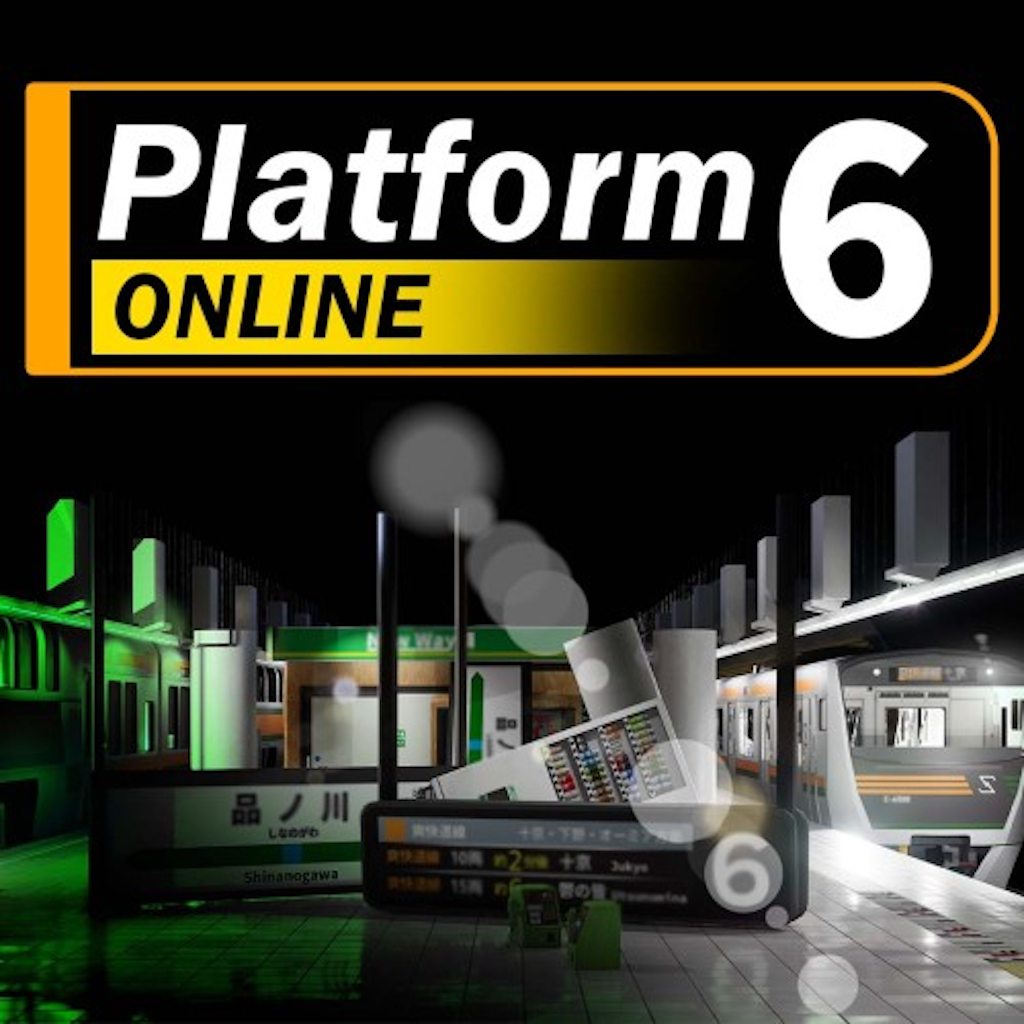
The setting of Platform 6 ONLINE is deceptively mundane. A train platform, rendered with stark lighting and minimal detail, becomes the central stage for the game’s slow-burning horror. There is no grand narrative introduction, no dramatic inciting incident. Instead, the game drops players into routine — waiting, observing, and listening.
What elevates this setting is the online component. Other players exist within the same space, moving independently, sometimes interacting, often remaining silent. Their presence transforms the environment into something unpredictable. A figure standing too still, a movement in the distance, or a player behaving oddly can feel far more unsettling than any scripted scare.
Platform 6 ONLINE uses familiarity as its foundation. Train platforms are spaces most players recognise, which makes the subtle distortions and irregularities stand out sharply. The horror emerges not from what the platform is, but from how it behaves differently than expected.
Core Gameplay: Observation Over Action
Gameplay in Platform 6 ONLINE is intentionally minimal. There are no weapons, no complex puzzles, and no traditional objectives clearly laid out. Instead, players are encouraged to observe their surroundings, notice changes, and respond — sometimes — to events that may or may not be real.
Interaction is limited to movement, basic environmental engagement, and occasional context-sensitive actions. This lack of mechanical depth is deliberate. Platform 6 ONLINE wants players focused on perception rather than problem-solving. The act of noticing becomes the primary mechanic.
This design works particularly well in short sessions. The tension comes from uncertainty: is something wrong, or are you imagining it? Did that flicker of light mean something, or was it network latency? The online element blurs the line between intentional design and emergent behaviour, reinforcing paranoia.
However, this same simplicity becomes a limitation over time. Once players understand the types of anomalies to expect, the experience shifts from unsettling to procedural. Without mechanical escalation or meaningful variation, engagement depends heavily on player imagination and social unpredictability.
The Online Element: Strength and Liability
Platform 6 ONLINE’s defining feature is also its most inconsistent. Other players add unpredictability, but not always tension. In the best moments, silent co-presence creates a shared unease, where every movement feels loaded with implication. In weaker moments, player behaviour breaks immersion — excessive movement, deliberate trolling, or obvious testing of boundaries can undermine atmosphere.
The game does little to control or contextualise player interaction. Communication is limited, which helps maintain tension, but there are no systems to meaningfully integrate players into the narrative or mechanics. As a result, the online component feels more like an atmospheric modifier than a fully realised system.
When player behaviour aligns with the game’s tone, Platform 6 ONLINE is genuinely unsettling. When it does not, the illusion fractures quickly.
Atmosphere and Environmental Storytelling
Atmosphere is where Platform 6 ONLINE excels. Visual design is sparse but deliberate. Lighting is harsh and unnatural, shadows linger longer than expected, and small environmental changes create a persistent sense of unease. The platform feels frozen in time, disconnected from the world beyond it.
Environmental storytelling is subtle. Clues are implied through placement rather than explanation. Signs, sounds, and visual irregularities suggest something is wrong, but never confirm it outright. This ambiguity is key to the experience, allowing players to project meaning onto what they see.
Sound design is particularly effective. Ambient noise dominates, punctuated by distant echoes, mechanical hums, and occasional unexplained sounds. Silence is used as a weapon, forcing players to sit with discomfort rather than distracting them with constant audio cues. The absence of a traditional soundtrack reinforces the sense of isolation.
Pacing and Repetition
Platform 6 ONLINE operates at a deliberately slow pace. Time stretches, events are infrequent, and progress — if it can be called that — is abstract. This pacing supports tension in short bursts but becomes challenging to sustain across longer sessions.
Repetition is both thematic and mechanical. The platform rarely changes dramatically, and players often find themselves revisiting the same spaces repeatedly. While this reinforces the feeling of being trapped in a loop, it also accelerates familiarity, reducing fear over time.
There are moments of escalation, but they are subtle and infrequent. Players looking for clear progression or climactic payoffs may find the experience unsatisfying.
Visual and Technical Presentation
Visually, Platform 6 ONLINE is minimalistic rather than impressive. Textures are functional, animations are restrained, and environmental detail is intentionally limited. This supports the game’s tone, but it also exposes its technical simplicity.
Performance is generally stable, though the online component introduces occasional latency or desynchronisation. Interestingly, these technical imperfections sometimes enhance the horror, making it difficult to distinguish between intentional distortion and genuine network issues. At other times, they simply disrupt immersion.
The interface is unobtrusive, offering little information beyond what is strictly necessary. This reinforces immersion but provides limited accessibility options for players sensitive to visual or auditory intensity.
Audience Fit and Longevity
Platform 6 ONLINE is not a game designed for broad appeal. Its reliance on atmosphere, ambiguity, and minimal interaction makes it best suited to players who enjoy liminal horror, slow-burn tension, and experimental design.
Longevity is limited. Once the atmosphere has been absorbed and the types of anomalies understood, there is little to draw players back consistently. Replay value relies heavily on the unpredictability of other players, which is inherently inconsistent.
Final Verdict
Platform 6 ONLINE is a thoughtful, unsettling experiment in shared-space horror. It transforms a mundane environment into a site of quiet dread, using minimal mechanics and online presence to create moments of genuine unease. When everything aligns — player behaviour, sound design, and environmental cues — it delivers an experience that feels uniquely modern and deeply uncomfortable.
However, its narrow scope, limited mechanical evolution, and reliance on external factors prevent it from sustaining tension over time. Platform 6 ONLINE is best experienced in short, focused sessions, where its atmosphere can shine without being undermined by repetition.
An effective and intriguing liminal horror experience that excels in atmosphere and concept, but whose limited depth and inconsistent online element hold it back from lasting impact.