There is something wonderfully old-fashioned about a good detective story. Give me a murder, a handful of suspicious characters, a locked room and a collection of seemingly insignificant clues, and I am usually quite happy to settle in for the evening. Murders on the Yangtze River understands that appeal beautifully, but rather than dressing its mysteries in the familiar surroundings of Victorian London or modern-day America, OMEGAMES STUDIO takes us somewhere considerably less explored. This is a journey through China during one of the most fascinating periods in its history, when ancient traditions, emerging technology and foreign influence were colliding in increasingly complex ways.
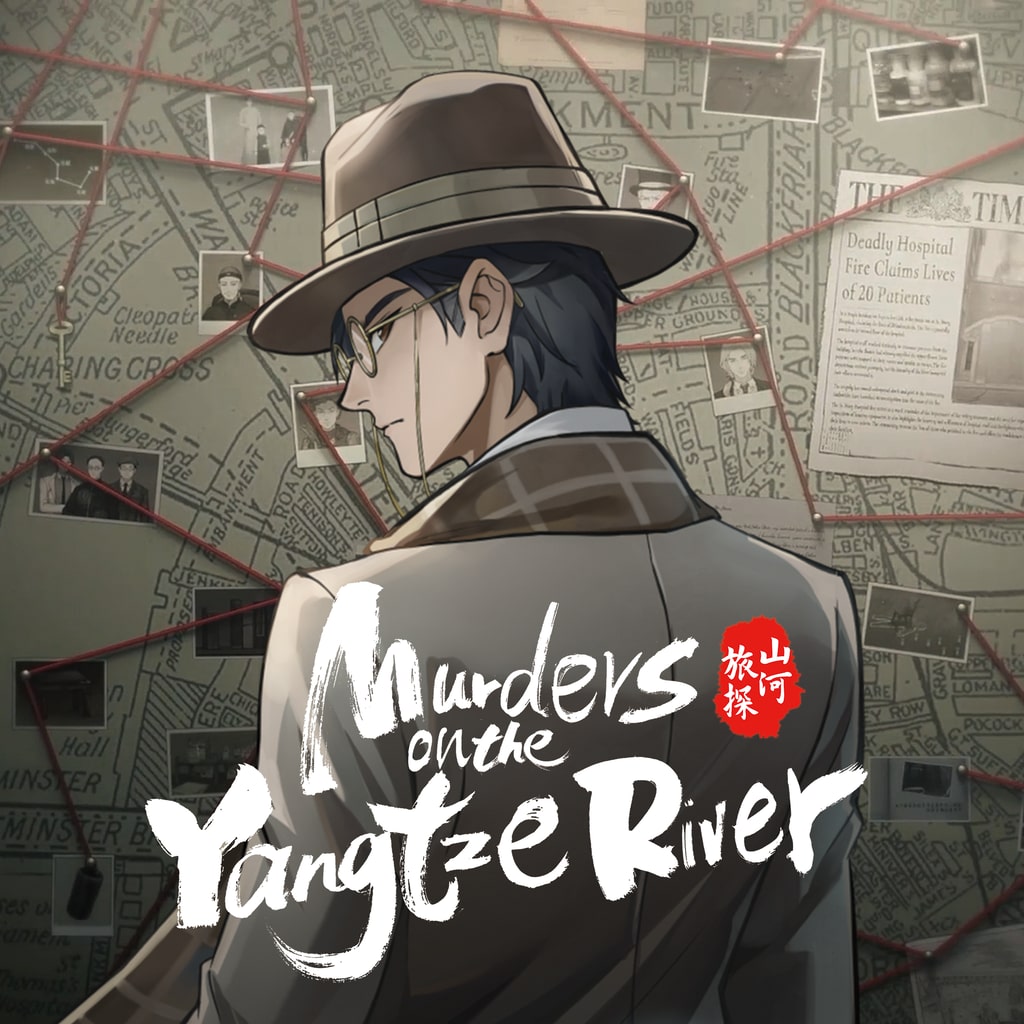
The result is a side-scrolling detective adventure that combines traditional investigation with courtroom-style confrontations, logical deduction and a surprisingly rich historical setting. You take on the role of John Shen, a refined investigator travelling along the Yangtze River with his inventive assistant Frankie. What begins as a series of individual murder cases gradually develops into something much larger, with connections leading back to Shen’s own past and the mysterious death of his brother.
That central mystery gives the adventure a strong sense of purpose, but it is the individual cases that make the journey so enjoyable. Every victim has a story, every suspect has something to hide, and almost every seemingly harmless conversation has the potential to become important later. Murders on the Yangtze River asks you to pay attention, and when you finally spot the connection that has been sitting in front of you all along, there is a wonderfully satisfying little spark of achievement.
A Detective Story With A Difference
At its heart, Murders on the Yangtze River is about observation. There are no glowing objects constantly screaming for your attention, nor does the game expect you to simply wander around until the correct answer magically presents itself. Instead, you are encouraged to explore crime scenes properly, examine your surroundings and listen carefully to what people tell you.
That last point becomes particularly important during interrogations. Witnesses and suspects rarely hand over the truth willingly, and their statements often contain inconsistencies that need to be uncovered. Spotting a contradiction is only half the battle, because you then need to produce the right piece of evidence to prove that something does not add up.
Anyone who has spent time with Ace Attorney will immediately understand the appeal. There is a wonderful rhythm to discovering that tiny inconsistency, scrolling through your evidence and realising that you finally have the weapon needed to dismantle somebody’s carefully constructed story. The presentation may be different, but the underlying satisfaction is very similar.
Following The Evidence
Exploration unfolds through beautifully illustrated side-scrolling environments, and there is a pleasing amount of freedom in how you approach an investigation. You can move between locations, speak with different characters, and examine objects that might initially seem completely irrelevant.
The game understands that good detective work is rarely about finding one enormous clue. It is about building a picture from fragments. A comment from one witness might contradict something you discovered at the crime scene, while an apparently meaningless object could suddenly become incredibly important when another piece of evidence falls into place.
That approach makes the investigations feel more rewarding because you are not simply following instructions. You are building your own understanding of what happened. When the deduction board eventually asks you to connect those discoveries, it can feel less like completing a puzzle and more like finally putting the final pieces of a jigsaw together.
There are moments when the logic can become a little less obvious than the game might hope, but that is part of the fun of detective adventures. Sometimes you will stare at a collection of evidence, wondering how on earth you are supposed to connect it, only for the answer to suddenly click. That moment of clarity is exactly what the genre is supposed to deliver.
When Stories Don’t Add Up
The interrogation sequences are where Murders on the Yangtze River truly finds its personality. Characters have their own motivations, secrets and fears, so getting the truth out of someone is rarely as straightforward as asking the right question.
The game lets you challenge statements when you believe they contain a contradiction. Producing evidence at exactly the right moment is crucial, and doing so creates some of the most satisfying scenes in the entire adventure. There is something wonderfully theatrical about watching a confident testimony begin to unravel because you noticed one tiny detail that everybody else overlooked.
It also helps that the game does not treat its characters as disposable suspects. Many of them have complicated histories and understandable reasons for behaving suspiciously. Not every criminal is simply evil, and not every victim is entirely innocent. That moral ambiguity gives the individual cases more emotional weight than you might initially expect.
The deeper you travel down the Yangtze, the more these individual stories begin to intertwine. What initially appears to be an isolated tragedy can turn out to be another thread in the much larger mystery surrounding John Shen.
A Journey Through A Changing China
If the detective work provides the brains of the experience, the setting provides its soul.
Murders on the Yangtze River is visually gorgeous. Its world looks like a traditional Chinese ink painting gently brought to life, with flowing backgrounds, misty waterways and carefully composed scenery that create an atmosphere unlike almost anything else in the genre.
Travelling along the Yangtze gives the adventure a natural sense of progression. Dongting Lake and Yueyang Tower offer an evocative glimpse into China’s historic landscape, while other locations introduce increasingly modern influences. Hanyang Iron Works brings steampunk-inspired industrial imagery into the adventure, while Yangzhou offers tranquil waterways and elegant architecture.
Shanghai provides perhaps the most striking contrast of all. Its foreign concessions represent a China caught between its own traditions and rapidly expanding international influence. That tension is reflected beautifully in the environments, where old and new architecture exist side by side.
It is easy to lose yourself simply looking at the scenery. There is a genuine sense that the developers wanted to recreate a particular time and place rather than merely use historical China as an exotic backdrop.
History With Personality
The historical research behind the game is one of its greatest strengths. Costumes, architecture, everyday objects and locations all contribute to the feeling that you are travelling through a real period rather than an entirely fictional interpretation of it.
What makes this especially effective is how history is woven into the story. The transition from the late Qing Dynasty to the early Republic of China was an extraordinary period of social and technological change, and the game uses that backdrop to enrich its mysteries.
The juxtaposition of Western forensic techniques with traditional Chinese culture creates an interesting contrast. Frankie’s technological inventions add another layer, giving the investigation sequences a slightly fantastical quality without completely breaking the historical atmosphere.
There is also a lovely sense of place in the smaller details. Markets, boats, buildings and everyday conversations help make the locations feel inhabited. You are not simply travelling from murder scene to murder scene. You are travelling through a society that is itself undergoing enormous change.
Frankie Steals The Show
John Shen is a compelling protagonist, but Frankie deserves particular praise. Their relationship provides welcome warmth amid what could otherwise be a rather grim series of investigations.
Frankie’s inventive nature also gives the gameplay a practical purpose. Her gadgets allow the pair to investigate unusual evidence, solve mechanical puzzles and uncover information that traditional detective work alone might not reveal.
Their contrasting personalities complement each other. Shen brings experience and refinement, while Frankie contributes curiosity and technical ingenuity. The result is a partnership that feels believable enough to become one of the adventure’s emotional anchors.
That matters because murder mysteries can become quite clinical when reduced entirely to clues and deductions. Having characters you actually enjoy spending time with gives the journey a little more heart.
Ink, Water And Sound
The audio presentation complements the artwork beautifully. Traditional Chinese instruments such as the guzheng and erhu help establish a distinctive musical identity, while quieter environmental sounds allow each location’s atmosphere to breathe.
The soundtrack knows when to become dramatic, too. During major revelations and confrontations, the music lends proceedings a heightened theatrical quality that suits the game’s detective drama perfectly.
Visually, the hand-painted approach remains the star. Character portraits are expressive, locations are packed with detail, and the ink-wash aesthetic gives almost every scene the appearance of a moving piece of artwork.
There is a gentle beauty to the presentation that contrasts wonderfully with the darker subject matter. Murders, conspiracies and revenge may dominate the story, but the world itself remains captivating.
The Verdict
Murders on the Yangtze River is a beautifully crafted detective adventure that feels familiar without becoming predictable. Its investigative mechanics borrow well-established ideas from the genre, particularly in interrogations and evidence-based contradictions, but the historical setting gives those mechanics a fresh identity.
The individual mysteries are enjoyable, the larger conspiracy provides a compelling reason to continue, and the relationship between John and Frankie gives the adventure plenty of personality. Most impressive of all is the world itself. The hand-painted ink-wash presentation is gorgeous, while the historical research gives the journey an authenticity that elevates it beyond simply being a detective game with an unusual backdrop.
It is not flawless. Some deductions can occasionally feel more obscure than logical, and players looking for constant action will obviously find the deliberate investigative pace rather restrained. But those are minor complaints when measured against the sheer atmosphere and thoughtfulness of the experience.
Murders on the Yangtze River is a detective adventure with genuine character. It combines satisfying investigations, clever interrogations and a compelling overarching mystery, set against one of the most beautiful settings the genre has offered in years. OMEGAMES STUDIO has created something that feels both familiar and refreshingly different, and there is a real sense of affection running through its characters, history and world.
More than anything, it understands the pleasure of solving a mystery yourself. There is no better feeling than reaching the final conclusion, looking back at everything you have discovered and realising that the answer was there all along. In a genre built around secrets, Murders on the Yangtze River proves that sometimes the journey towards the truth can be just as rewarding as the revelation itself.