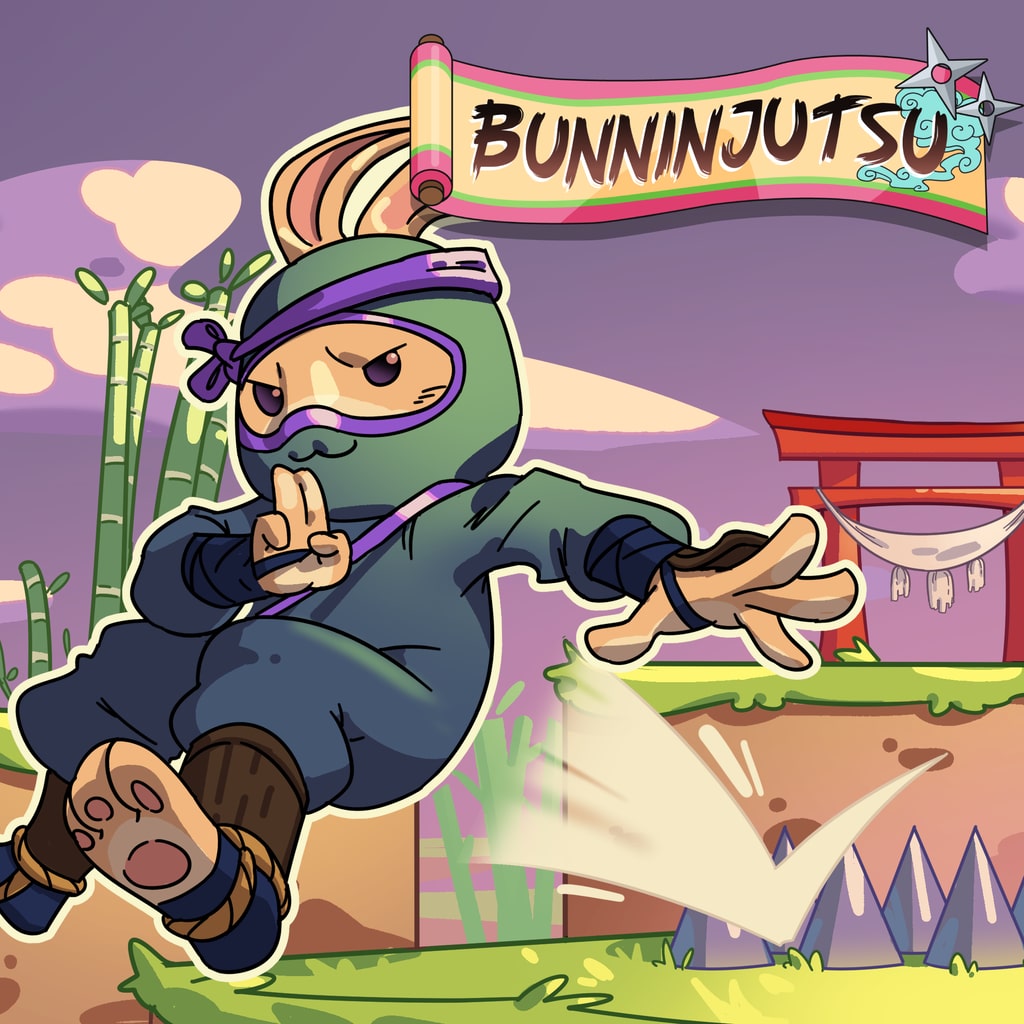
At first glance, Bunninjutsu looks like a playful genre mash-up built around a single visual joke: bunnies trained in the art of ninjutsu. What initially appears to be a novelty premise quickly proves to be something more focused and deliberate. Rather than leaning entirely on humour or gimmickry, the game commits to delivering a tightly designed, skill-driven experience. It understands its scope and works confidently within it, favouring mechanical polish and challenge over spectacle or narrative excess.
Core Gameplay and Mechanics
At its heart, Bunninjutsu is a fast-paced action platformer that places heavy emphasis on momentum, precision, and player execution. Movement is the backbone of the experience, built around responsive jumping, wall traversal, and quick directional changes. The game rarely encourages caution; instead, it rewards players who maintain speed and flow through each stage.
Combat is tightly integrated into this movement-focused design. Attacks are swift and decisive, and encounters are structured to punish hesitation just as much as recklessness. Enemies are dangerous, but predictable, and success depends on reading patterns, positioning carefully, and striking at the right moment. The simplicity of the combat system belies the level of skill required to use it effectively.
Controls and Responsiveness
One of Bunninjutsu’s strongest qualities is its control fidelity. Inputs feel immediate and precise, allowing players to execute complex manoeuvres without fighting the game itself. This responsiveness is crucial, as later stages demand near-perfect timing and spatial awareness. Failures feel earned rather than arbitrary, reinforcing the sense that improvement comes from learning and mastery rather than luck.
Level Design and Challenge Curve
Levels in Bunninjutsu are compact but densely designed. Rather than sprawling environments, each stage is carefully constructed to test specific skills, from aerial control to enemy management under pressure. Checkpoints are placed generously enough to prevent excessive frustration, yet far enough apart to ensure that mistakes carry consequence.
The difficulty curve is firm and unapologetic. Early levels serve as an onboarding process, but the challenge escalates steadily. By the later stages, the game demands consistency, precision, and composure. This approach will appeal strongly to fans of precision platformers, though it may deter players seeking a more relaxed experience. Importantly, the challenge remains fair, with deaths providing clear feedback rather than confusion.
Visual Presentation and Art Style
Visually, Bunninjutsu adopts a clean, stylised aesthetic that prioritises clarity. Characters and enemies are instantly readable, with strong silhouettes and expressive animations that communicate intent effectively. Backgrounds are colourful but restrained, ensuring that visual flair never interferes with gameplay readability.
Animation quality deserves particular mention. Movements are fluid and purposeful, helping players intuitively understand enemy behaviour and timing. This visual clarity plays a key role in the game’s learnability, especially as challenges grow more complex.
Sound Design and Music
Sound design complements the fast-paced action well. Attacks have satisfying impact, movement abilities are reinforced with crisp audio cues, and enemy actions are clearly telegraphed through sound. The soundtrack is energetic and rhythmic, reinforcing momentum without becoming distracting. While not especially memorable on its own, the music consistently supports the intensity of play.
Narrative and Thematic Restraint
Narrative is intentionally minimal in Bunninjutsu. The story exists largely as thematic flavour rather than a driving force, offering just enough context to frame the action. This restraint feels appropriate given the game’s focus. There are no lengthy cutscenes or exposition-heavy interruptions, allowing gameplay to remain the central attraction at all times.
Replayability and Longevity
Replayability is a key strength. The structure of short, demanding levels naturally encourages repeated attempts, whether to improve completion times or simply achieve cleaner runs. The satisfaction of mastering previously difficult sections adds long-term appeal, even in the absence of extensive modes or content variations. The game’s compact length works in its favour, ensuring it remains engaging without overstaying its welcome.
Strengths and Weaknesses
Strengths
- Exceptionally Responsive Controls
Movement and combat inputs are precise and reliable, enabling high-skill play and reinforcing the game’s focus on mastery rather than trial-and-error frustration. - Well-Crafted Level Design
Compact stages are intelligently constructed to test timing, positioning, and momentum, encouraging replayability and continuous self-improvement. - Strong Gameplay Readability
Clear visual language, expressive animations, and distinct enemy silhouettes ensure that players can quickly interpret threats, even during high-speed sequences. - Fair but Demanding Challenge
Difficulty is unapologetically high, yet consistently fair, with rapid restarts and clear feedback that make failure feel instructive rather than punitive. - Cohesive Audio-Visual Presentation
Sound effects and music effectively reinforce pace and tension without distracting from gameplay, complementing the clean, focused art direction.
Weaknesses
- Limited Accessibility Options
The steep difficulty curve and lack of significant assist or accessibility settings may alienate less experienced or more casual players. - Minimal Narrative Depth
While intentional, the light narrative framing offers little incentive for players seeking story-driven motivation or world-building. - Narrow Scope of Content
The streamlined structure supports replayability but may feel slight for players expecting a broader range of modes or gameplay variations. - Appeal May Be Niche
Its heavy emphasis on precision and repetition makes it best suited to fans of hardcore action platformers, rather than a wide mainstream audience.
Final Verdict
Bunninjutsu is a focused, confident action platformer that succeeds by committing fully to its core ideas. With precise controls, intelligent level design, and a demanding but fair difficulty curve, it delivers a rewarding experience for players who enjoy skill-based challenges. While its difficulty and minimal narrative may limit its broader appeal, those aligned with its design philosophy will find it deeply satisfying.