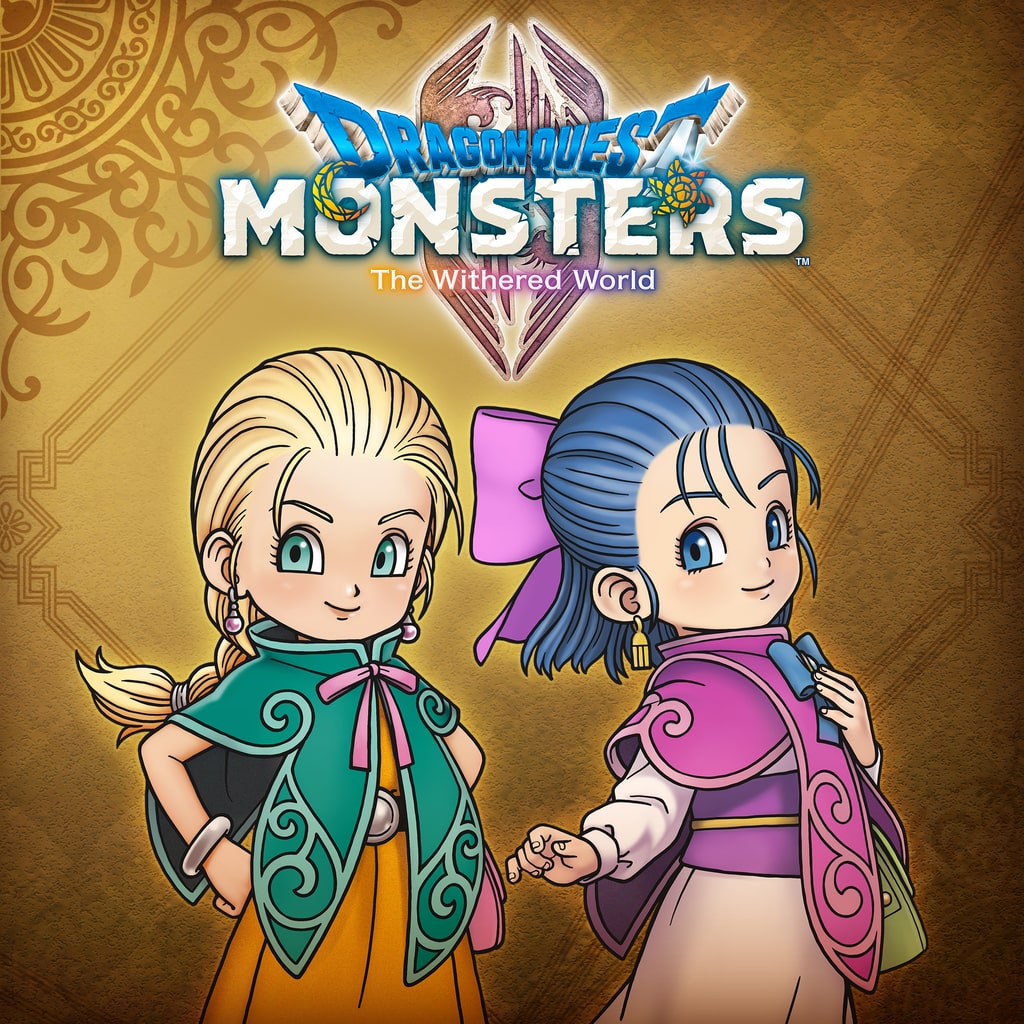
DRAGON QUEST MONSTERS: The Withered World arrives with the confidence only a long-running spin-off can muster when it knows exactly what fans want and, more importantly, what they are willing to spend another hundred hours on. Developed by TOSE and published by Square Enix, this latest entry in the monster-breeding saga leans into nostalgia without letting it calcify into repetition. Launching on December 3, 2026, it builds its identity around familiar faces, specifically Bianca and Nera, while pushing the series into a more expressive, exploratory structure that feels both comforting and quietly ambitious.
Rather than dropping players into yet another faceless monster-wrangler role, The Withered World rewinds the clock to the childhood of two iconic figures from DRAGON QUEST V. It is a clever narrative pivot that reframes the entire adventure through innocence and discovery, making the act of befriending monsters feel less like optimisation and more like wonder. That emotional framing gives even simple encounters surprising weight, especially when you realise how much the game wants you to care about the creatures you collect, fuse, and eventually send into battle on your behalf.
A World That Refuses to Sit Still
At the heart of The Withered World is its sense of place. The game’s environments are not merely backdrops for monster battles; they are living ecosystems that shift in tone and density as you move through them. One moment you are wandering through oversized gardens where vegetables tower like ancient architecture, and the next you are stepping into frozen valleys that feel almost dreamlike in their stillness. The visual direction leans into soft surrealism, giving each biome a storybook quality without sacrificing the clarity needed for tactical exploration.
What stands out most is how the world encourages curiosity without punishing hesitation. Monsters roam alongside you rather than simply waiting to be encountered, turning exploration into something closer to companionship than to combat preparation. There is a gentle rhythm to it all, a feeling that you are not merely passing through the world but slowly learning its language. Even the smallest detour often leads to unexpected encounters, hidden synthesis materials, or monsters deliberately placed to tempt you into rethinking your party composition.
The Art of Monster Bonding
The monster recruitment system remains the backbone of the experience, and here it is expanded to an almost overwhelming depth. With over 500 monsters available at launch, ranging from series staples like Slimes and Golems to entirely new creations, the sense of possibility is enormous. Yet what matters more than quantity is how each monster fits into a larger web of experimentation.
Every creature has its own traits and growth paths, but The Withered World pushes you beyond simple stat comparisons. Talents can be mixed, inherited, and refined, encouraging you to think in terms of long-term identity rather than short-term power spikes. This naturally feeds into the synthesis system, which remains one of the most addictive loops in the genre. Combining two monsters does not just produce something stronger; it often produces something unfamiliar, as if the game is quietly daring you to discover combinations it never explicitly explains.
It is in these moments that the game finds its strongest rhythm. You begin to recognise patterns in how monsters evolve, but there is always a layer of unpredictability that keeps experimentation alive. The result is a party-building system that feels less like optimisation and more like creative authorship.
Combat Built on Patience and Payoff
Battles in The Withered World are turn-based, yet far from passive. Positioning, party synergy, and timing all matter, especially as enemies scale in complexity. While early encounters lean towards experimentation, later fights demand a more deliberate understanding of your monsters’ strengths and inherited abilities.
There is a satisfying tension between preparation and execution. A well-synthesised monster can completely reshape a difficult encounter, but only if you have taken the time to understand its role within your party. This is not a system that rewards rushing. Instead, it gently encourages you to slow down, refine your approach, and accept that failure is often a step towards a better synthesis chain.
Online battles extend this philosophy into competitive territory, offering structured tournaments and casual matches that test how well your creations hold up against other players’ interpretations of the same systems. It is less about raw dominance and more about expression, which feels entirely in keeping with the series’ evolving identity.
Bianca, Nera, and the Weight of Innocence
Framing the story around young Bianca and Nera is more than a nostalgic gesture. It fundamentally reshapes the journey’s emotional tone. These are not seasoned monster tamers but children discovering a world that responds to their curiosity in real time. Their bond with monsters feels unfiltered, almost instinctive, lending even routine gameplay moments a subtle emotional undercurrent.
The narrative leans into this innocence without overplaying it. Instead of forcing melodrama, it lets small character interactions carry the weight. A monster responding to a call, a hesitant first synthesis, or a quiet moment of doubt before entering a new biome all contribute to a sense of growing responsibility. It is a softer kind of storytelling, yet one that suits the game’s structure surprisingly well.
Final Thoughts
DRAGON QUEST MONSTERS: The Withered World feels like a confident evolution of a long-running formula rather than a reinvention for its own sake. It understands what makes monster-raising compelling and builds outward from that foundation with care and curiosity. The synthesis system alone could carry the experience, but it is the combination of world design, emotional framing, and mechanical depth that gives it staying power.
If there is hesitation, it lies in the sheer density of systems introduced early on, which may overwhelm players unfamiliar with the series’ more intricate entries. Yet even that complexity feels intentional, as if the game is asking you to grow alongside it rather than simply master it from the outset.
Overall, this is a rich, thoughtful addition to the DRAGON QUEST MONSTERS lineage, one that respects its past while quietly expanding its emotional and mechanical vocabulary.