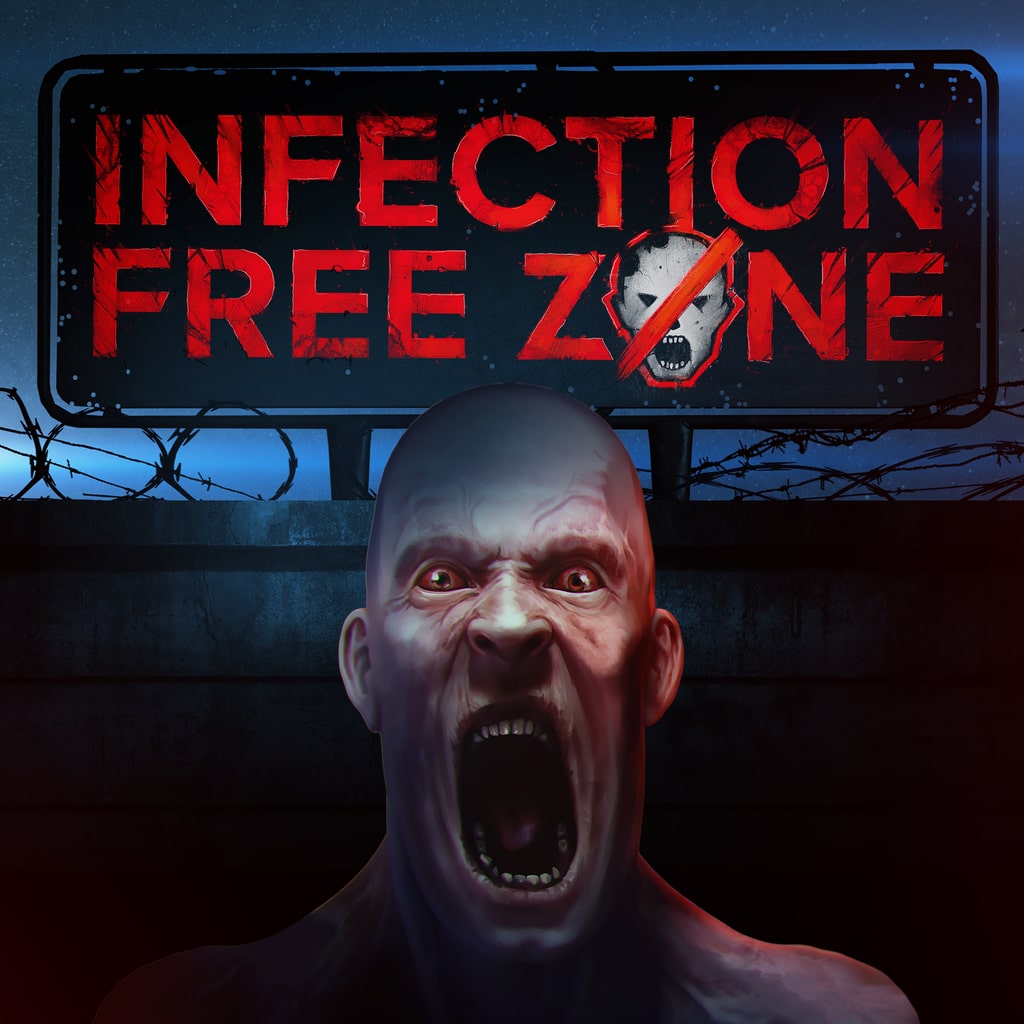
There is something uniquely unsettling about seeing a place you know transformed into the setting for a zombie apocalypse. Many games have asked us to imagine what the world would look like after society collapses, but Infection Free Zone takes a rather brilliant shortcut to making that scenario feel personal. Instead of dropping you into a fictional wasteland, Jutsu Games lets you choose a real town or city and then turns its streets, buildings and landmarks into the foundations of your new survival colony. It is a simple idea on paper, but once you recognise a familiar road or building on the map, the fantasy suddenly becomes considerably more frightening.
Infection Free Zone is part colony builder, part real-time strategy game and part survival horror experience, though it never fully settles into any one of those categories. During the day, you focus on food, medicine, weapons, construction and exploration. Once night arrives, however, your priorities shift dramatically as the infected emerge in increasingly dangerous numbers. What begins as a fascinating experiment in rebuilding civilisation gradually becomes a tense battle for survival, where every decision can mean the difference between another successful night and watching your hard work disappear beneath a sea of infected.
Welcome to the End of the World
The premise is wonderfully straightforward. A devastating disease known as the Mad Virus has spread across the globe with terrifying speed, leaving civilisation in ruins within weeks. Electricity and running water have disappeared, shops have been abandoned, and most of the population has either fled or become infected. You take control of a group of survivors who have made it through the collapse and must establish somewhere they can call home.
The cleverest part of the concept is that Infection Free Zone doesn’t dictate where that home should be. You can enter the name of a city or town and use real-world geographical data to generate your playing area. That means your apocalypse can take place almost anywhere. It is strangely fascinating to watch a familiar location become a tactical map, particularly when you begin thinking about places you know in terms of defensive positions, resources and escape routes.
That personal connection gives the game something many post-apocalyptic titles struggle to achieve. A supermarket isn’t merely a generic supermarket when it resembles a real place. A railway line isn’t simply another piece of scenery when you recognise the route it represents. Suddenly, you find yourself wondering which buildings would actually be useful and which streets would become death traps.
Building a New Society
At the heart of Infection Free Zone is the surprisingly satisfying process of turning abandoned structures into a functioning settlement. Your initial group of survivors has very little, so you need to make the most of what remains. Existing buildings can be adapted to accommodate your growing population, while farms, workshops, power facilities, storage areas and other structures gradually transform your little corner of the apocalypse into something resembling a functioning community.
There is an enjoyable rhythm to this process. You might spend the morning assigning survivors to gather resources, then send another group into an abandoned building in search of food or medicine. Back at the settlement, others could be constructing defensive positions or producing essential supplies. As the day progresses, you begin preparing for the inevitable arrival of darkness.
Resources never quite feel as plentiful as you would like, which is exactly what makes the management side work. Every decision involves compromise. Do you use precious materials to strengthen your walls, or spend them on something that will improve your long-term survival? Do you risk sending a small team deeper into the city for potentially valuable supplies, knowing they might not make it back before nightfall?
When Darkness Falls
Night is when the Infection Free Zone really comes alive. During daylight, there is always a sense of control, but once the sun goes down, the atmosphere shifts. The infected become more active, and hordes begin moving towards your settlement. What follows can range from a manageable skirmish to an absolute nightmare.
Defence isn’t simply about surrounding yourself with walls and hoping for the best. You need to consider where your enemies are likely to approach from and how your defensive positions interact with the surrounding environment. Towers can provide useful vantage points, while gates create controlled entry points. Armed survivors can be positioned strategically, with ranged weapons providing valuable support while melee fighters deal with anything that gets too close.
There is a particularly satisfying moment when a carefully planned defence works exactly as intended. You watch the infected pour towards your settlement, only for your survivors to cut them down before they can breach the perimeter. Of course, the opposite can happen too. A single weak point can become a floodgate, and suddenly the quiet confidence you had five minutes earlier disappears as dozens of infected tear through your carefully constructed defences.
Survival During the Day
The daytime exploration mechanics provide an important contrast to the frantic battles of the night. Survivors can venture into abandoned buildings to search for food, medicine, weapons and other useful resources. It is a deceptively dangerous process, as every building carries potential risk.
You never know what you will find. A seemingly harmless structure could contain valuable supplies, but it could also harbour the infected. Sending your strongest survivors into dangerous locations might improve your chances of success, but it also puts some of your most valuable people at risk. Losing experienced survivors can have consequences that extend far beyond simply reducing the number of people available for your next expedition.
This is where the game occasionally reminds you that these aren’t just anonymous units. As your survivors become more experienced, their loss becomes increasingly painful. You start remembering who was responsible for gathering food, who was particularly effective with a rifle and who managed to survive several particularly nasty encounters. Watching one of those characters disappear can feel surprisingly personal.
A World That Feels Familiar
Visually, Infection Free Zone isn’t trying to compete with the biggest cinematic survival games, but it doesn’t need to. Its satellite-inspired presentation suits the concept, letting you see streets, buildings and surrounding terrain clearly while still giving the world a sense of scale.
The transition between day and night is particularly effective. Daytime brings clarity and a sense of routine, whereas darkness brings shadows, searchlights, muzzle flashes and the movement of infected through familiar streets. There is something unnerving about watching a location that looks perfectly recognisable in daylight become almost alien after sunset.
The sound design deserves credit too. Distant infected noises, weapons fire, radio chatter and the general ambience of a world that has fallen silent all help sell the atmosphere. It isn’t a traditional horror soundtrack constantly screaming at you to be frightened. Instead, the game understands that sometimes the absence of sound can be just as effective.
More Than Just Zombies
Another welcome element is the presence of other survivor groups. Your settlement isn’t necessarily alone, and you may eventually encounter other communities that may be willing to trade or cooperate with you. Unfortunately, not everyone is interested in friendship, so diplomacy can sometimes give way to conflict.
This adds another layer of unpredictability to the experience. You aren’t simply managing the threat from the infected. You also need to consider how your settlement interacts with the wider surviving population. Friendly groups can offer useful opportunities, while hostile factions create yet another reason to strengthen your defences.
Research and technological progress also help sustain longer campaigns. Developing better infrastructure, improving your ability to produce essential resources, and working towards a vaccine or cure provide meaningful objectives beyond simply surviving another night. There is a genuine sense of progression as your desperate collection of survivors slowly becomes a functioning community.
A Few Cracks in the Walls
For all its strengths, Infection Free Zone isn’t without problems. The interface can occasionally feel a little cumbersome, particularly when several things are happening at once. Pathfinding can also be frustrating, with survivors occasionally behaving in ways that make you question whether they have forgotten they are supposed to be escaping from a horde of bloodthirsty infected.
The balance can also become uneven as campaigns progress. There are moments when resources feel brutally scarce, followed by periods when your settlement suddenly becomes considerably more comfortable. Large attacks can also expose some of the game’s rougher edges, particularly when numerous units are moving around the same area.
None of these issues destroy the experience, but they do prevent Infection Free Zone from becoming the polished masterpiece its concept occasionally suggests it could be. There is a brilliant game beneath the rougher edges, and with a little patience, those imperfections become easier to forgive.
Final Verdict
Infection Free Zone is one of those games where the central idea is so effective that it carries you through the rough patches. Being able to choose a real location and then watch it become the stage for your own post-apocalyptic survival story is genuinely fascinating. The first time you recognise a familiar street buried beneath the chaos, you understand exactly why the concept works so well.
More importantly, there is real substance beneath the novelty. The combination of resource management, settlement construction, exploration and increasingly desperate night-time battles creates an addictive gameplay loop. You are constantly thinking about tomorrow while trying to survive tonight, and that tension gives the campaign its character.
It isn’t perfect. Some awkward pathfinding, occasional interface frustrations and uneven balancing keep it from reaching the highest tier of the genre. Yet there is something wonderfully compelling about watching your survivors transform a recognisable part of the world into a fortified refuge while hordes gather outside the walls.
Infection Free Zone may not be the most technically polished survival strategy game around, but it has something arguably more valuable: personality. It makes the apocalypse feel strangely close to home, and once you have spent hours turning familiar streets into your own personal fortress, it becomes surprisingly difficult to walk away.