There is something wonderfully appealing about a dungeon crawler that understands the value of keeping things simple. Dungeons of Alethrion does not need an enormous fantasy world, hundreds of quests or a sprawling narrative to grab your attention. Instead, it gives you a hero, a dungeon, a collection of increasingly unpleasant things trying to kill you, and the simple promise that the next run might go just a little bit better. It is the sort of premise that has kept dungeon-crawling fans occupied for decades, and Alethrion knows exactly why the formula works.
Developed as a roguelike dungeon crawler, Dungeons of Alethrion throws players into randomly generated environments where every run brings a different mix of rooms, enemies and challenges. Four heroes are available, each with their own abilities and combat style, while the option to bring a friend adds a welcome cooperative dimension. It is not attempting to reinvent the genre, but there is plenty to enjoy in its straightforward approach to exploration, combat and survival.
Into the Dungeon
The first thing that Dungeons of Alethrion gets right is its grasp of what makes a roguelike dungeon crawl so addictive. You enter with a basic understanding of your character, start exploring, and gradually become more confident as you learn how enemies behave and how the environments are structured. Then the game reminds you that confidence can be dangerous, usually by throwing something considerably nastier at you than anything you have encountered before.
Procedurally generated dungeons mean that no two journeys are quite the same. Rooms are rearranged, encounters change, and the route ahead is never entirely predictable, giving each run its own little rhythm. One expedition might give you a generous collection of useful encounters early on, while another can feel like the game has personally decided that you have had quite enough fun for one evening.
That unpredictability is a big part of the appeal. You cannot simply memorise the perfect route and repeat it until you succeed. Instead, you have to adapt to what the dungeon gives you, make sensible decisions about when to push forward, and recognise when things are beginning to go horribly wrong. It is a familiar roguelike philosophy, but it remains effective because every successful run feels like something you have earned.
Four Heroes, Four Ways to Survive
The four playable heroes give Dungeons of Alethrion welcome variety. Rather than merely cosmetic alternatives, each character brings distinct abilities and encourages a slightly different approach to the dungeon. Learning which hero best suits your playstyle is part of the fun, especially when you experiment with characters rather than automatically choosing the one that feels comfortable.
A good dungeon crawler should make you feel as though you are improving alongside your character, and that is where Alethrion finds some of its strongest moments. Early encounters can feel intimidating as you are still learning how everything works. After a few runs, however, you begin to recognise patterns, anticipate threats and make decisions more confidently.
That sense of personal progression is particularly satisfying because roguelikes are often as much about improving the player as they are about improving the character. When you finally overcome an encounter that previously destroyed you, there is a genuine sense of achievement. You know it was not simply better equipment that carried you through. You understand the game better now, and that knowledge matters.
The Joy of the Random
Procedural generation can sometimes be a double-edged sword. When it works, it creates endless possibilities and gives you a reason to keep coming back. When it does not, you can end up with rooms that feel interchangeable and runs that lack the sense of discovery they should provide.
Thankfully, Dungeons of Alethrion generally keeps things moving. The changing layouts give the dungeon enough unpredictability to make exploration worthwhile, while the increasing difficulty ensures that simply knowing what you are doing is never quite enough. You still need a little luck on your side, and that is an important part of the roguelike experience.
There is something strangely compelling about starting another run after defeat. You tell yourself that you will only play for a few minutes, perhaps just long enough to see whether the next dungeon is kinder. Before you know it, another hour has disappeared and you are once again standing outside the entrance, wondering whether this will finally be the run where everything comes together.
Challenge That Keeps Growing
The progressive difficulty is another important part of the experience. Dungeons of Alethrion does not simply throw the same encounters at you repeatedly while increasing a few numbers behind the scenes. The deeper you go, the more pressure is placed on your ability to manage whatever the game throws at you.
This creates a satisfying learning curve. The opening sections give you time to settle into your chosen hero and understand the basic rhythm of exploration, while later areas demand greater awareness and better decision-making. Mistakes that might have been harmless earlier can become disastrous as the difficulty climbs.
That said, players who are not particularly fond of repeated failure may find the roguelike structure a little demanding. There is a certain amount of repetition, and getting comfortable with the idea of losing a run is essential. If you approach the game expecting constant progress, frustration is inevitable. If you view every failed expedition as another lesson, however, the experience becomes considerably more rewarding.
Going It Alone
Single-player mode is the easiest way to become familiar with Dungeons of Alethrion. You can learn each hero at your own pace, experiment with abilities, and take your time getting used to the dungeons’ procedural nature. There is something particularly enjoyable about finding a character whose abilities suddenly make everything click.
The experience becomes even more appealing when another player joins the adventure. Cooperative dungeon crawling has always had the ability to turn straightforward encounters into memorable moments, largely because human players are considerably less predictable than anything an enemy AI can throw at you.
A friend can be the one who saves you from a seemingly impossible situation, or the one who makes everything considerably worse by charging headfirst into danger. Either way, playing together adds an extra layer of personality to the experience. The dungeon might be randomly generated, but the stories that emerge from playing alongside another person are anything but predictable.
A Classic Look for a Classic Formula
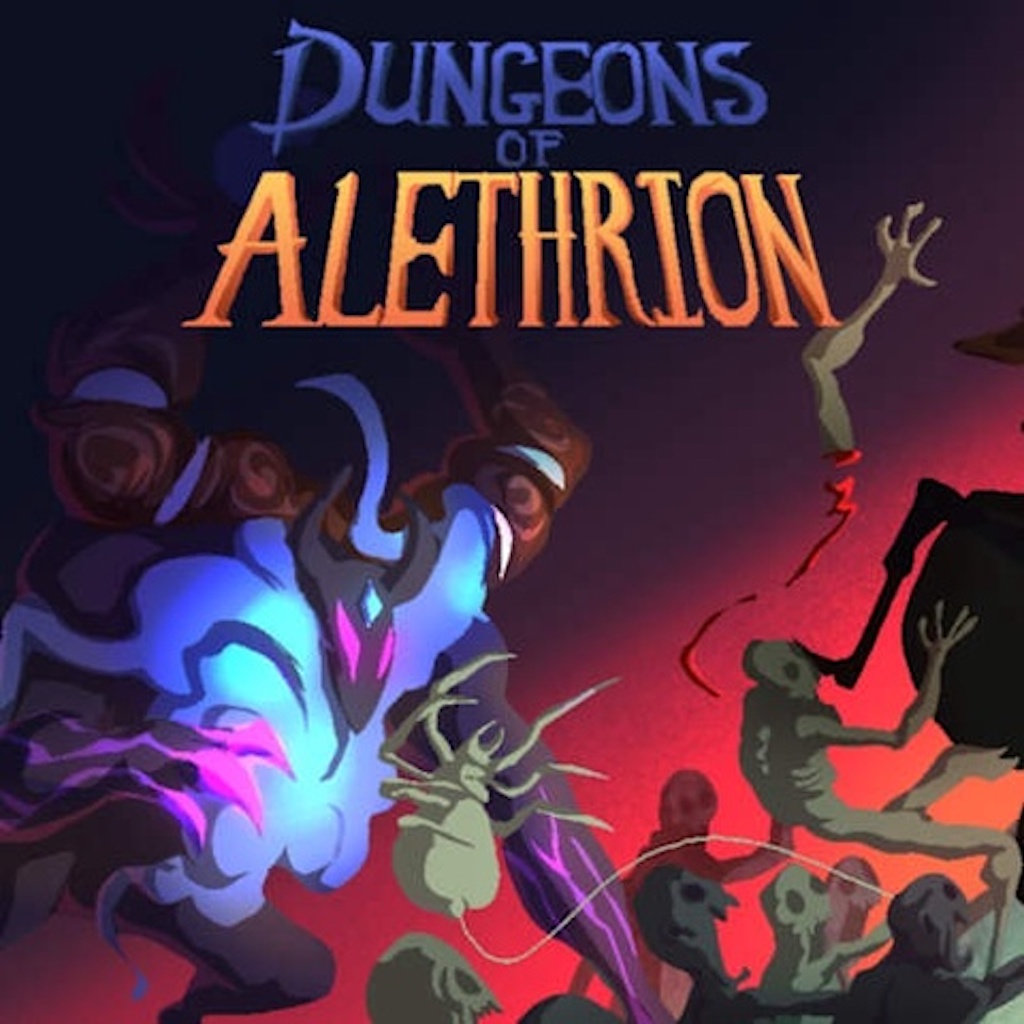
Visually, Dungeons of Alethrion embraces the fantasy aesthetic you would expect from a game built around compact dungeon environments. There is no need for extravagant spectacle when the core appeal lies in exploring, fighting and surviving. The environments provide enough variety to keep the journey visually interesting, while the heroes and enemies have enough character to make encounters readable.
The straightforward presentation also suits the gameplay. You need to see what is happening when several enemies are bearing down on you, and a cluttered visual style could easily undermine the tactical side of the experience. Alethrion keeps things relatively clear, allowing you to focus on the threats rather than fighting against the interface.
The overall presentation has an appropriately gamey quality, which suits the experience. This is not a cinematic fantasy epic. It is a dungeon crawler designed around repeated runs, experimentation and the occasional triumphant escape from a situation that looked completely hopeless a few seconds earlier.
A Familiar Adventure With Plenty of Bite
If there is one criticism that can be levelled at Dungeons of Alethrion, it is that the basic formula will feel very familiar to anyone who has spent considerable time with roguelikes. Randomised dungeons, multiple characters and progressively tougher encounters are hardly new ideas. The game does not necessarily need to innovate dramatically, but players looking for something that completely shakes up the genre may find the experience a little conventional.
There can also be moments when the repetition starts to show. The strength of a roguelike depends heavily on how effectively its random elements keep the experience feeling fresh, and there will inevitably be runs that are less memorable than others. That is part of the nature of the genre, but it does mean Alethrion is likely to work better in shorter sessions than in marathon play.
Fortunately, its accessibility helps enormously. You do not need to understand an enormous collection of interconnected systems before you can enjoy yourself. Pick a hero, enter the dungeon and start learning. That simplicity gives Dungeons of Alethrion a welcoming quality that should appeal to newcomers as well as veterans who simply fancy another excuse to crawl through a dangerous dungeon.
Final Verdict
Dungeons of Alethrion is a charming and accessible roguelike that understands the timeless appeal of the dungeon crawl. Its randomly generated environments, four distinctive heroes and steadily increasing difficulty create a satisfying loop that encourages experimentation and repeated attempts. It may not reinvent the genre, but it does not need to when the fundamentals are this enjoyable.
The cooperative option is a particularly welcome addition, giving the adventure another dimension when played with a friend. There is also something reassuring about the game’s straightforward structure. It knows exactly what it wants to deliver and does not bury that experience in unnecessary complexity.
For anyone who enjoys exploring dangerous dungeons, learning from failure and chasing that elusive perfect run, Dungeons of Alethrion is an easy recommendation. It may not be the most revolutionary roguelike you will play, but it is an enjoyable one, and sometimes that is more than enough. There is always another dungeon waiting, another hero to master and another run that might just be the one where everything goes right.