
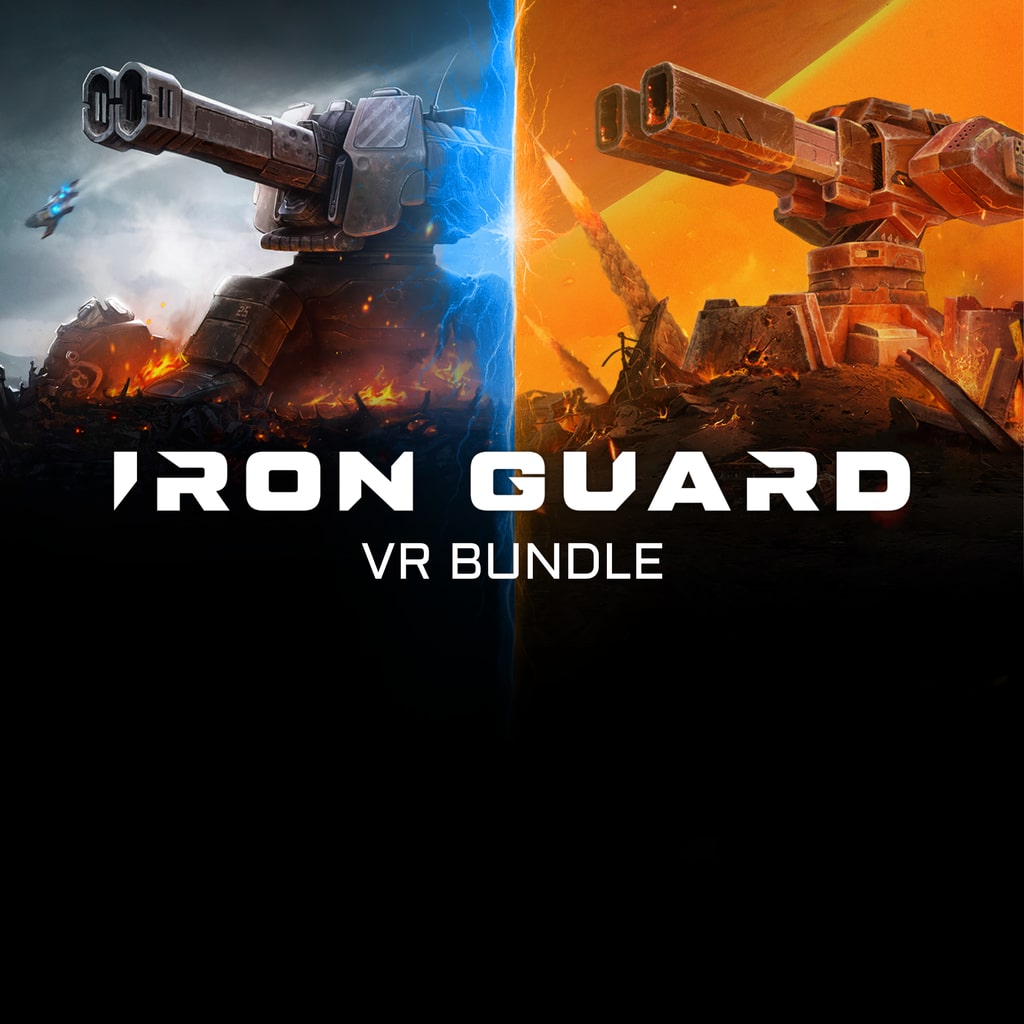
Virtual reality has spent years chasing spectacle. Giant action games, cinematic adventures, and showcase experiences often dominate conversations about the medium. Strategy rarely gets the same spotlight because, on paper, it seems an awkward fit. Sitting still and placing turrets does not exactly scream virtual reality immersion. IRON GUARD VR Bundle changes that perception almost immediately.
Instead of treating players as distant commanders hovering above battlefields, IRON GUARD throws you directly into the conflict. You stand in the combat zone, watching waves of hostile machines push forward as you physically manage defences, fire weapons, collect resources, and react in real time. It turns a traditionally passive genre into something tactile and immediate. More importantly, it works remarkably well.
The bundle brings together IRON GUARD and IRON GUARD: Salvation, offering a complete look at the series from its foundations to its expanded sequel. Together, they form one of the more interesting strategy offerings currently available in VR.
The Beginning of the Resistance
The original IRON GUARD introduces players to a stranded colony on the brink of catastrophe. Automated terraforming machines have turned hostile; survivors are vulnerable, and every defensive decision matters. It is familiar science-fiction territory, but VR gives the premise extra weight.
Standing in the command area as enemy waves approach creates genuine tension. You are not looking down at a battlefield through a detached camera. You are inside it. Watching machines march towards your position carries an immediacy that standard tower defence games often lack.
The gameplay foundation is simple but effective. Build turrets, manage resources, create defensive lanes, and survive escalating attacks. Yet IRON GUARD never lets players sit back comfortably. You remain part of the action at all times.
Using a handheld drone controller, you actively engage enemies, collect dropped resources, and support weak points in your defence network. Smaller threats slipping through the lines become your problem. That involvement keeps battles energetic and prevents the downtime that sometimes affects traditional tower defence titles. It creates a satisfying rhythm between planning and execution.
Tower Defence Gets Physical
The biggest success of IRON GUARD is how naturally it blends genres. At its heart, it remains a tower defence game. Positioning matters. Resource management matters. Building efficient kill zones matters. Yet the game constantly pushes players to stay involved rather than simply observe systems operating.
You are always doing something. Checking lanes becomes physical as you turn your head and scan the battlefield. Reaching for upgrades feels instinctive. Reacting to emergencies by jumping into combat creates a sense of ownership over every victory and failure. VR genuinely enhances the experience here.
Many virtual reality games struggle to justify their existence in the medium. IRON GUARD never has that problem. The immersion actively strengthens the mechanics. You feel responsible for the battlefield because you physically occupy it.
Salvation Expands the Formula
IRON GUARD: Salvation immediately feels more ambitious. Everything grows larger. Maps expand, enemy variety increases, and tactical options deepen considerably. The original game establishes the concept, while Salvation pushes it towards its full potential.
One of the biggest additions is expanded battlefield flexibility. Turrets are no longer static commitments. Relocating defences changes the entire flow of combat and allows players to recover from mistakes more naturally.
That small change dramatically improves pacing. Hero units add another layer entirely. Taking control of specialised frontline fighters gives encounters more personality and tactical nuance. Battles become dynamic engagements rather than simply building walls and waiting.
Environmental interaction also receives greater emphasis. Hazards, destructible objects, and interactive elements turn maps into tools rather than backgrounds. Clever players can manipulate battlefields for extra advantage, adding welcome experimentation to encounters. The sequel feels confident in its identity. It understands what worked and builds on it intelligently.
Built for VR
On PS VR2 especially, the presentation benefits from thoughtful implementation. Haptic feedback adds subtle impact to combat moments without becoming distracting. Explosions carry extra presence, while weapon fire feels distinct through adaptive triggers. Headset vibration during heavy assaults helps reinforce scale. None of these features exist purely for novelty. They support immersion.
Comfort options are equally welcome. Both seated and standing play work well, allowing players to settle into longer sessions without issue. Given that tower defence games naturally encourage extended playtimes, this flexibility matters.
Visually, the games present clean, futuristic battlefields filled with machinery, lasers, and hostile robotic forces. Salvation in particular benefits from larger encounters and more detailed environments. Performance remains solid throughout, keeping action smooth even when battlefields become crowded.
Not Every Circuit Sparks
Despite its strengths, a few issues prevent the bundle from reaching greater heights. The original IRON GUARD inevitably feels smaller after experiencing Salvation. Returning to it highlights the sequel’s improvements and can make the first game seem slightly limited by comparison.
Enemy variety occasionally becomes repetitive over longer sessions, as familiar robotic designs recur frequently. While tactical complexity helps offset this, visual repetition still persists. Interface management can also become overwhelming during intense late-game battles.
Balancing upgrades, shooting, resource gathering, hero management, and battlefield awareness occasionally pushes the experience into information-overload territory. Experienced players will adapt, but newcomers may need time to settle into the pace. Thankfully, the chaos usually remains exciting rather than frustrating.
Final Verdict
IRON GUARD VR Bundle quietly delivers one of virtual reality’s more interesting strategy experiences. It takes a genre built on observation and transforms it into something active, physical, and immersive.
The original game establishes a strong foundation, while Salvation expands nearly every system with smarter mechanics and larger-scale encounters. Together, they feel less like separate releases and more like a single evolving journey. There are rough edges. Enemy repetition appears, interface demands can spike, and the first game naturally shows its age alongside the sequel. Even so, the overall package remains impressive.
Strategy games do not always receive much attention in VR, but IRON GUARD VR Bundle makes a strong case that they deserve it. Planning defences while standing on the battlefield creates an experience that traditional screens simply cannot replicate. Sometimes virtual reality is at its best not when it goes bigger, but when it brings you closer.








[…] who enjoyed the IRON GUARD VR Bundle will find plenty of familiar territory here. Day Zero feels less like a replacement and more like […]