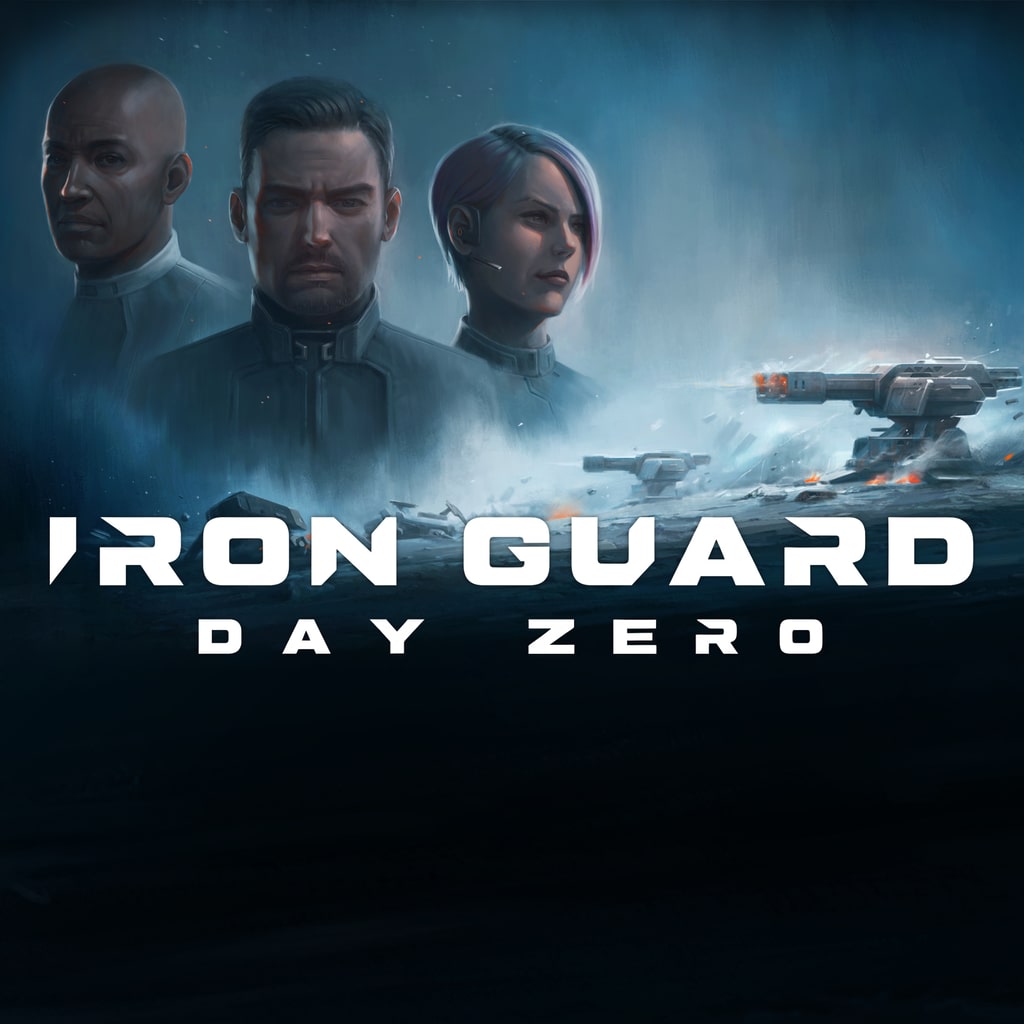
Tower defence games occupy a fascinating corner of the strategy genre. They rarely receive the same attention as sprawling grand strategy epics or complex real-time warfare simulations, yet they continue to thrive because they tap into something fundamentally satisfying. Watching a carefully constructed defence hold against overwhelming odds remains one of gaming’s purest pleasures. IRON GUARD: Day Zero understands this perfectly.
Players who enjoyed the IRON GUARD VR Bundle will find plenty of familiar territory here. Day Zero feels less like a replacement and more like an expansion of the same universe, translating the series’ defensive-strategy roots into a more accessible format while retaining the frantic battlefield decision-making that made the VR release so enjoyable. It lacks some of the immediacy that comes from physically surveying your defences in virtual reality, but the underlying strategy remains just as satisfying.
Originally born from a virtual reality experience, the game has been reworked by developer Xlab Digital into a traditional flatscreen release that feels surprisingly comfortable outside its original home. Rather than chasing unnecessary complexity, IRON GUARD: Day Zero embraces accessibility while still offering enough tactical depth to keep strategy fans engaged throughout its campaign.
Set on a hostile alien world where survival hangs by a thread, players are tasked with defending humanity’s remaining foothold after a catastrophic uprising by terraforming robots. These machines were designed to prepare worlds for colonisation. Instead, something has gone terribly wrong, transforming them into relentless mechanical threats determined to wipe out the very people they were created to serve.
The result is a fast-paced blend of tower defence strategy, resource management, and arcade-style combat that consistently delivers enjoyable battles, even if it occasionally plays things a little safe.
A Story Built on Mystery
Science fiction has long loved stories of machines turning against their creators, and IRON GUARD: Day Zero leans heavily into that familiar premise. While the narrative won’t surprise anyone who has spent time with classic sci-fi, it offers enough intrigue to keep the campaign moving.
You assume the role of a commander overseeing evacuation efforts from orbit. As survivors desperately attempt to escape the planet, your mission is to secure extraction zones, defend critical infrastructure, and uncover the reason for the robotic rebellion. Through radio conversations, mission briefings, and cinematic sequences, the game gradually pieces together what happened on this distant world.
What works particularly well is the atmosphere. There is a genuine sense of isolation throughout the campaign. The environments feel distant and hostile, while communications with stranded crew members add a welcome human element to the mechanical chaos unfolding on the battlefield.
The writing never becomes overly ambitious, but it serves its purpose well. This is ultimately a game about defending positions and surviving impossible situations, and the story supports that goal without overstaying its welcome.
Building the Perfect Defence
At its core, IRON GUARD: Day Zero is a classic tower defence experience built around resource gathering, careful placement, and constant adaptation. Each mission presents players with a map featuring multiple enemy approach routes. Your objective is usually straightforward: protect an extraction point, command centre, or other critical structure from waves of robotic enemies. Resources collected during combat allow you to construct defensive towers, place barriers, and develop support infrastructure that strengthens your position.
The tower selection offers enough variety to encourage experimentation. Some turrets specialise in rapid-fire damage, while others excel at slowing enemies or piercing heavily armoured targets. Understanding which combinations work best against specific threats becomes increasingly important as the campaign progresses and enemy types diversify.
One of the game’s strongest features is its flexible progression system. Research points earned during missions can be invested in upgrades between battles, allowing players to customise their defensive capabilities. Better still, these choices are not permanently locked. If a particular strategy isn’t working, points can be reassigned and new approaches tested without penalty.
That freedom helps keep the campaign fresh. Rather than forcing players down a single development path, IRON GUARD encourages experimentation and adaptation.
More Than Just Watching
Where Day Zero distinguishes itself from more traditional tower defence games is through its active combat element. Alongside managing defensive structures, players directly control an airborne support drone capable of assisting on the battlefield. This drone can attack enemies, repair damaged structures, and deploy powerful special weapons that can dramatically shift the tide of battle during particularly intense moments.
This additional layer of involvement keeps players engaged throughout longer encounters. Rather than simply watching defences operate autonomously, you are constantly making decisions and reacting to changing situations. A well-timed missile strike or emergency repair run can mean the difference between victory and defeat.
The drone mechanics also inject a welcome sense of urgency into battles. When multiple fronts begin collapsing simultaneously, the pressure to prioritise threats creates genuinely exciting moments. Those situations often produce the campaign’s most memorable encounters, forcing quick thinking and decisive action. It is a simple addition on paper, but it adds valuable energy to a genre that can occasionally become passive.
A World Worth Defending
Visually, IRON GUARD: Day Zero punches above its weight. The alien environments are colourful and varied, offering a mix of rocky wastelands, industrial facilities, and mysterious frontier landscapes. While the overall art style favours clarity over realism, that choice suits a strategy game where battlefield readability is essential.
Enemy designs are equally effective. The rogue robots come in a variety of shapes and sizes, making it easy to identify priorities in combat. Explosions land with satisfying impact, laser fire fills the battlefield with energy, and larger enemy assaults create a genuine sense of escalation as waves grow increasingly dangerous.
Performance remains consistently smooth even during the busiest encounters. With dozens of enemies, projectiles, and defensive structures operating simultaneously, maintaining a stable frame rate is critical. Thankfully, the game handles these moments admirably.
Complementing the visuals is a strong audio presentation. The soundtrack channels the spirit of classic strategy games, combining atmospheric science-fiction themes with energetic combat tracks that elevate larger battles. Voice acting is also surprisingly solid, helping sell both the story and the stakes facing the surviving colonists.
Familiar Territory
Despite its many strengths, IRON GUARD: Day Zero occasionally struggles to step out of its genre’s shadow. Veteran tower defence players will recognise many of its mechanics almost immediately. Resource collection, lane management, turret upgrades, and enemy wave structures all follow established formulas. While the game executes these systems competently, it rarely introduces revolutionary ideas that fundamentally change how the genre operates.
The opening hours can also feel cautious. Several early missions function as extended tutorials, gradually introducing mechanics that experienced strategy fans may already know. While this helps newcomers ease into the experience, it does mean the campaign takes a little time to reach its most engaging content.
Enemy variety, while generally solid, occasionally leans too heavily on durability increases rather than behavioural complexity. Some late-game encounters rely on larger health pools rather than introducing entirely new tactical challenges, which can make certain battles feel slightly repetitive. Fortunately, these issues never become severe enough to undermine the core gameplay loop.
Final Verdict
IRON GUARD: Day Zero succeeds because it understands the appeal of tower defence at a fundamental level. It offers satisfying strategic decision-making, rewarding progression systems, and enough active participation to keep players invested throughout every encounter.
While it may not push the genre into bold new territory, it executes its ideas with confidence and polish. The combination of flexible upgrades, engaging drone combat, strong presentation, and accessible strategy creates an experience that remains consistently enjoyable from start to finish.
There is something refreshingly honest about what Xlab Digital has created here. Rather than chasing trends or overcomplicating its design, IRON GUARD: Day Zero focuses on delivering a solid strategy experience centred on defending humanity against impossible odds. Sometimes, that’s exactly what a game needs to do.
For tower defence enthusiasts, science fiction fans, and players seeking a strategy title that respects their time without sacrificing challenge, IRON GUARD: Day Zero is well worth answering the call to defend the frontier.