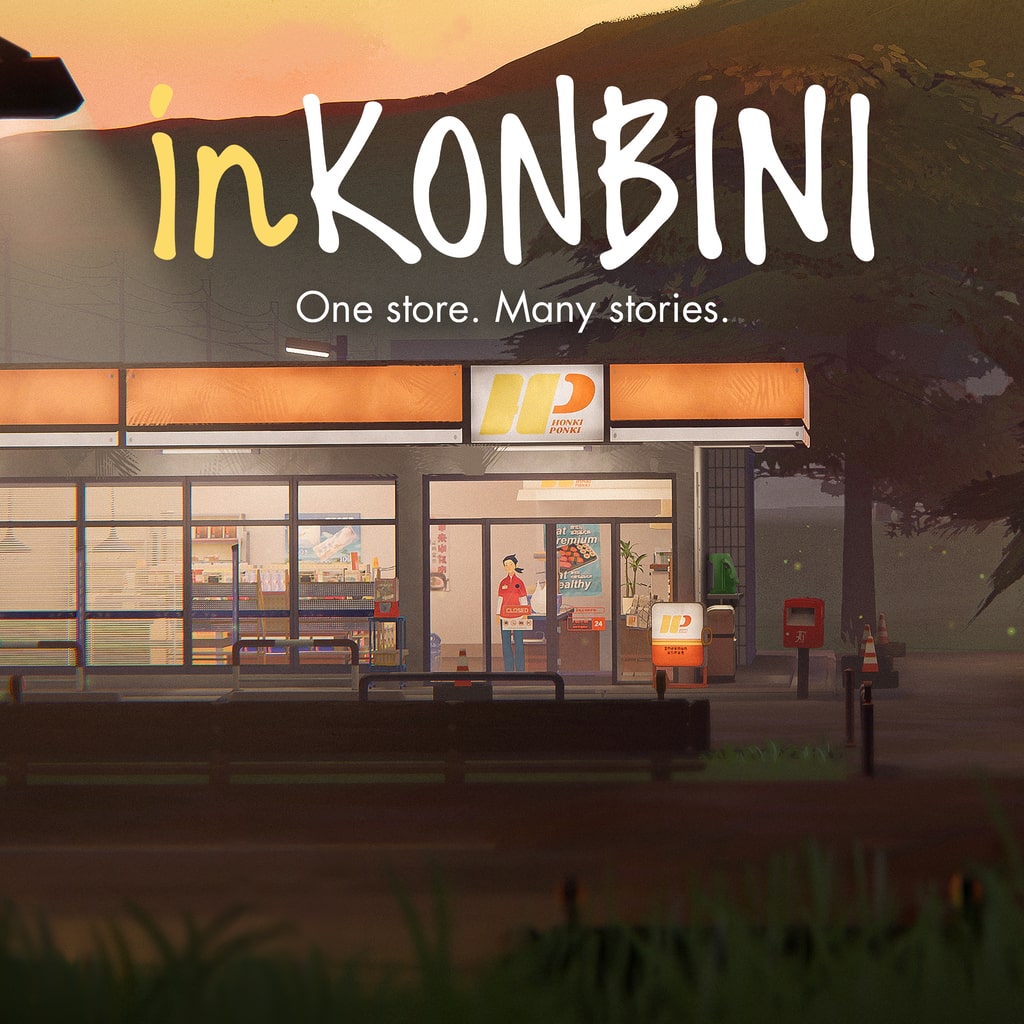
There is a certain kind of game that does not ask for your attention so much as your presence. It does not rush you, challenge you, or overwhelm you with systems. It simply invites you in and trusts you to stay. inKONBINI: One Store. Many Stories belongs to that rare space.
Developed by Nagai Industries and published by Beep Japan, this slice-of-life simulation places you behind the counter of a small-town convenience store in 1990s Japan. You play as Makoto Hayakawa, a college student spending her summer helping out at her aunt’s shop. It sounds simple. It is simple. And that simplicity is the point.
The Rhythm of Routine
Most of your time in inKONBINI is spent performing small, repetitive tasks. Stocking shelves. Straightening displays. Scanning items. Sweeping floors. None of these actions are complex, and none are particularly demanding. What matters is how they feel.
There is a deliberate pacing to everything. Movements are gentle. Interactions are tactile without being fiddly. The game creates a rhythm that you slowly fall into, where each task leads naturally into the next. You are not chasing efficiency or optimisation. You are simply working.
This is where the game separates itself from other retail simulators. There are no timers pushing you forward. No profit margins dictating your choices. No escalating difficulty demanding faster reactions. Instead, it offers something closer to calm repetition. The kind of quiet focus that lets your mind settle.
People, Not Customers
The real heart of inKONBINI lies in its characters. Customers drift in and out of the store, each carrying fragments of their own lives. Some are regulars who appear every day, their routines as consistent as your own. Others pass through briefly, leaving behind small moments that linger longer than expected.
Through conversation, observation, and time, you begin to piece together their stories. A tired salaryman who lingers too long by the drinks fridge. A school student avoiding going home. An elderly neighbour who remembers the shop before it changed.
These interactions are not dramatic in a traditional sense. There are no explosive twists or high-stakes confrontations. Instead, the game leans into the philosophy of ichi-go, ichi-e. Every encounter is unique. Every moment is fleeting.
What you say, and when you say it, shapes how these relationships develop. Choices matter, but not in a way that feels mechanical. They feel human. Sometimes you say the wrong thing. Sometimes you say nothing at all. And sometimes, that is enough.
A Place That Feels Real
The setting is as important as the people within it. The store itself is meticulously crafted, filled with small details that bring it to life. Product packaging reflects the era. Shelves are arranged with care. Lighting casts a warm, almost nostalgic glow over everything.
Step outside, and the world expands just enough to give context without breaking intimacy. Quiet streets, soft evening light, distant sounds of everyday life. It all contributes to a sense of place that feels grounded and believable. This is not a grand open world. It is a small corner of life, rendered with intention.
There is a kind of digital nostalgia here that does not rely on familiarity with the 1990s. It captures a feeling rather than a specific memory. The sense of a slower time, where days blurred together in quiet, meaningful ways.
Sound That Wraps Around You
If the visuals create the space, the sound design fills it. The game leans heavily into an ASMR-inspired soundscape. The soft hum of refrigerators. The subtle clink of items being placed on shelves. The gentle chime of the door opening as customers enter. These sounds are not background noise. They are part of the experience.
There is very little in the way of traditional music. Instead, the game allows its environment to speak. It creates a sense of presence that is difficult to replicate, drawing you into its rhythm without demanding attention. It is soothing without being empty. Quiet without feeling lifeless.
A Game Without Urgency
It is important to understand what inKONBINI is not. It is not a management simulator. It is not a narrative thriller. It is not a game that rewards quick thinking or mechanical mastery.
This lack of urgency will not appeal to everyone. Players looking for structured progression or clear goals may find themselves adrift. There is no traditional sense of advancement. No skill trees to unlock. No escalating challenges to overcome.
Instead, progress is measured in relationships and moments. In understanding the people who pass through your life, even briefly. For some, this will feel refreshing. For others, it may feel like a lack of direction.
Small Joys, Lasting Impact
What makes inKONBINI work is its commitment to small moments. A conversation that reveals just a little more than expected. A regular customer who changes their routine. A quiet evening where nothing happens, and that somehow feels meaningful.
The game trusts these moments to carry weight. It does not overexplain or force emotional beats. It allows them to exist naturally, giving you space to interpret and reflect. There is a confidence in that restraint.
The Limits of Stillness
For all its strengths, the game’s slow pace can become a double-edged sword. Without variation in core tasks, repetition can start to feel less like rhythm and more like stagnation, especially during longer sessions.
There are small diversions, such as collecting capsule toys from the store’s gachapon machine, but these are more charming than substantial. They add flavour rather than depth.
The lack of broader systems means the experience relies heavily on your engagement with its tone and characters. If that connection does not form, there is little else to hold onto.
A Quiet Kind of Storytelling
What lingers after playing inKONBINI is not a single moment, but a collection of them. It is the feeling of standing behind the counter as the day fades into evening. The sound of the door opening one last time. The quiet understanding that tomorrow will be much the same, and that this is not a bad thing. It is a game about presence. About paying attention to the small details that often go unnoticed.
Final Verdict
inKONBINI: One Store. Many Stories is a beautifully understated slice-of-life experience that prioritises atmosphere, empathy, and quiet storytelling over traditional gameplay systems. Its slow pace and lack of structure will not appeal to everyone, but for those willing to meet it on its own terms, it offers something rare.
A space to slow down. To listen. To notice. And sometimes, that is exactly what you need.