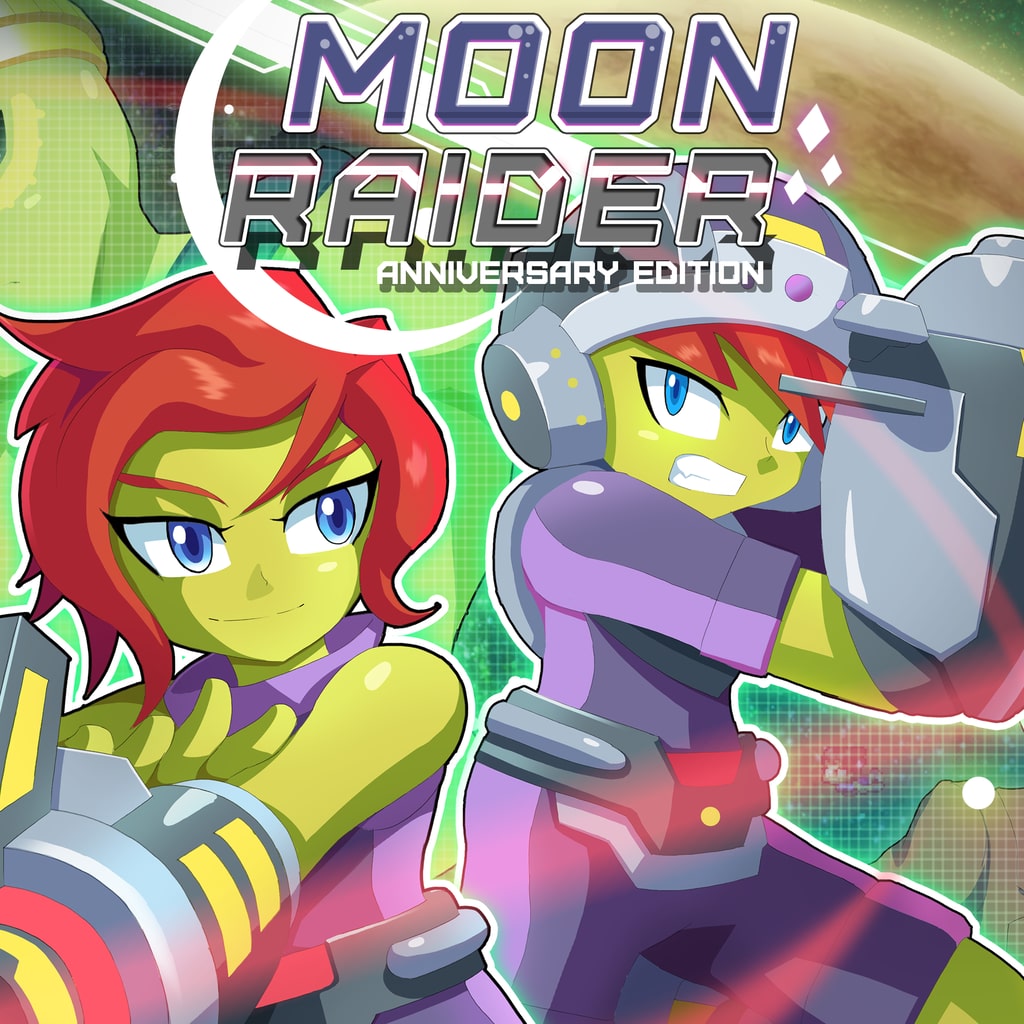
Moon Raider: Anniversary Edition opens with a sense of urgency that feels refreshingly direct. Ava is not here to explore for curiosity’s sake. She is here to save her family and, by extension, a world that is quietly falling apart beneath the moon’s surface.
The premise is simple, almost deliberately so. A missing mother, a corrupted world, and a descent into increasingly hostile environments. It is a structure that has powered platformers for decades, yet Moon Raider leans into it with enough sincerity to make it work.
What matters is not the complexity of the story, but the momentum it creates. From the moment you begin, the game pushes you forward, deeper into a world that feels both ancient and unstable.
Movement That Feels Earned
Platformers live or die by how they feel in your hands, and Moon Raider gets this right almost immediately. Ava moves with a sense of precision that builds confidence quickly. Jumps land where you expect them to. Momentum feels consistent. Mistakes feel like your own.
There is a simplicity to the control scheme that works in its favour. It does not overwhelm you with options. Instead, it focuses on making a small set of actions feel reliable and responsive. That clarity allows the level design to take centre stage.
As you progress, new abilities and tools are introduced, but they never overcomplicate the core movement. They expand what you can do without diluting the foundation. That balance is difficult to achieve, and Moon Raider handles it with quiet confidence.
Level Design That Keeps You Engaged
The real strength of Moon Raider lies in its level design. Each environment feels intentionally crafted, with layouts that challenge your timing, awareness, and adaptability.
From crumbling caverns to mechanical ruins and alien ecosystems, the game presents a steady stream of new ideas. Hazards evolve, traps become more intricate, and enemy placement begins to demand more precise reactions.
What makes this work is pacing. The game introduces concepts gradually, giving you just enough time to understand them before layering on additional complexity. It rarely feels unfair, even when it becomes demanding.
There is a rhythm to each stage. A flow that encourages you to keep moving, to trust your instincts, and to recover quickly when things go wrong.
Boss Battles That Test Your Focus
The eleven boss encounters scattered throughout the game provide a welcome shift in pace. These fights are not just about dealing damage. They are about reading patterns, recognising openings, and maintaining control under pressure.
Each boss introduces a distinct challenge, often combining platforming elements with combat mechanics. You are dodging attacks, navigating hazards, and looking for moments to strike, all within confined spaces that leave little room for error.
These encounters serve as checkpoints for your progress. They test everything you have learned up to that point, and they do so without feeling repetitive. By the time you reach the later stages, the difficulty ramps up in a way that feels earned rather than sudden.
A World Built on Variety
One of the most impressive aspects of Moon Raider is the variety across its ten environments. While the core mechanics remain consistent, each area introduces enough visual and mechanical distinction to keep the experience fresh.
Some stages focus on tight, precise movement. Others open up slightly, giving you more space to navigate but introducing new types of hazards. Environmental storytelling adds subtle flavour, hinting at the history of the moon and the forces that have shaped it.
Visually, the game strikes a balance between clarity and style. It is not trying to push technical boundaries, but it creates a cohesive world that supports gameplay rather than distracting from it.
Co-op Chaos and Shared Discovery
The addition of local co-op is one of the most welcome features in this Anniversary Edition. Bringing a second player into the experience changes the dynamic in interesting ways.
What is a tightly controlled solo experience becomes something more unpredictable. Coordination becomes key, but so does adaptability. Mistakes can cascade quickly, turning simple sections into chaotic moments of recovery and improvisation.
There is a joy in that chaos. It transforms the game into something more social, more immediate. It is not always the most efficient way to play, but it is often the most memorable.
A Familiar Structure That Plays It Safe
For all its strengths, Moon Raider does not take many risks. It refines rather than reinvents. The structure, the progression, and the overall design all feel rooted in established platforming traditions.
That is not necessarily a flaw. There is value in a game that understands its identity and executes it well. But it does mean that players looking for something radically new may find it a little too familiar.
There are moments where you can predict what is coming next. A certain type of hazard, a particular style of challenge. The game rarely surprises in a dramatic way. Still, consistency is its own reward.
Where It Finds Its Strength
What ultimately defines Moon Raider is its focus. It knows what it wants to be and does not drift away from that goal. It delivers a tight, polished platforming experience that respects your time and your skill.
There is a sense of care in how everything is put together. Levels feel deliberate. Challenges feel considered. Progression feels steady.
It is not trying to overwhelm you with systems or stretch itself beyond its strengths. It is content to offer a well-crafted journey from start to finish.
Final Verdict
Moon Raider: Anniversary Edition is a confident, well-executed platformer that delivers exactly what it promises. Tight controls, thoughtful level design, and a steady challenge curve come together to create an experience that is both engaging and satisfying.
It may not push the genre forward in bold ways, but it does not need to. It refines what already works and presents it with clarity and polish. This is a game about movement, timing, and the quiet satisfaction of getting it right.