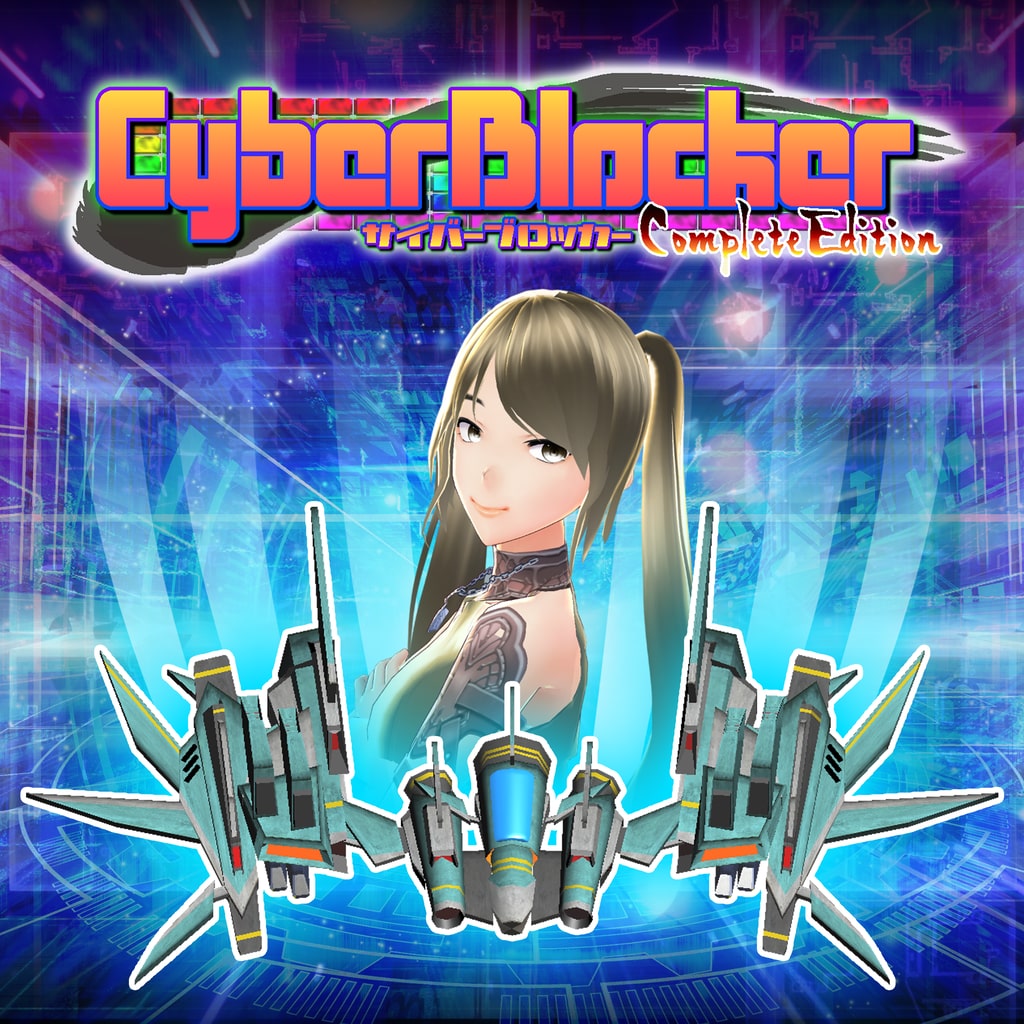
CyberBlocker Complete Edition starts with something instantly recognisable. A ball, a field of blocks, and the simple goal of clearing them. It is a formula that has existed for decades, one that many games have repeated with minor tweaks.
Then CyberBlocker changes the rules. Instead of a static paddle at the bottom of the screen, you control twin ships that move freely across the entire play area. Instead of waiting for the ball to come to you, you chase it, redirect it, and shape its path through constant motion. And instead of relying solely on ricochet physics, you are also firing at enemies, dodging incoming attacks, and managing a battlefield that feels closer to a shoot ’em up than a puzzle game. It is not a reinvention so much as a collision of genres. And surprisingly, it works.
Motion, Rhythm, and Control
The most striking thing about CyberBlocker is how it feels in motion. The orb begins at a manageable speed, bouncing predictably between surfaces, giving you time to understand the space. Then, gradually, it accelerates. What starts as controlled movement becomes something closer to controlled chaos.
Your twin ships are always in motion, adjusting position, anticipating rebounds, and trying to stay aligned with an orb that becomes increasingly difficult to track. At the same time, enemies begin to fill the screen, firing patterns that demand attention and quick reactions.
The result is a rhythm that feels almost musical. You are not just reacting. You are syncing yourself to the movement of the orb, the timing of enemy attacks, and the flow of the stage itself. When it clicks, it feels incredible.
Offence Over Frustration
One of the most frustrating aspects of traditional brick-breaking games is chasing that final block. The angle is wrong, the ball refuses to cooperate, and what should be a simple task drags on longer than it should.
CyberBlocker removes that frustration entirely. Because you can fire at blocks directly, there is always a sense of progress. The orb is still central to the experience, but it is no longer your only tool. You are constantly contributing to the destruction of the field, even when the physics are not working in your favour.
This shift creates a more aggressive style of play. You are encouraged to stay active, to push forward, to take control of the pace rather than waiting for it. It turns a traditionally reactive genre into something far more proactive.
Dual Ships and Defensive Play
The twin-ship system adds another layer of depth. While you can control them together for simplicity, the ability to combine them into a wider defensive barrier becomes crucial during more intense moments.
This combined form acts as a safety net, allowing you to intercept the orb more reliably when things become chaotic. It is a small mechanic, but one that introduces meaningful decision-making. Do you prioritise coverage and safety, or flexibility and precision?
Boss encounters make full use of this system. Large, multi-phase enemies flood the screen with attacks, forcing you to balance offence and defence carefully. These fights feel less like puzzles and more like endurance tests, pushing your awareness and control to their limits.
Variety Through Stages and Ships
The Complete Edition expands the experience with additional stages, each introducing new visual themes and gameplay twists. While the core mechanics remain consistent, these changes help keep the experience from feeling repetitive.
Enemy patterns evolve, block arrangements become more complex, and environmental hazards add subtle variations to how you approach each stage. It is not a dramatic shift, but it is enough to maintain engagement across multiple runs.
The inclusion of different aircraft also adds variety. Each ship offers slight variations in handling or firepower, encouraging experimentation. Finding a setup that suits your playstyle becomes part of the appeal, particularly as difficulty increases.
Arcade Roots, Modern Polish
CyberBlocker wears its arcade inspiration proudly. Sessions are fast, focused, and built around high scores and repeat attempts. It is easy to jump in, play a few rounds, and step away.
The addition of score-attack modes and leaderboards reinforces that structure. This is a game that wants you to improve, to refine your performance, and to chase higher numbers through better execution.
The console version benefits from smoother performance and improved clarity, making the already fast-paced action easier to track. It is not a dramatic overhaul, but it feels refined in ways that matter.
Intensity That Can Overwhelm
For all its strengths, CyberBlocker is not an easy game to settle into. Its pace ramps up quickly, and the combination of orb tracking, enemy fire, and constant movement can feel overwhelming, especially for new players.
There is a lot to process at once. Your eyes are pulled in multiple directions, your hands are constantly adjusting, and mistakes can escalate quickly. It demands focus in a way that can be exhausting over longer sessions.
This intensity is part of its identity, but it does limit accessibility. Players looking for a more relaxed puzzle experience may find it too demanding.
Where It Finds Its Identity
What makes CyberBlocker stand out is not just its mechanics, but how confidently it blends them. It does not treat brick-breaking and shooting as separate systems. It merges them into a single, cohesive experience where each element supports the other.
You are always engaged. Always moving. Always making decisions, even if they happen in fractions of a second.
It is a game that rewards attention, rhythm, and persistence. One that feels simple at first glance, but reveals depth through repetition and mastery.
Final Verdict
CyberBlocker Complete Edition is a sharp, fast-paced arcade experience that successfully reimagines a classic formula through the lens of modern action design. Its combination of brick-breaking and bullet-hell mechanics creates something that feels both familiar and fresh.
It can be overwhelming, and it does not always ease players into its intensity, but those willing to engage with its systems will find a deeply satisfying loop built on precision and flow. This is a game about control in chaos, about finding rhythm in speed, and about turning a simple idea into something far more demanding.