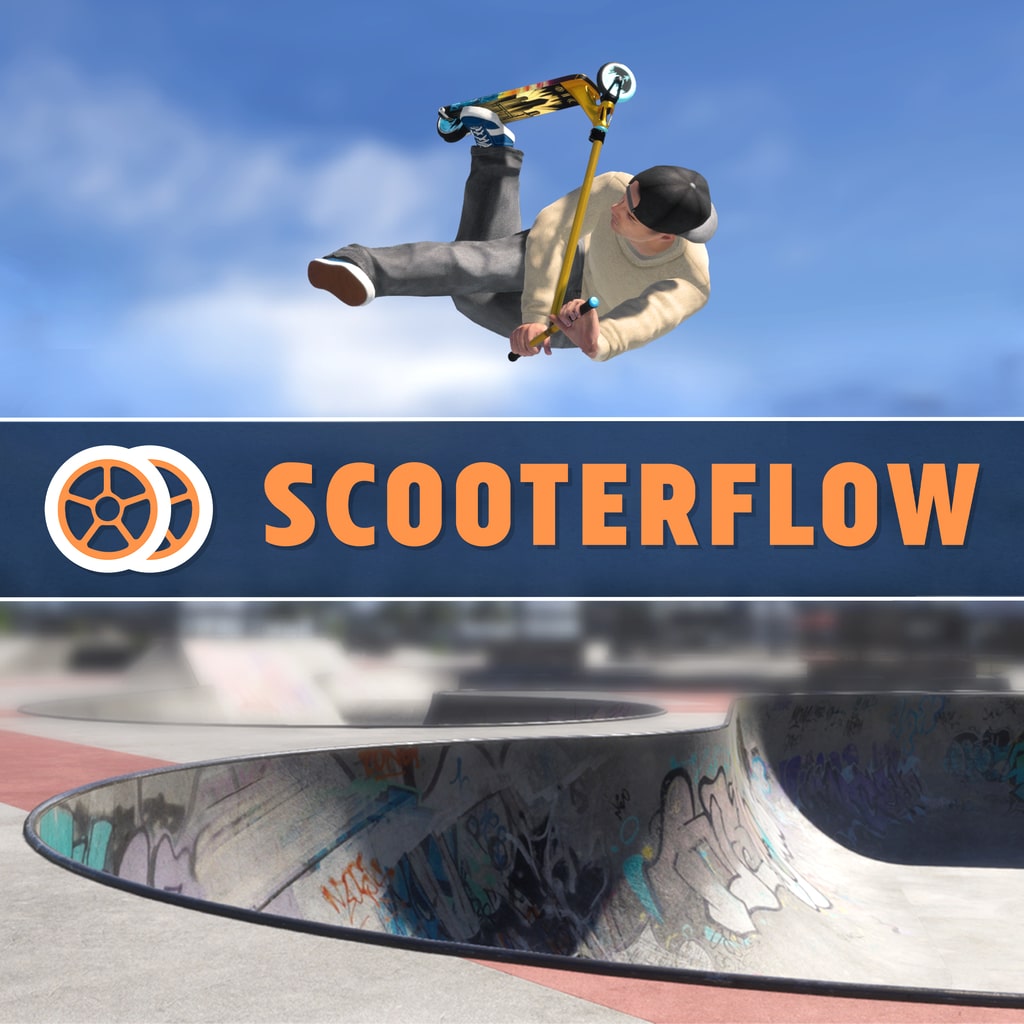
There is a moment in ScooterFlow when the game finally makes sense. Not through a tutorial prompt or a checklist of objectives, but through feel. You hit a ramp with just enough speed, tilt the deck mid-air, land cleanly, and roll straight into a grind without losing momentum. It lasts maybe five seconds. It sticks with you far longer.
Developed by UncannyKiwi Limited, ScooterFlow is not trying to compete with arcade-style action sports games. It is chasing something more elusive. Authentic movement. Real weight. The quiet satisfaction of getting a line just right. That ambition defines everything about it, for better and for worse.
A Simulation First, a Game Second
At its core, ScooterFlow is built around a physics system that prioritises realism over accessibility. Every jump, grind, and landing is governed by momentum and balance. There is no safety net smoothing out mistakes. If your angle is off, you will feel it immediately. If your timing slips, the run falls apart.
This creates a steep learning curve. Early sessions can feel awkward, even frustrating. Movements that seem simple in theory require careful input and spatial awareness. You are not just pressing buttons. You are managing weight, direction, and timing all at once. But once it clicks, the game opens up in a way that feels genuinely rewarding.
There is a natural rhythm to movement that cannot be faked. You start to anticipate how your rider will respond. You learn how to carry speed through transitions. Tricks stop feeling like isolated actions and begin to flow into each other. That sense of flow is where the game earns its name.
Building Lines, Not Chasing Scores
Unlike many action sports titles, ScooterFlow is not obsessed with points. There is no constant push towards high scores or combo multipliers. Instead, it encourages creativity and expression.
You are building lines. Not for a leaderboard, but for yourself. This shift in focus changes how you approach the game. You are not rushing to maximise output. You are experimenting, adjusting, refining. A clean, stylish run feels more satisfying than a messy, high-scoring one. It is a quieter kind of satisfaction, but a deeper one.
The absence of structured progression may put some players off. There are no traditional career modes guiding you from beginner to pro. No clear milestones marking your improvement. Progress is personal, measured in how confidently you move through the environment. For some, that freedom is liberating. For others, it may feel directionless.
Parks That Feel Lived In
The environments in ScooterFlow play a crucial role in shaping its identity. From tight street spots to expansive skateparks and towering mega ramps, each location is designed with movement in mind.
What stands out is the sense of authenticity. Many parks are based on real-world locations, and that grounding gives them a natural flow. Lines emerge organically. Transitions connect in ways that feel intuitive once you understand the physics.
There is a subtle storytelling in how these spaces are built. Scuffed rails, worn surfaces, and varied layouts create the impression of places that have been used, not just designed. You are not just navigating a level. You are exploring a space.
Customisation That Goes Deep
Customisation is another area where ScooterFlow excels. The ability to build your own scooter using licensed parts from brands like Apex, Ethic, and Lucky adds a layer of personal investment that goes beyond aesthetics.
Each component contributes to the overall feel of your setup. Weight distribution, responsiveness, and stability can all shift depending on your choices. It is not just about looking good. It is about finding a configuration that matches your style.
Clothing customisation extends that expression further. While it does not impact gameplay, it reinforces the sense that this is your rider, your setup, your space. There is an impressive level of detail here, and for players who enjoy tinkering, it adds significant depth.
A Social Space at Its Best
Where ScooterFlow truly comes alive is in its online lobbies. Riding alongside other players transforms the experience from a solitary exercise into something communal.
You watch others attempt lines, learn from their approaches, and occasionally land something that earns a quiet nod of respect. There is no pressure, no competition in the traditional sense. Just shared space and shared movement.
The replay editor enhances this further, allowing you to capture and refine your best moments. It turns successful runs into something worth revisiting, not just for personal satisfaction, but for sharing. In these moments, ScooterFlow feels less like a game and more like a digital skatepark.
The Cost of Authenticity
For all its strengths, ScooterFlow is not an easy game to recommend universally. The same physics system that makes it rewarding also makes it demanding. There is little in the way of onboarding for new players. Tutorials are limited, and the game often expects you to learn through trial and error.
This can create a barrier to entry that feels unnecessarily steep. Players unfamiliar with simulation-based sports games may struggle to find their footing, especially in the early hours.
There is also a lack of structured content. Without a career mode or defined progression path, some players may find it difficult to stay engaged long-term. The freedom that defines the experience can also leave it feeling sparse.
Sound and Style
The presentation leans into a grounded, contemporary aesthetic. Visuals are clean and functional, prioritising clarity over spectacle. Animations are smooth, with a noticeable emphasis on how movement connects rather than how it looks in isolation.
The soundtrack fits the tone well, blending indie, rock, and hip-hop influences into something that feels appropriately tied to action sports culture. It is not overwhelming, but it adds energy when needed.
Sound design during gameplay is subtle but effective. The scrape of a grind, the impact of a landing, the hum of wheels on concrete. These details reinforce the physicality of the experience.
A Niche Done Right
ScooterFlow is not trying to be everything to everyone. It is a focused, deliberate attempt to capture the feel of freestyle scootering in a digital space. It succeeds in that goal more often than not.
The challenge lies in how specific that appeal is. Players looking for instant gratification or structured progression may find it lacking. Those willing to invest time, learn its systems, and embrace its slower, more deliberate pace will find something genuinely special. It is a game about patience. About repetition. About small improvements that build into something satisfying.
Final Verdict
ScooterFlow is a thoughtful, authentic simulation that captures the rhythm and creativity of freestyle scootering with impressive fidelity. Its physics system is both its greatest strength and its biggest barrier, offering deep satisfaction to those who master it while remaining intimidating to newcomers.
It lacks structured modes and broader accessibility, yet what it does offer feels genuine and carefully crafted. For the right player, it is easy to lose hours chasing that perfect line.