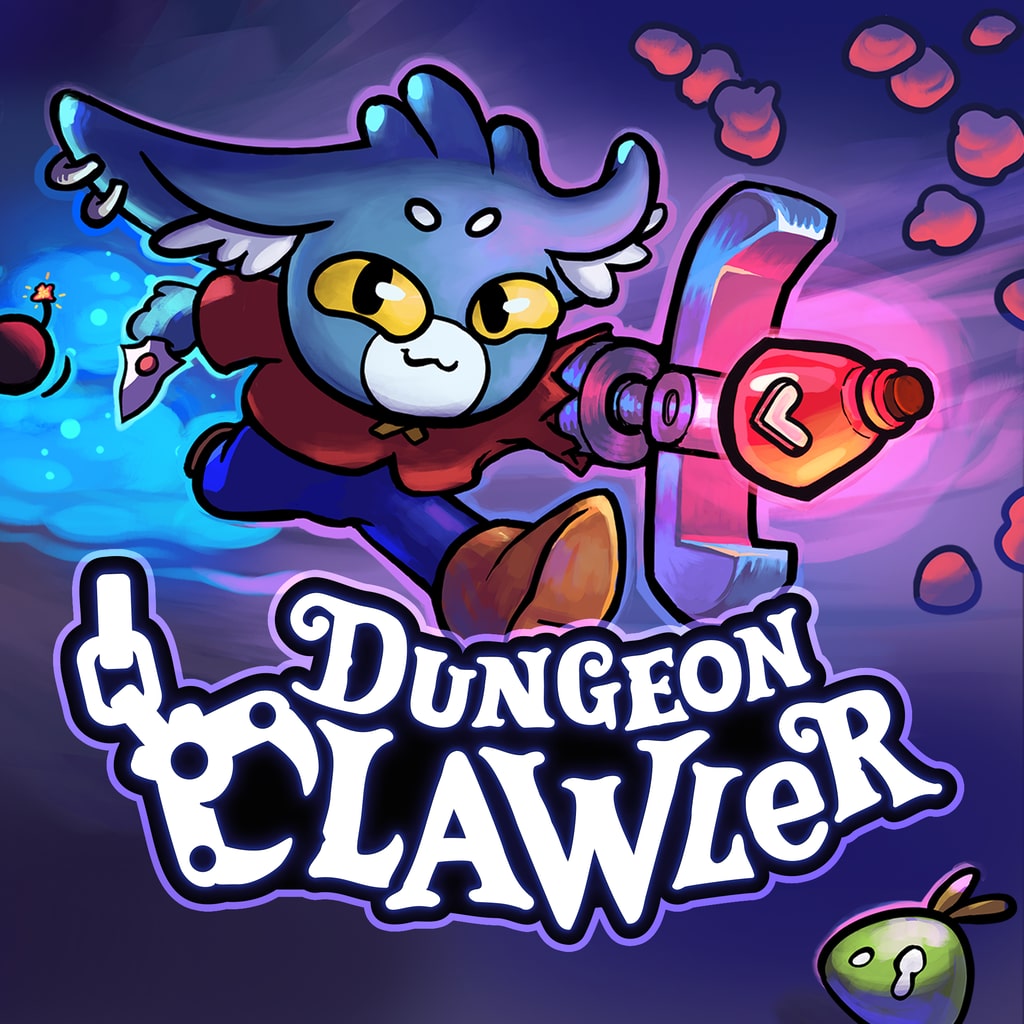
Roguelike deckbuilders have spent years refining their language. Draw cards, manage energy, build synergies, repeat. It is a formula that has produced some of the most thoughtful strategy games in recent memory, but also one that risks settling into predictability. Dungeon Clawler arrives like a loud arcade machine dropped in the middle of that carefully organised space.
Developed by Stray Fawn Studio, it takes the structure of a deckbuilder and replaces the deck entirely with a claw machine. Not metaphorically. Literally. You do not draw cards. You grab them. That single decision changes everything.
The Claw Is the Deck
At the heart of Dungeon Clawler is a simple but chaotic idea. Instead of drawing from a controlled deck, you interact with a physics based claw machine filled with weapons, items, and temporary power-ups. Each turn begins not with certainty, but with motion.
You aim the claw. You drop it. You hope. Sometimes you pull exactly what you need. A perfectly timed weapon that completes your build or a defensive item that saves a run. Other times, you miss entirely, or grab something useful at the wrong moment, forcing you to adapt on the fly.
This system creates a tension that traditional deckbuilders rarely achieve. Strategy is still essential, but it is constantly disrupted by physical unpredictability. You can plan ahead, but you can never fully control the outcome. And that is the point.
Control Versus Chaos
What makes Dungeon Clawler so compelling is the friction between planning and execution. In most deckbuilders, failure is usually the result of poor preparation or bad draws. Here, failure can come from a perfectly planned turn undone by a slightly misaligned claw drop.
It sounds frustrating, and at times it absolutely is. But it also creates moments of genuine surprise that feel rare in the genre.
You start to think differently. Instead of building a rigid strategy, you build flexible systems. You learn to adapt your plans based on what you can realistically grab, not just what you want to grab. That shift is where the game finds its identity.
Builds Born From Accidents
Every run in Dungeon Clawler is shaped by improvisation. Items are not just collected, they are physically retrieved from the machine, meaning your build evolves through interaction rather than selection.
Synergies still matter. In fact, they matter more than ever. But they are often discovered rather than planned. A run might begin with a simple melee focus, only to shift into elemental chaos because you happened to snag a rare modifier at the right moment.
There is a sense of discovery here that feels closer to experimentation than optimisation. It is messy. It is unpredictable. And it is often very funny.
Characters That Change the Rules
The 1.0 release introduces a wider roster of characters, each with distinct strengths that alter how the claw machine behaves. Some characters improve precision. Others increase item variety or modify how certain pickups interact.
These differences are not subtle. They meaningfully change how each run feels, encouraging experimentation across multiple playstyles.
A character built around precision turns the game into a careful exercise in timing and control. Another, built around randomness, leans fully into chaos, rewarding players who can adapt quickly rather than plan ahead.
This variety helps soften the unpredictability of the core system. Even when the claw refuses to cooperate, your character choice gives you a different lens through which to approach the problem.
The Dungeon Beneath the Machine
Outside of the claw machine itself, Dungeon Clawler follows a familiar roguelike structure. You progress through a series of dungeon floors, encountering enemies, hazards, and occasional shops or event spaces.
Combat is straightforward but effective. You use whatever you manage to retrieve from the claw machine to fight through encounters. The strength of your build directly reflects your success in previous grabs, which creates a satisfying feedback loop between risk and reward.
There is also a light meta-progression system that allows for long-term upgrades and customization between runs. These systems do not overshadow the core experience, but they provide enough structure to keep progression feeling meaningful.
Daily Challenges and Replayability
One of the standout additions in the full release is the Daily Challenge mode. These runs introduce specific modifiers that alter the behaviour of the claw machine or restrict certain item types, forcing players to rethink familiar strategies.
It is a smart addition that helps extend replayability. Combined with the inherent variability of the claw system, no two runs feel exactly the same.
That said, repetition can still creep in over time. While the randomness keeps individual sessions fresh, the broader structure of runs remains consistent. Enter dungeon, grab items, fight enemies, repeat. It is a strong loop, but not an endlessly evolving one.
Sound, Style, and Arcade Energy
Visually, Dungeon Clawler leans into a playful, slightly chaotic aesthetic. The dungeon environments are colourful without being overwhelming, and the claw machine itself is always the focal point of the screen.
There is a deliberate arcade feel to the presentation. Animations are snappy, feedback is immediate, and everything is designed to keep momentum flowing.
Sound design reinforces this energy. The mechanical clunk of the claw, the ping of successful grabs, and the escalating intensity of combat all contribute to a sense of controlled chaos.
It feels less like a traditional RPG dungeon and more like a game you would find in a noisy arcade corner, surrounded by flashing lights and competing sounds.
Frustration as Design
There is no avoiding the fact that Dungeon Clawler can be frustrating. The claw machine is inherently unreliable, and that unpredictability will not appeal to everyone.
There will be runs where everything clicks. And there will be runs where nothing does. The difference is that failure here rarely feels like punishment. It feels like misfortune. A missed grab rather than a misplayed system. Whether that distinction works for you will likely define your experience with the game.
A Genre Bent Out of Shape
What Dungeon Clawler ultimately achieves is not refinement, but transformation. It takes the structured clarity of deckbuilders and injects them with physical uncertainty. The result is something less predictable, more reactive, and often more entertaining.
It is not trying to be the most balanced or precise entry in the genre. It is trying to be the most memorable.
Final Verdict
Dungeon Clawler is a bold and inventive roguelike that successfully turns the chaos of a claw machine into a strategic system full of risk, reward, and surprise. Its reliance on randomness can be frustrating, but that same unpredictability is also what gives it personality.
It is a game about adapting rather than controlling, reacting rather than planning, and finding order in controlled chaos. Not every grab will land. But when it does, it feels like you earned it.