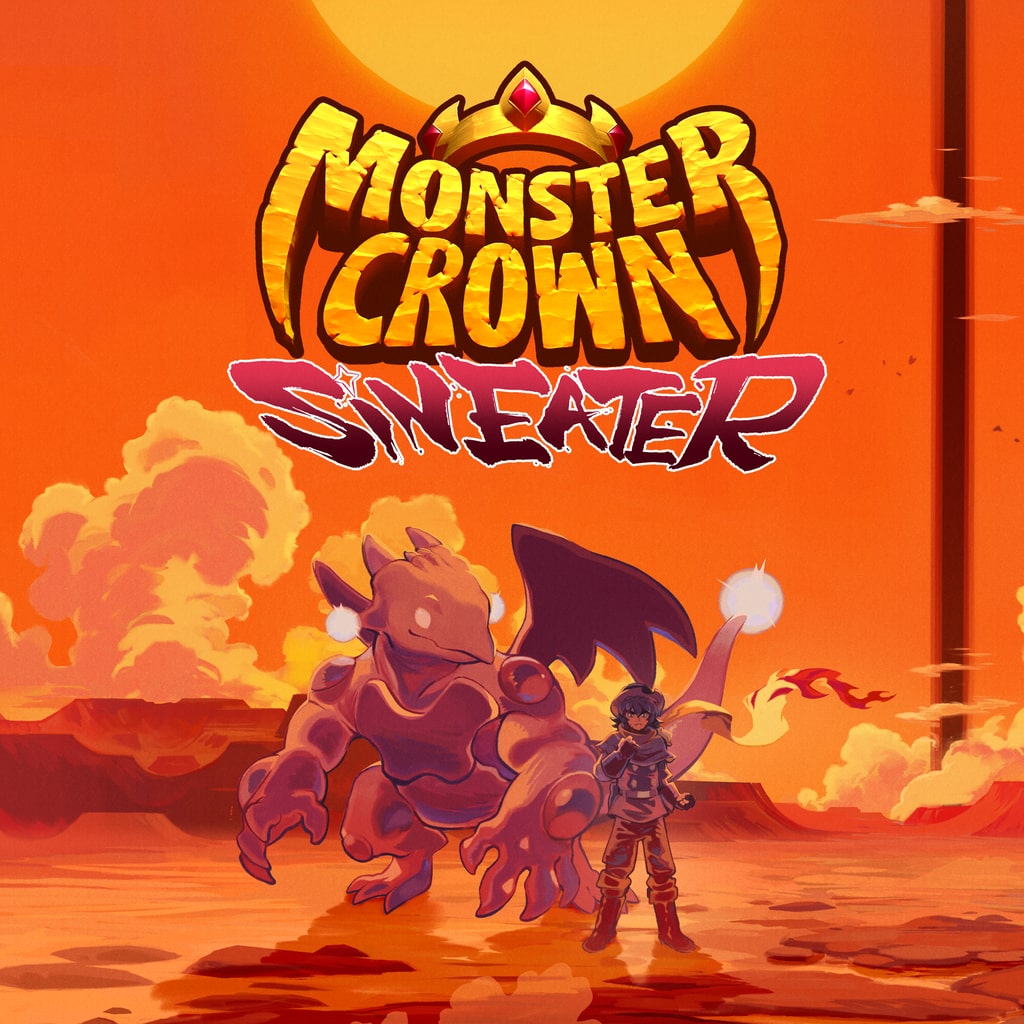
Sequels in the monster-taming genre often play it safe. They refine systems, add new creatures, maybe widen the world a little, and call it evolution. Monster Crown: Sin Eater refuses that comfort entirely. It does not just expand the formula of its predecessor, it tears it apart and rebuilds it with sharper edges and heavier consequences.
Developed by Studio Aurum, this follow-up to 2021’s cult RPG takes place in the Crown Nation, a land that feels less like a backdrop and more like a system in decline. You play as Asur, a young farmer whose life is uprooted by violence and expectation, forcing him into a world where monsters are not companions first, but extensions of survival, power, and moral compromise. If the original Monster Crown flirted with darkness, Sin Eater lives in it.
A Journey Without Comfort
From the beginning, Sin Eater signals that it is not interested in traditional heroism. There is no gentle onboarding into a chosen destiny. Instead, you are pushed into a world where every decision carries weight, and every alliance feels conditional.
The Crown Nation itself is sprawling and deliberately uneven. Forests bleed into industrial ruins. Quiet farmland sits uncomfortably close to corrupted zones where reality feels unstable. It is not a world designed for convenience. It is a world that resists clarity.
Exploration is open ended, sometimes to a fault. You are rarely told exactly where to go next, and objectives often exist as loose suggestions rather than firm directives. This can be disorienting, but it also creates a sense of discovery that feels earned rather than guided. You are not following a path. You are carving one.
Monsters as Systems, Not Companions
At the heart of Sin Eater lies its most ambitious feature: a deeply complex genetics based breeding and fusion system. With over a thousand possible monster combinations, the game transforms creature collection into something closer to experimentation than simple acquisition.
Every monster carries traits that can be passed down, altered, or combined through crossbreeding. The results are rarely predictable. Sometimes you create something powerful. Sometimes you create something deeply strange. Often, it is both.
This system encourages long term thinking in a way few monster taming games attempt. You are not just assembling a team. You are shaping a lineage. Planning generations ahead becomes part of the strategy, especially when certain combinations unlock entirely new combat possibilities.
It is overwhelming at first. There is no gentle introduction to its deeper mechanics. But once it clicks, it becomes the driving force of the entire experience.
Combat That Demands Patience
Battles in Sin Eater are turn based, but they are anything but passive. Positioning, elemental interaction, and monster synergy all play significant roles. Fights are less about brute force and more about understanding how your creations interact with each other and the world around them.
There is a noticeable emphasis on preparation. A poorly planned team can struggle even in early encounters, while a well engineered lineup can turn difficult fights into controlled demonstrations of strategy.
This creates a satisfying but demanding rhythm. Success rarely feels accidental. Failure, on the other hand, often feels like a direct result of oversight or experimentation gone wrong. It is a system that rewards attention and punishes carelessness without apology.
Choice That Actually Changes Things
One of the most significant departures from its predecessor is the introduction of meaningful branching narrative paths. Choices are not cosmetic. They affect relationships, available regions, and even how certain monsters behave or evolve.
As Asur’s journey unfolds, you are constantly asked to weigh survival against morality. Help a struggling settlement or exploit its resources. Save a creature or harvest it for power. These decisions are rarely framed as clearly right or wrong.
Instead, they exist in a grey space where consequences unfold slowly over time. This approach gives the narrative a sense of weight that lingers beyond individual scenes. The world remembers what you do, even when it does not immediately react.
A Visual Identity Rooted in Contrast
Visually, Sin Eater adopts a striking blend of retro inspired pixel aesthetics and modern presentation techniques. The result feels both nostalgic and contemporary, echoing handheld RPGs of the past while maintaining widescreen clarity and environmental detail.
The monster designs are particularly impressive. There is a deliberate inconsistency in style that reinforces the idea of genetic unpredictability. Some creatures feel almost traditional. Others are unsettling in ways that feel intentional rather than accidental.
Environments carry a similar contrast. Peaceful regions are rendered with soft colour palettes and gentle animation, while corrupted zones feel harsher, more fragmented, as if the world itself is struggling to hold shape.
Sound and Atmosphere
Sound design plays a crucial role in grounding the experience. The soundtrack, directed by Onion_mu, shifts between calm melodic themes and more unsettling ambient pieces depending on location and narrative tone.
There is restraint in how music is used. Silence is often just as important, especially in exploration segments where environmental audio takes precedence. Wind, distant creature calls, and subtle mechanical hums all contribute to a world that feels constantly active, even when nothing is happening directly.
Freedom and Frustration
For all its strengths, Sin Eater is not always graceful in how it delivers information. The same openness that makes exploration feel liberating can also lead to moments of confusion. Important mechanics are sometimes introduced without clear explanation, and progression can stall if you miss subtle environmental cues.
There is also a learning curve to its breeding and fusion systems that may overwhelm players unfamiliar with deep optimisation mechanics. While experimentation is encouraged, the lack of structured guidance means mistakes can be costly in terms of time and resources. This is a game that trusts the player heavily. That trust is rewarding, but it is not always comfortable.
A World That Demands Engagement
What ultimately defines Monster Crown: Sin Eater is its refusal to simplify itself. It asks for patience. It asks for attention. It asks players to engage with systems that are deliberately complex and occasionally opaque.
In return, it offers depth that few games in the genre can match. Not just in terms of creature variety, but in how those creatures interact with narrative, combat, and consequence.
It is a game about systems as much as story. About lineage as much as companionship. About the cost of shaping a world through the things you create.
Final Verdict
Monster Crown: Sin Eater is a bold, uncompromising evolution of the monster-taming RPG. Its deep genetic systems, branching narrative structure, and morally complex world give it a distinct identity that separates it from its inspirations.
It is not always easy to navigate, and it does not always communicate its ideas clearly. But for players willing to invest in its systems, it offers one of the most mechanically rich and narratively flexible entries in the genre. It is messy, ambitious, and often brilliant in the ways that matter most.