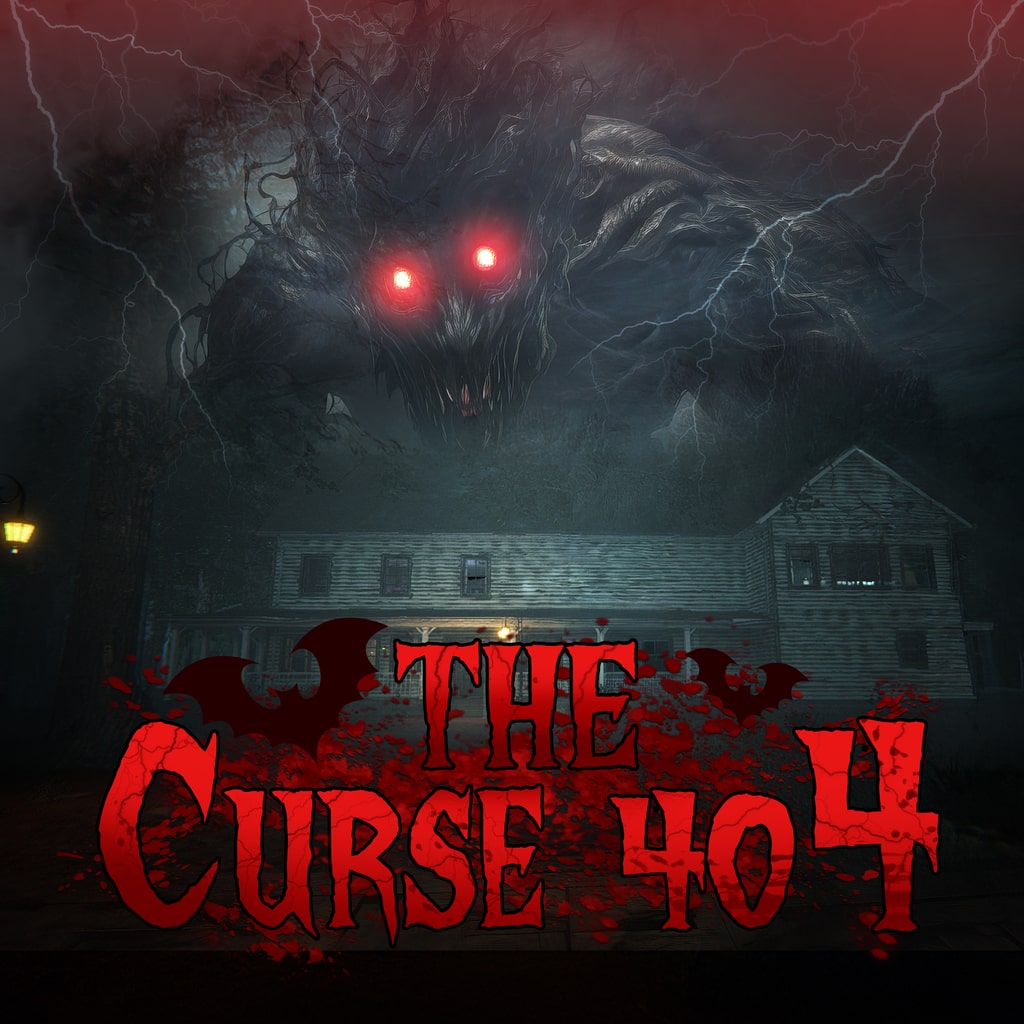
The Curse 404 begins with disorientation. You wake into darkness, guided only by fragments of light and the uneasy sense that something is already watching you. The environment is unfamiliar, yet strangely repetitive. Corridors bend back into themselves. Rooms feel both new and remembered.
This is the game’s central idea, and it commits to it fully. You are trapped in a series of looping environments that gradually reveal their logic as you spend more time inside them. At first, it feels confusing. Then unsettling. Eventually, it becomes something worse. Familiar. That familiarity is where the horror lives.
Light as Both Tool and Threat
Most horror games give you tools to survive. The Curse 404 gives you one and immediately makes you afraid of using it. Your flashlight is essential. Without it, navigation becomes almost impossible. With it, you risk drawing attention. Battery life is limited, and every second the light stays on feels like a decision you might regret.
This simple system does an incredible amount of work. It transforms exploration into a constant internal debate. Do you move forward in darkness and risk missing something important, or do you illuminate your surroundings and risk being seen? The answer is rarely comfortable.
Stealth That Forces You to Listen
Enemies in The Curse 404 are not just obstacles. They are pressure. They move through the same looping spaces you do, reacting to sound, light, and proximity. The game provides a warning system that alerts you when danger is near, but it is not a safety net. It is a reminder that you are already in trouble.
Stealth here is less about planning and more about instinct. You hide when you can, move when you must, and try to stay one step ahead of something that always feels closer than it should be.
There are moments where you will freeze, unsure whether to move or stay still. Those moments are where the game is at its strongest. It understands that fear often comes from uncertainty, not just threat.
Puzzles That Break the Rhythm
What keeps The Curse 404 from becoming overwhelming is its approach to puzzles. Rather than relying on a single mechanic, it constantly shifts expectations.
One moment you are repairing an electrical circuit, tracing connections under pressure. The next, you are solving a sequence-based puzzle that requires careful observation and memory. Later, you may find yourself piecing together musical patterns that feel almost out of place until they suddenly are not.
These puzzles do more than add variety. They create moments of focus that cut through the tension. For a brief period, your attention shifts from survival to problem solving. Then the game pulls you back.
The journal system helps track clues, which is a welcome inclusion. Without it, the constant looping structure could easily become disorienting in a frustrating way. Instead, it feels like you are slowly mapping something that does not want to be understood.
Atmosphere Over Fidelity
Visually, The Curse 404 is modest. It does not aim for cutting-edge realism or elaborate detail. Instead, it builds its identity through lighting, shadow, and sound.
Darkness is not just an absence here. It is a presence. Spaces feel tight, oppressive, and unpredictable. Corners hide more than just geometry. They hide possibility.
Sound design carries much of the weight. Distant footsteps, faint mechanical hums, and the subtle shifts in ambient noise create a soundscape that keeps you constantly alert. Even when nothing is happening, it feels like something could.
There is a roughness to the presentation that occasionally shows through. Animations can feel stiff, and environmental detail is inconsistent. But more often than not, the atmosphere compensates.
The Psychology of Repetition
The looping structure is not just a gameplay mechanic. It is a psychological tool. At first, repetition provides comfort. You begin to recognise layouts, anticipate turns, and feel a small sense of control. Then the game begins to shift things. Not dramatically, but just enough to make you question your memory. Was that door always there? Did that corridor feel this long before?
That erosion of certainty is where the game excels. It turns knowledge into doubt. The more familiar you become with the environment, the more unsettling it feels when that familiarity starts to break down. It is a slow burn, but an effective one.
Where the Illusion Falters
For all its strengths, The Curse 404 does show its limitations over time. The looping environments, while effective, can begin to feel restrictive rather than oppressive. There is a fine line between intentional repetition and noticeable limitation, and the game occasionally crosses it.
Some puzzles, while varied, lack the refinement needed to feel consistently satisfying. A few feel more like obstacles than meaningful challenges, interrupting the flow rather than enhancing it.
There are also moments where the tension dips slightly, particularly when you become more comfortable with the stealth systems. Fear is difficult to sustain over long periods, and the game does not always find new ways to escalate it.
Final Verdict
The Curse 404 is a focused psychological horror experience that understands the power of restraint. It builds tension through limitation, familiarity, and the constant threat of being seen.
Its use of light as both tool and liability is its strongest idea, supported by a looping structure that slowly erodes your sense of control. While its presentation is modest and its systems occasionally show strain, the core experience remains compelling. This is a game that does not rely on sudden shocks to create fear. It relies on the quiet, persistent feeling that you are never truly safe.