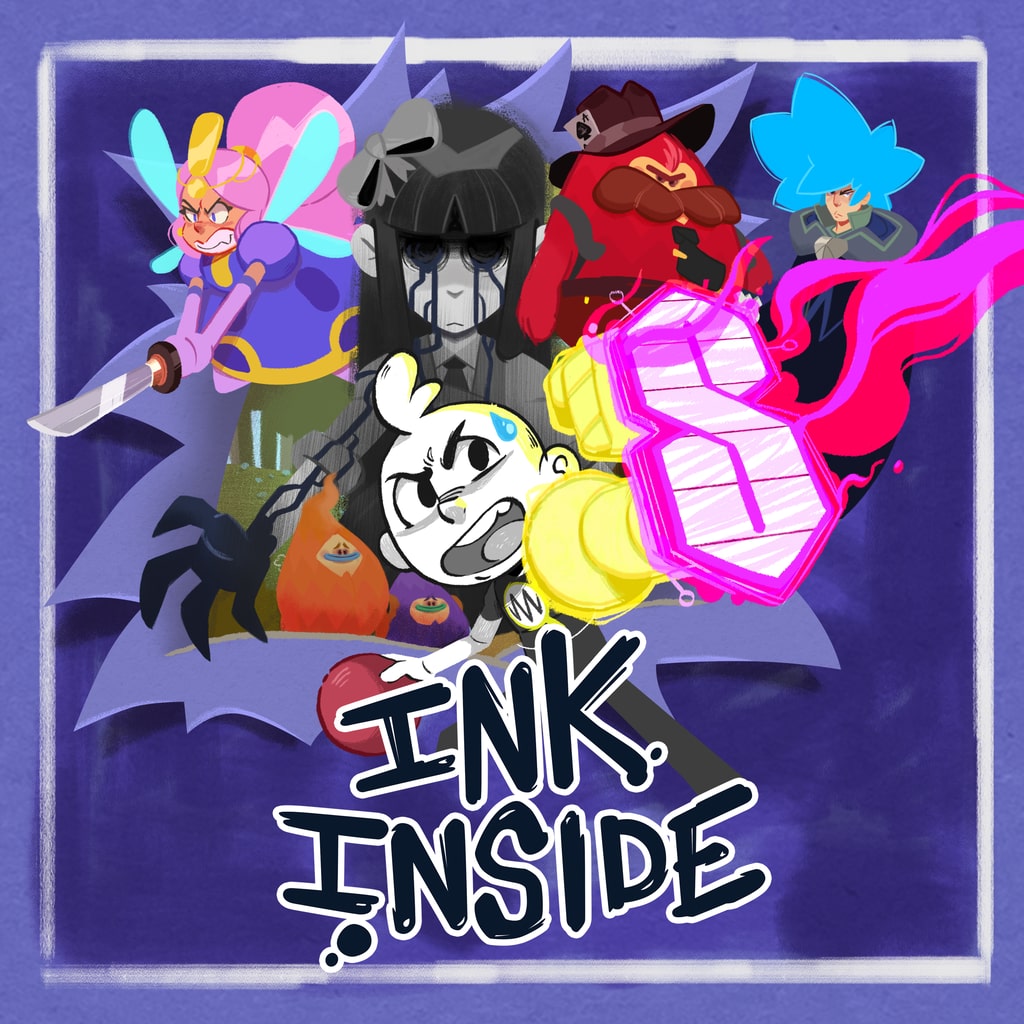
There are games that entertain, games that challenge, and then there are games like Ink Inside—titles that unsettle, provoke, and stay with you long after you’ve put the controller down. A surreal narrative puzzle-adventure wrapped in psychological horror, Ink Inside is less about defeating enemies or mastering combat and more about descending into a world where creativity becomes corruption, and expression becomes something you can’t always control.
Stylish, bold, and dripping (sometimes literally) with thematic intent, Ink Inside explores the razor-thin boundary between artistic creation and emotional collapse. It’s an intimate game with big ideas, blending symbolism, environmental storytelling, and puzzle-driven progression into a strange, beautiful nightmare that calls back to games like Layers of Fear, Limbo, and Control while forging its own identity.
A Story Told in Strokes, Scratches, and Silence
Ink Inside casts you as Rhea Lorne, a once-renowned illustrator suffering from creative burnout and unresolved trauma. Following a mysterious invitation, she returns to her abandoned childhood studio—a place tightly linked to her early talent, and to a tragedy she has spent years trying to forget.
The premise is initially simple: rediscover your inspiration. But Ink Inside quickly makes it clear that inspiration isn’t the only thing living within these walls.
The studio is a labyrinth of shifting rooms, sketchbook memories, and living ink constructs that slither along pages, ceilings, and hallways. As you explore, you uncover fragments of the past through:
- charcoal scrawls that animate when touched
- illustrated diary pages that rewrite themselves
- portraits that whisper conflicting memories
- drawings that morph depending on Rhea’s emotional state
The narrative doesn’t spoon-feed answers. Instead, it layers symbolism and metaphor until the line between literal and figurative blurs beyond recognition. Is the ink alive? Or is it a manifestation of Rhea’s spiraling artistic psyche? The game never tells you outright—and that ambiguity is one of its greatest strengths.
Rhea herself is a compelling protagonist. Her voice acting captures vulnerability without melodrama, and her internal monologue evolves as she confronts pieces of her fractured past. It’s a story about art, guilt, and catharsis that avoids clichés by embracing surrealism.
Gameplay: A Puzzle-Driven Descent Into Madness
Ink Inside is not a traditional horror game. Instead of relying on jump scares or combat, it builds fear through interaction, inference, and environmental change.
The Core Mechanic: Drawing Reality Into Being
Your primary tool is Rhea’s sketchbook, which allows you to draw simple shapes and symbols that then become three-dimensional parts of the environment. For example:
- Draw a ladder → climb to a new platform.
- Draw a bridge → cross a gap that wasn’t there.
- Draw a door → open a path into a previously sealed room.
- Draw a flame → illuminate a shadowy corridor.
This mechanic feels intuitive and tactile, reinforcing the theme that creation comes at a cost. The ink is alive, and your drawings can warp, decay, or mutate unexpectedly.
Later in the game, drawings become unstable when Rhea’s emotions spike, forcing players to manage both environment and psyche simultaneously.
Environmental Puzzles
Puzzle design is where Ink Inside truly excels. Rather than asking players to solve abstract riddles, puzzles emerge naturally from the world’s shifting logic:
- Sketches ripple when lies are present, guiding you toward truth.
- Perspective shifts transform ink blotches into functional symbols.
- Illusions break only when you draw something contradictory.
- Rooms loop endlessly until you sketch the memory Rhea is avoiding.
These sequences can be profound, unsettling, and occasionally uncomfortable—and that’s entirely intentional.
Ink Creatures
While there is no combat, the world is populated by abstract entities formed from corrupted ink—representations of Rhea’s fears, regrets, and forgotten truths. Encounters with them are stealth or puzzle-based, relying on distraction, quick movement, or altering the environment to escape.
These moments deliver tension without ever resorting to cheap tricks.
Visuals: Hand-Drawn Horror With Striking Style
Ink Inside has one of the most unique aesthetic identities in recent memory. It blends hand-drawn 2D art with painterly 3D environments, creating a shifting hybrid world that feels cohesive despite its contradictions.
Highlights include:
- Ink bleed effects that distort the world in real time.
- Sketch animations that feel ripped straight from Rhea’s childhood notebooks.
- Black-and-white sequences where only certain emotions appear in colour.
- Layered environmental textures reminiscent of graphite, charcoal, and pastels.
The visual storytelling goes beyond style—it communicates mood, memory, and meaning in every brushstroke.
Sound Design: Minimal, Emotional, and Unsettling
The soundscape in Ink Inside leans heavily on:
- soft, paper-like rustles
- wet ink drips echoing through empty halls
- unstable tonal drones
- music tracks that shift tempo based on Rhea’s anxiety
Voice acting is sparse but effective, and silence is used with near-cinematic precision. The game sounds like a sketchbook come alive—and not always in pleasant ways.
Performance and Accessibility
Ink Inside runs smoothly across platforms, with only occasional dips during complex ink morph sequences. Controls feel intuitive whether using a controller or mouse, though drawing with analog sticks sometimes lacks precision.
Accessibility features include:
- adjustable puzzle difficulty
- optional visual contrast modes
- text size options
- simplified drawing presets
A thoughtful touch in a game so reliant on visual interpretation.
Where Ink Inside Smudges the Page
While ambitious and beautifully crafted, Ink Inside has a few notable issues:
- A handful of puzzles rely too heavily on abstract thinking, which may frustrate less patient players.
- Pathfinding can be unclear in sections where rooms physically reshape.
- The narrative’s ambiguity—one of its major strengths—may leave some players wanting a more concrete resolution.
- Drawing controls occasionally misinterpret input during late-game sequences that require speed.
These issues are minor but noticeable within an otherwise compelling experience.
Verdict: A Masterful, Haunting Journey Through Art and Trauma
Ink Inside is a rare kind of game—one that uses mechanics, visuals, and narrative to reinforce each other with precision and purpose. It is atmospheric, introspective, and emotionally resonant, delivering a surreal journey that lingers long after completion.
It may not appeal to those looking for fast-paced pacing or clear-cut storytelling, but for players who appreciate psychological depth, symbolic puzzles, and unforgettable imagery, Ink Inside is one of the standout indie experiences of the year.