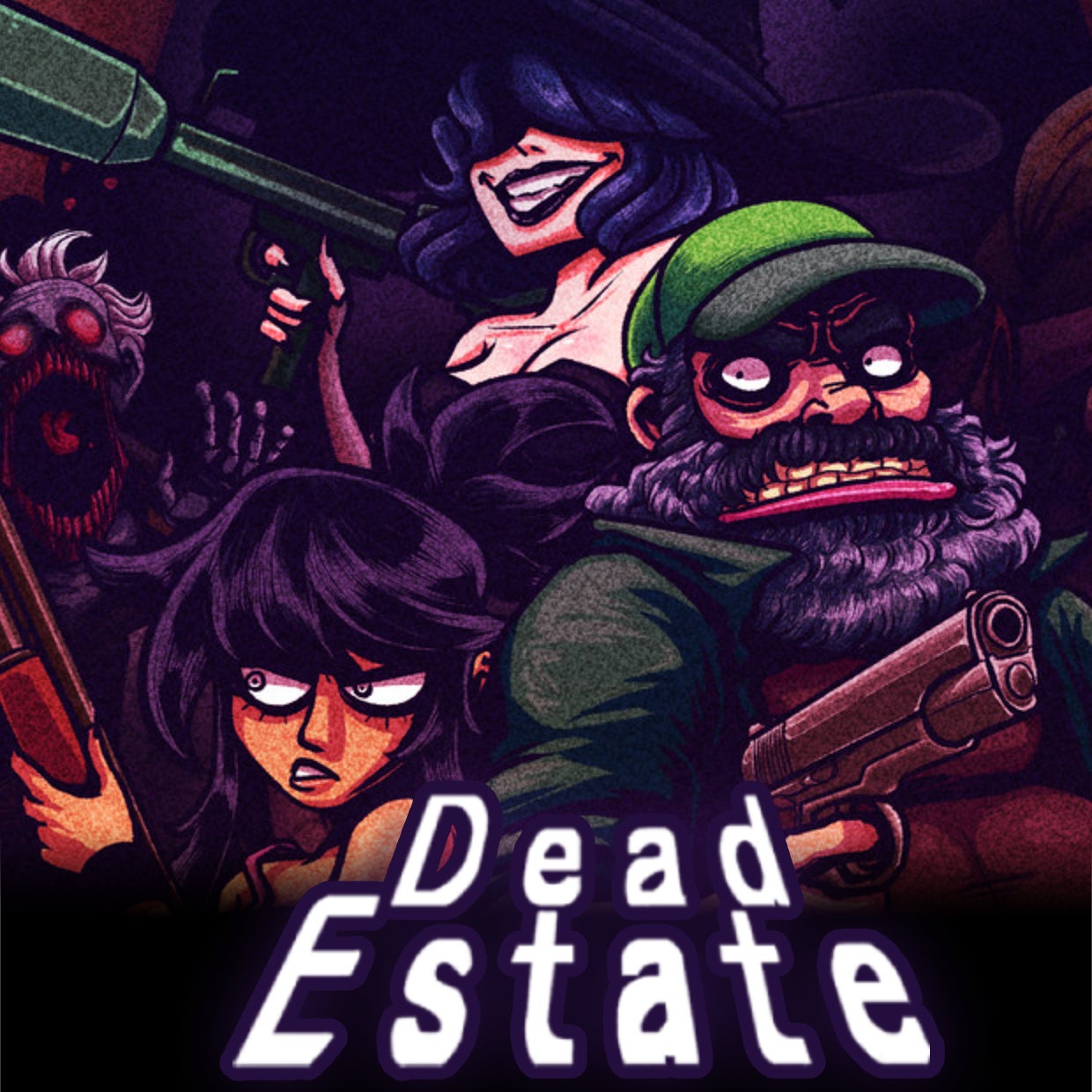
There is something timeless about horror games that refuse to take themselves too seriously. Rather than chasing realism or relying on endless jump scares, they embrace monsters, mayhem and pure entertainment. Dead Estate fits squarely into that category. Developed by Milkbar Lads and published by 2 Left Thumbs, this roguelite twin-stick shooter wears its Halloween influences proudly, blending frantic arcade action with a wonderfully grotesque art style that feels like a lost cult classic from the early days of internet animation.
What sets Dead Estate apart from the crowded roguelite scene is its personality. Many games offer randomly generated levels and endless weapon combinations, but few wrap those mechanics in a world bursting with strange humour, colourful characters and unapologetically over-the-top horror. Every floor of the haunted mansion feels alive with bizarre creatures, unsettling imagery and enough secrets to prompt “just one more run” long after common sense tells you to stop.
Dead Estate is not interested in gently easing players into its systems. It throws you into the deep end almost immediately, trusting you to learn from repeated failure. Thankfully, every defeat teaches something valuable, and before long the mansion reveals its hidden rhythms.
Welcome to the Mansion
The premise is delightfully straightforward. After an unfortunate encounter leaves your chosen character stranded outside a towering haunted mansion, survival becomes the sole objective. Inside lurk hordes of undead monsters, grotesque mutants and terrifying supernatural horrors, each more dangerous than the last.
The mansion itself becomes the true star of the experience. Rather than sprawling across an enormous open world, Dead Estate keeps its action confined to compact floors packed with tightly designed combat arenas. Every room becomes its own miniature battlefield, demanding quick reactions and careful movement while rewarding aggressive play.
Progress is measured by climbing higher through the estate. Each new floor brings stronger enemies, tougher bosses and more opportunities to strengthen your build. Like the very best roguelites, success depends on balancing risk against reward. Do you search every room in hopes of better equipment, or push onward before the danger escalates beyond control? It is a wonderfully addictive loop that rarely loses momentum.
Fast Combat That Never Lets Up
Combat is where Dead Estate truly earns its reputation. From the opening minutes, the game demands constant movement. Standing still for even a moment is usually enough to be surrounded by enemies firing projectiles from every direction.
The twin-stick shooting mechanics feel incredibly responsive. Weapons have satisfying weight behind them, dodge rolls are quick and reliable, and movement remains fluid even in the busiest encounters. Every successful escape from what initially looked like certain death feels entirely earned.
The variety of weapons is remarkable. Pistols, machine guns, magical staves, rocket launchers, flamethrowers and dozens of bizarre experimental weapons all appear across different runs. With over 150 weapons and hundreds of passive items available, it is rare for two playthroughs to feel exactly alike.
Some combinations become wonderfully ridiculous. A seemingly ordinary handgun can evolve into an unstoppable room-clearing monster after enough complementary upgrades. Watching bullets split into multiple projectiles that ricochet around the room while poisoning enemies never stops being entertaining. This constant experimentation gives every run its own identity and keeps the gameplay fresh, even when revisiting familiar environments.
Every Character Changes Everything
Dead Estate offers an impressive roster of ten playable characters, each with unique mechanics that dramatically alter how the game feels. Jules offers a balanced experience, making her an excellent starting choice, while Jeff trades mobility for raw power. Other unlockable characters completely reinvent the gameplay, introducing mechanics centred on speed, melee combat, unusual weapons or highly specialised abilities.
These are not superficial cosmetic differences. Switching characters genuinely feels like learning an entirely new game. Some excel at careful positioning, while others reward relentless aggression. Finding the character that matches your preferred style becomes part of the long-term progression. Unlocking additional costumes and completing challenge runs also provide meaningful reasons to return long after seeing the credits.
Atmosphere with a Horrific Sense of Humour
Dead Estate manages to be creepy without becoming oppressive. Rather than relying on relentless darkness or realistic gore, it embraces exaggerated horror inspired by B movies, Halloween decorations and classic monster films.
Its pixel art is exceptional. Every enemy has a distinct personality, bosses are wonderfully grotesque, and the mansion constantly surprises with strange visual details lurking in the background. The animation deserves particular praise, making every creature feel unsettling despite the deliberately cartoonish presentation.
The soundtrack perfectly complements the action. Fast-paced electronic tracks sustain the frantic energy during combat, while quieter moments allow the eerie atmosphere to breathe before the next wave of chaos begins.
The sound effects are equally satisfying. Every shotgun blast, monster shriek and explosion carries enough impact to keep firefights exciting throughout lengthy sessions.
Secrets Around Every Corner
One of Dead Estate’s greatest strengths is how rewarding it is to be curious. Hidden rooms, alternate floors, mysterious events and unlockable content are scattered throughout the mansion.
The inclusion of Blessings, Curses and Challenge Runs dramatically expands replayability. Players seeking an easier experience can customise their journey, while veterans can stack modifiers that turn already difficult encounters into brutal endurance tests.
Assignment Anya deserves special mention. Rather than feeling like a simple bonus mode, it offers an entirely separate campaign inspired by classic survival horror. The slower pace creates a noticeably different atmosphere and expands the lore surrounding the mansion. It is an excellent addition that gives returning players another compelling reason to revisit the estate.
Where the Cracks Begin to Show
For all its strengths, Dead Estate is not without flaws. The fixed isometric perspective occasionally creates awkward moments in hectic firefights. Judging projectile trajectories can be difficult when enemies occupy different elevations on screen, particularly with explosive weapons.
Environmental repetition also becomes noticeable during extended sessions. While room layouts constantly change, the visual themes of each floor remain familiar. Veterans will quickly recognise recurring libraries, corridors and dungeons, despite procedural generation shuffling their arrangement.
Difficulty can also fluctuate dramatically depending on item luck. Some runs hand players incredible combinations early, allowing them to dominate the mansion with ease. Others never quite deliver the upgrades needed to overcome the increasingly brutal bosses. While randomness is part of the roguelite formula, some runs can feel doomed before they truly begin. Fortunately, the game’s strong core mechanics usually overcome these frustrations.
A Roguelite That Understands Momentum
Perhaps Dead Estate’s greatest achievement is its grasp of pacing. Runs rarely drag, as there is always another weapon to discover, another secret to uncover, or another boss waiting around the corner.
Even failure rarely feels discouraging. Instead, defeat becomes another lesson, prompting players to immediately try again, armed with greater knowledge and better strategies.
That addictive rhythm is what separates memorable roguelites from forgettable ones. Dead Estate knows exactly how to keep players invested without overwhelming them with unnecessary complexity. Whether playing for twenty minutes or three hours, it remains remarkably difficult to walk away.
Final Verdict
Dead Estate is one of those indie games that quietly earns its place among the best roguelite shooters available today. It combines wonderfully responsive combat, an enormous amount of replayability and an unforgettable, horror-inspired presentation into an experience that consistently rewards both skill and experimentation.
Its handful of shortcomings, including occasional aiming frustrations and repetitive environments, never overshadow the sheer enjoyment of battling through its monster-infested mansion. The diverse cast of playable characters, impressive weapon variety and outstanding atmosphere ensure that every return visit offers something new to discover.
For fans of The Binding of Isaac, Enter the Gungeon or Nuclear Throne, this is an easy recommendation. It captures the addictive “one more run” magic that defines the genre while carving out an identity entirely its own through stylish visuals and a gloriously spooky personality.