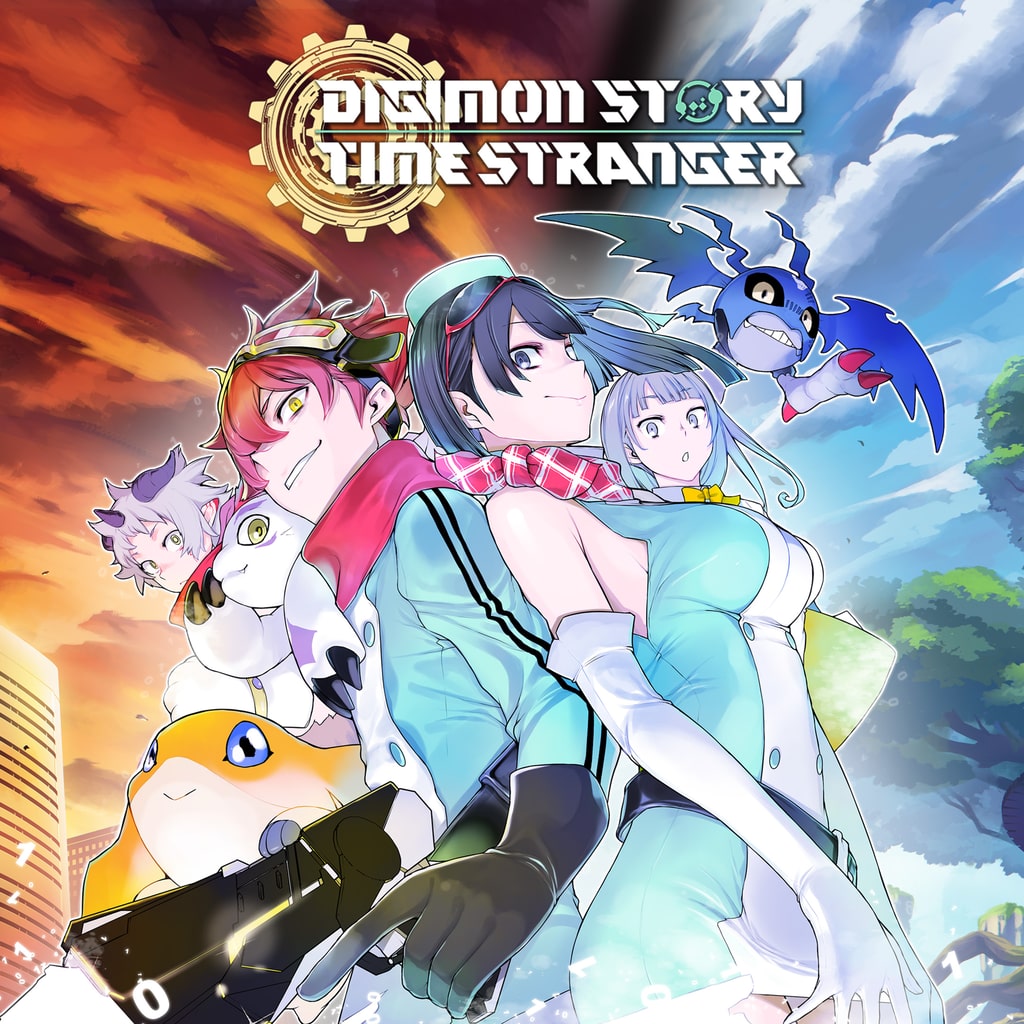
It has been a long wait for fans of the Digimon Story series. While Digimon has continued to appear in games across various genres, the Story subseries has always felt special. Its blend of heartfelt storytelling, deep monster-raising mechanics, and surprisingly mature themes carved out its own identity alongside other monster-collecting RPGs. After nearly a decade away, Digimon Story: Time Stranger finally arrives with the confidence of a series that knows exactly what made players fall in love with it in the first place.
Developed by Media.Vision and published by Bandai Namco Entertainment, Time Stranger is an ambitious role-playing adventure that blends time travel, mystery, and strategic turn-based combat into one of the strongest Digimon experiences to date. Rather than simply relying on nostalgia, it pushes the formula forward with meaningful quality-of-life improvements while respecting everything long-time fans appreciate. Newcomers may initially feel overwhelmed by the sheer number of Digimon and progression systems, but those willing to invest their time will discover a rewarding adventure filled with memorable characters and satisfying battles. This is not simply another creature-collecting game. It is a story about fate, sacrifice, friendship, and the choices that shape both worlds.
A Story That Carries Emotional Weight
Time travel has become a familiar storytelling device in games, but Time Stranger uses it with surprising restraint. The adventure begins in modern Tokyo, where members of the secret organisation ADAMAS investigate mysterious digital anomalies. Moments later, a catastrophic explosion devastates the city, only for your character to awaken eight years in the past, with the chance to prevent history from repeating itself.
Players can choose between protagonists Dan or Kanan Yūki, but regardless of your selection, the central mystery remains compelling throughout the lengthy campaign. Rather than relying on endless plot twists for shock value, the narrative focuses on relationships. Every decision, every mission, and every encounter slowly builds towards understanding why the world is destined to collapse.
The Digital World of Iliad also receives far more attention than in previous entries. Instead of feeling like disconnected zones linked by gameplay, its regions feel like living places inhabited by Digimon with their own cultures, struggles, and personalities. As you revisit locations across different points in time, you begin to notice how your actions influence both worlds in subtle but meaningful ways.
Perhaps the game’s greatest strength is how naturally it fosters emotional connections between players and their Digimon. Watching familiar companions evolve alongside the story carries genuine emotional weight because they are not simply statistics on a menu. They become trusted partners throughout an increasingly dangerous journey.
Raising Digimon Never Gets Old
Collecting Digimon remains is every bit as addictive as fans would hope. Instead of capturing creatures directly, defeated enemies contribute scan data that gradually fills a percentage meter. Once enough data has been collected, new Digimon can be created at your headquarters.
It is a system that has always suited the Digimon universe perfectly. Rather than encouraging players to endlessly throw capture items, Time Stranger rewards curiosity and exploration. Every new encounter offers another chance to expand your collection, and with more than 450 Digimon available, there is always another evolution line waiting to be discovered.
What truly sets Digimon apart from many of its competitors is its evolution system. Digivolution is rarely a one-way journey. Instead, players are encouraged to repeatedly evolve and de-evolve their partners, unlocking new abilities, increasing stats, and opening entirely different evolutionary paths.
This creates one of the deepest progression systems in the genre. Building your perfect team becomes an enjoyable puzzle rather than a simple numbers game. A Digimon that seems average early on can eventually become one of your strongest allies if you are willing to experiment with different branches and inherited skills.
Adding personality traits further expands customisation. These traits influence stat growth and passive abilities, allowing players to shape their Digimon into specialised attackers, defensive tanks, support experts, or versatile hybrids.
Strategic Battles That Reward Preparation
Combat is where Time Stranger truly shines. Every encounter feels like a tactical exercise rather than a grind for experience points. The familiar attribute triangle returns, with Data, Vaccine, and Virus Digimon retaining their classic strengths and weaknesses. On top of this sits an elemental system covering fire, water, earth, wind, light, darkness, and more. Suddenly, every encounter becomes a careful balancing act, where exploiting weaknesses can dramatically swing the momentum of battle.
Team composition also plays a significant role. Players can bring three active Digimon into battle while keeping reserves ready to swap in as the situation changes. This flexibility encourages experimentation rather than forcing players to rely on the same handful of favourites throughout the campaign.
Boss encounters are especially satisfying because they demand genuine preparation. Walking into battle with an unbalanced team is rarely enough. You need to consider resistances, inherited skills, support abilities, and long-term resource management if you want to overcome the toughest opponents.
Thankfully, the game respects your time. Adjustable battle speeds make routine encounters much quicker, while auto-battle offers a welcome option in easier fights. These small additions significantly reduce the repetitive grinding that often slows down lengthy Japanese role-playing games.
Beautiful Worlds Worth Exploring
Visually, Time Stranger embraces a colourful, anime-inspired presentation that suits the Digimon universe perfectly. Characters are expressive, Digimon animations are energetic, and special attacks burst across the screen with satisfying flair.
The Digital World is easily one of the series’ most attractive settings. Forests glow with digital life, ancient ruins hide forgotten secrets, and futuristic cities blend technology and fantasy in imaginative ways. Every region feels distinct, helping sustain a strong sense of adventure throughout the lengthy campaign.
Performance is equally impressive across modern platforms. On PlayStation 5, Xbox Series X, and capable PCs, the game delivers smooth performance and crisp visuals. Loading times remain pleasantly short, making exploration feel seamless.
Even the Nintendo Switch versions perform admirably despite the obvious graphical compromises. Handheld play suits the game’s structure particularly well, making it easy to complete quests or train Digimon during shorter gaming sessions.
The soundtrack also deserves special recognition. It balances emotional orchestral pieces with energetic battle themes that perfectly capture the excitement of raising and fighting alongside your Digimon. Combined with strong voice performances, it elevates many of the game’s biggest emotional moments.
A Few Growing Pains
Despite its many strengths, Time Stranger is not without flaws. The menu system occasionally feels cluttered, particularly as your Digimon collection grows. Managing equipment, inherited skills, personality traits, and evolution paths can be slightly overwhelming until you become familiar with the interface.
Early dungeon design also lacks some of the creativity evident later in the adventure. Several opening areas feel fairly straightforward, with limited opportunities for exploration. Fortunately, the environments become much more interesting as the story progresses.
Some players may also find the sheer number of progression mechanics intimidating. Time Stranger introduces its systems gradually, but there is still a considerable amount to learn before everything clicks into place. Those expecting a more casual monster-collecting experience may initially feel buried beneath statistics and customisation menus. Thankfully, patience is rewarded. Once the mechanics begin working together, the depth becomes one of the game’s greatest strengths rather than an obstacle.
Verdict
Digimon Story: Time Stranger is exactly the return fans have been hoping for. Media.Vision has successfully modernised the Story formula without sacrificing the strategic depth and emotional storytelling that made the series so beloved. Every Digimon collected, every evolution unlocked, and every difficult battle overcome contributes to a genuinely meaningful journey.
Its occasionally cumbersome menus and slow opening hours are minor blemishes on an otherwise exceptional role-playing adventure. The excellent turn-based combat, remarkable customisation options, engaging time-travel narrative, and wonderfully realised Digital World combine to create one of the finest Digimon games ever released.
Whether you are a lifelong Digimon fan or discovering the series for the first time, Time Stranger offers dozens of hours of rewarding exploration, memorable storytelling, and endlessly satisfying monster-raising. It stands proudly alongside the franchise’s best entries and proves there is still plenty of life left in the Digital World.