There is something timeless about a great gothic mystery. Grand estates filled with whispered conversations, long-forgotten family secrets, forbidden romance, and a murder that changes everything have captivated readers and audiences for generations. The Crimson Maid embraces those traditions wholeheartedly, delivering a narrative adventure that feels less like a conventional video game and more like stepping into the pages of a Victorian novel, where every corridor hides another uncomfortable truth.
Developed by GrimTalin and Darkania Works and published by Wales Interactive, The Crimson Maid blends first-person exploration with visual-novel storytelling and light environmental puzzles. It is not interested in thrilling players with explosive action or relentless horror. Instead, it asks you to slow down, pay close attention to every conversation, and carefully observe the people around you, because everyone in the Rosenthal estate seems to be carrying a burden they desperately want to hide.
This measured approach will not appeal to everyone. Players seeking constant excitement may find its deliberate pace hard to embrace. Those willing to immerse themselves in its beautifully crafted world, however, will discover a compelling mystery that quietly builds emotional momentum and delivers several memorable twists along the way.
Returning to a Family That Barely Knows You
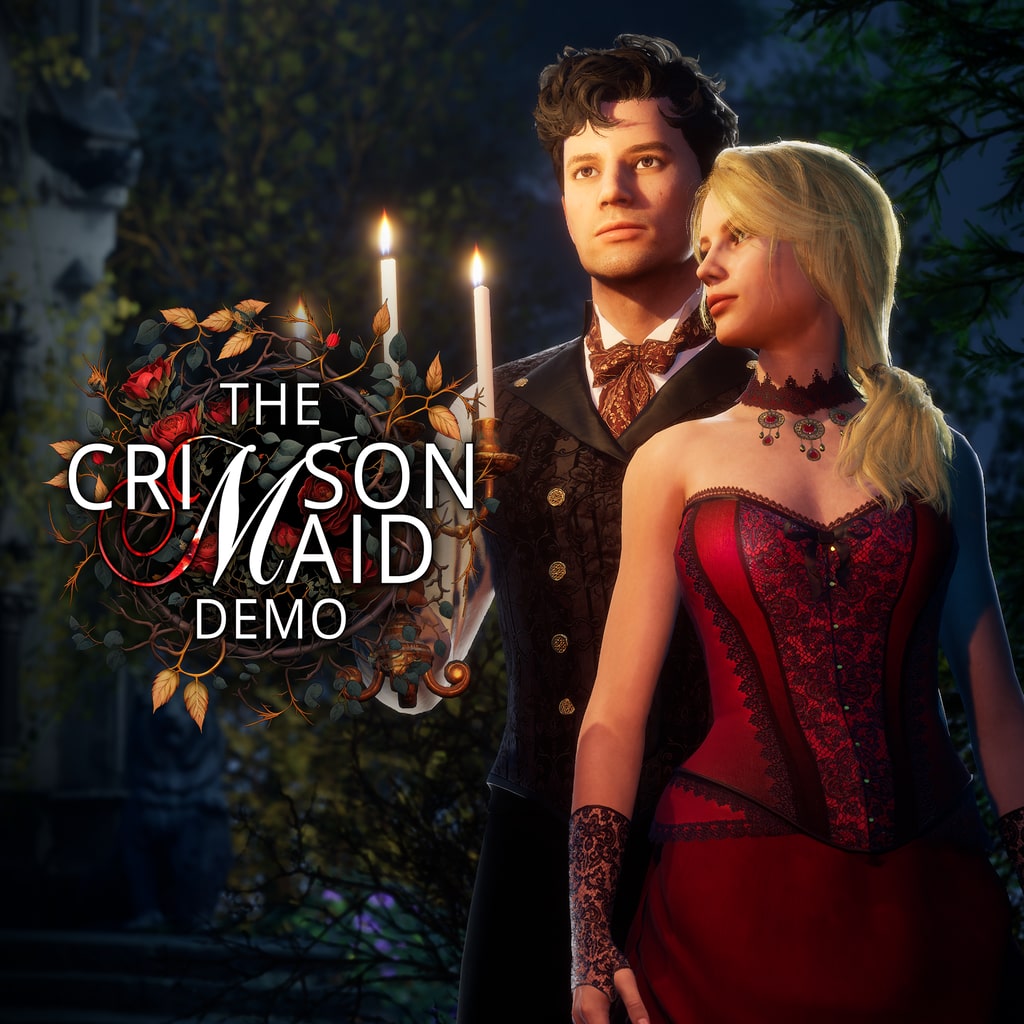
The story begins with Marius, a young man studying for the priesthood, returning to his childhood home after years apart. His father, Leon, has become gravely ill, and the once-proud Rosenthal family estate has fallen into quiet decline. From the moment Marius arrives, it is clear that time has not healed old wounds.
Every member of the household bears visible emotional scars. His mother maintains an icy composure that rarely slips, while his younger brother, Remus, struggles under responsibilities that seem far too heavy for one person. Then there is Irina, the household’s mysterious maid, whose arrival has already unsettled the delicate balance within the mansion long before Marius walks through its doors.
The relationship between Marius and Irina forms the emotional heart of the story. Their growing connection feels genuine, developing gradually through conversation, shared moments, and quiet understanding rather than through forced romantic spectacle. Marius also wrestles with his religious convictions, creating an internal conflict that gives his character far more depth than many protagonists in similar narrative adventures.
Just as the household begins to feel familiar, tragedy strikes. A murder turns the family reunion into a tense investigation, with suspicion hanging over every room and every conversation seeming to conceal another lie. From that point onward, The Crimson Maid shifts effortlessly between intimate character drama and classic murder mystery.
A Mansion Filled with Secrets
Exploration plays a central role throughout the adventure. The Rosenthal estate is not merely a backdrop for dialogue but a character in its own right. Every hallway, study, bedroom, and forgotten passage tells part of the family’s history through environmental storytelling.
The mansion feels appropriately lived-in despite its fading grandeur. Dust gathers in neglected corners, portraits silently watch your movements, and forgotten letters reveal painful memories buried beneath years of silence. Rather than overwhelming players with collectibles, exploration feels purposeful because nearly every discovery contributes meaningfully to the mystery or the characters themselves.
Outside the mansion, the grounds continue to reinforce the game’s melancholic atmosphere. Quiet gardens, abandoned pathways, and weather-worn structures create the impression of a family desperately clinging to a glorious past that has already slipped away.
This slower pace allows players to appreciate the exceptional environmental design. Instead of rushing between objectives, you are encouraged to observe, reflect, and absorb the subtle details that gradually reveal the Rosenthal family’s complicated history.
Storytelling Comes First
The Crimson Maid is, above all else, a narrative-driven experience. Dialogue takes up a significant portion of the adventure, and thankfully the writing is consistently engaging. Characters rarely feel like simple plot devices, with each conversation revealing new layers of personality and hidden motivation.
Player choices carry genuine weight throughout the story. Small decisions made early on influence relationships, alter conversations, and ultimately determine which of the game’s multiple endings you receive. Rather than presenting obvious good or bad options, many decisions force players to choose between conflicting loyalties, making the consequences feel more personal.
Marius himself is an interesting protagonist because his greatest battles are internal. His desire to honour his faith constantly clashes with his growing feelings for Irina, while loyalty to his fractured family competes with his pursuit of the truth. Watching those conflicts unfold makes him far more relatable than a traditional heroic lead.
The mystery itself unfolds at a satisfying pace. Rather than relying on constant shocks, the story builds tension through uncertainty. Each revelation raises new questions, prompting players to keep searching for answers even when they believe they understand what has happened.
Gentle Puzzles That Keep the Story Moving
Puzzle-solving provides welcome variety between exploration and dialogue. These challenges are deliberately accessible, emphasising observation and logical thinking rather than obscure solutions designed to frustrate players.
Some puzzles involve manipulating objects or uncovering hidden mechanisms throughout the mansion, while others ask players to piece together information gathered during exploration. One particularly memorable sequence involving a blood transfusion stands out for its unusual design and unsettling atmosphere, offering a brief but effective departure from the game’s otherwise measured pacing.
Importantly, the puzzles never overshadow the narrative. They exist to support the story rather than interrupt it, making them feel like natural extensions of the investigation rather than arbitrary obstacles placed between plot developments.
Players seeking deeply complex brain teasers may find these sections relatively straightforward, yet they maintain momentum without becoming repetitive.
Atmosphere Above Everything Else
The Crimson Maid’s greatest achievement is undoubtedly its atmosphere. From the opening moments, the game envelops players in a constant sense of quiet unease that never fully dissipates.
The visual presentation is striking, with warm candlelight casting long shadows across the richly detailed interiors. The estate feels beautiful without ever becoming comfortable. Every room suggests that something terrible has happened there, even before the narrative confirms your suspicions.
The musical score deserves considerable praise. Gentle piano melodies and haunting orchestral pieces complement the story’s emotional weight without overwhelming it. Silence is also used effectively, allowing moments of tension to breathe naturally.
One noticeable limitation is the lack of voice acting. Every conversation is conveyed through written dialogue, which may disappoint players who prefer fully voiced cinematic adventures. Fortunately, the quality of the writing helps compensate for this omission, and the expressive soundtrack carries much of the emotional weight.
Character animations can also feel somewhat stiff outside major story scenes. While the environments feel wonderfully alive, some characters occasionally resemble carefully posed figures, waiting for the next conversation to begin. It is a minor distraction rather than a serious flaw, but it occasionally breaks immersion.
Verdict
The Crimson Maid is a beautifully written gothic mystery that values patience. GrimTalin and Darkania Works have crafted an emotionally rich narrative in which family trauma, forbidden romance, religious conflict, and murder intertwine to form an engaging interactive drama. Rather than chasing modern trends, it confidently embraces slower storytelling, rewarding players willing to lose themselves in its haunting world.
Its deliberate pacing, lack of voice acting, and occasionally rigid character models prevent it from reaching true greatness, but these shortcomings never overshadow the strength of its writing or its wonderfully oppressive atmosphere. Every trip through the Rosenthal estate reveals another carefully placed clue, another emotional confrontation, or another heartbreaking secret waiting to be uncovered.
Fans of narrative adventures, visual novels, and gothic fiction will find plenty to admire here. The Crimson Maid may unfold at its own deliberate pace, but by the time its final choices arrive, it leaves a lasting impression that lingers long after the credits roll.