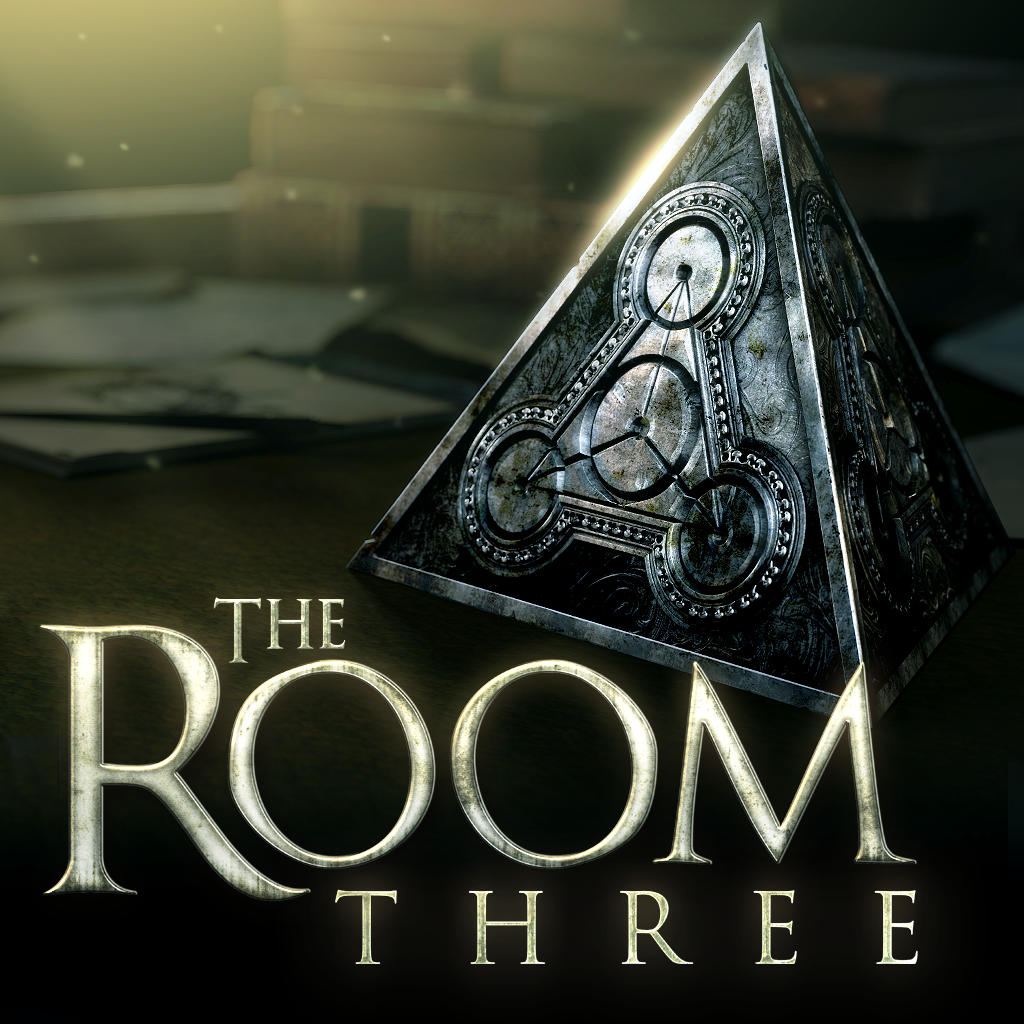
There is something wonderfully satisfying about solving a puzzle that initially seems impossible. You stare at a strange mechanism, turn it over in your hands, notice a tiny indentation you almost miss, and suddenly everything clicks into place. That feeling has always been at the heart of The Room series, and The Room Three takes that familiar formula and expands it into something considerably more ambitious. Originally released as another chapter in Fireproof Games’ acclaimed puzzle series, The Room Three eventually made its way to the Nintendo Switch, bringing its beautifully tactile mysteries to a platform that feels almost tailor-made for them.
Rather than simply presenting another collection of increasingly elaborate puzzle boxes, The Room Three gives you somewhere to explore. You are lured to the mysterious Grey Holm estate by a figure known only as the Craftsman, and before long you find yourself wandering through a collection of strange rooms, hidden passages and intricate mechanisms. There is an immediate sense that you are being watched and tested, although the game is in no hurry to explain exactly what is happening. That restraint is important because The Room Three is at its best when it leaves you with just enough information to make you desperately want to discover what comes next.
Welcome to Grey Holm
The change in scale is arguably the biggest difference between The Room Three and its predecessors. Earlier entries were largely focused on individual puzzle boxes, encouraging you to examine every surface and manipulate every component until their secrets revealed themselves. Here, Fireproof Games takes that concept and builds an entire environment around it. The result is a much more exploratory experience, where one puzzle can lead naturally into another, with the environment itself becoming part of the mystery.
Grey Holm is a particularly effective setting because it manages to feel both beautiful and deeply unsettling. There is an old, almost gothic quality to the architecture, while the rooms are filled with elaborate machinery that looks as though it belongs in some eccentric inventor’s private collection. Nothing feels entirely ordinary, even when you are simply opening a drawer or examining a desk. There is always the suspicion that something has been hidden in plain sight, which encourages you to look at practically everything.
That attention to detail is crucial because The Room Three expects you to be curious. You cannot simply wander around waiting for a highlighted object to tell you what to do next. Instead, you need to examine mechanisms from different angles, rotate objects, search for concealed switches and pay attention to symbols that may initially appear meaningless. It is the sort of design that rewards patience rather than reflexes, and for anyone who enjoys the satisfaction of figuring something out without being spoon-fed the answer, it is enormously rewarding.
Puzzles That Feel Like Objects
The puzzles remain the undisputed star of the show, and this is where Fireproof Games’ craftsmanship shines. The Room Three understands that a puzzle is far more satisfying when it feels physical rather than an abstract sequence of buttons. Keys turn, panels slide, gears rotate, and compartments spring open with a wonderfully tactile sense of weight and resistance. Even the smallest mechanism feels as though it has been constructed rather than simply programmed.
The addition of the eyepiece is another inspired idea. At first it might seem little more than a useful gadget, but it quickly becomes one of the most important tools in your arsenal. Looking through it reveals things that are otherwise invisible, uncovering hidden symbols and mechanisms that exist on an entirely different level. There is something genuinely magical about discovering that an apparently ordinary object contains another world within it.
The puzzles also become increasingly layered as the game progresses. You may discover an object that seems to have one obvious purpose, only to realise later that it is connected to another mechanism elsewhere in the room. A symbol found in one location might suddenly make sense several minutes later when you encounter a completely different device. This interconnected design gives the experience a lovely rhythm of discovery, where solving one problem often creates two more questions.
Importantly, The Room Three rarely feels as though it is asking you to guess at random. There are moments when you will undoubtedly stare at something and wonder what on earth the game expects of you, but the answer is generally there somewhere. The challenge comes from noticing the relationships between the clues rather than throwing combinations at a lock until something works. That distinction makes all the difference, because when the solution finally presents itself, you feel as though you have genuinely earned it.
A World of Mystery
While the puzzles are the main attraction, The Room Three would not work nearly as well without its atmosphere. Fireproof Games has created a world that feels mysterious without resorting to cheap scares or excessive theatrics. The soundtrack and sound effects do a tremendous amount of work here, with subtle noises and distant mechanical sounds making the estate feel strangely alive.
There is also a wonderful sense of isolation. You are not surrounded by other characters telling you where to go or explaining every strange discovery. Instead, much of the narrative comes through letters, objects and the environments themselves. The Craftsman remains an elusive presence throughout the experience, and the lack of clear answers makes the mystery considerably more intriguing.
That said, the game’s supernatural story can sometimes be frustratingly vague. The Room Three clearly wants you to embrace uncertainty, and much of its lore is deliberately cryptic. For some players, that will be part of the appeal, while others may finish the adventure wishing the game had provided a few more concrete answers. Personally, I think the ambiguity works because the story is primarily there to give the puzzles context rather than overshadow them, but there are certainly moments when you might find yourself wondering whether you have missed something.
Choices and Consequences
Another welcome addition is the presence of multiple endings. Rather than simply reaching the end of a linear sequence and putting the game down, The Room Three gives you reasons to revisit its world and experiment with your choices. There are four different endings, which adds another layer to an already substantial puzzle adventure.
The alternate conclusions also suit the game’s mysterious tone. The experience constantly makes you question whether you understand what the Craftsman actually wants from you, so having different outcomes reinforces the idea that your journey through Grey Holm is not necessarily following a single predetermined path. Even if you are primarily interested in solving puzzles, knowing that there are other possibilities gives the adventure a little more weight.
It also helps with replay value. Puzzle games can sometimes lose their appeal once you know all of the answers, but The Room Three’s branching structure encourages you to return and see what might have happened differently. You are not simply replaying the same sequence for the sake of it. There is a genuine reason to poke around again.
Perfect for Nintendo Switch
The Nintendo Switch feels like an excellent home for The Room Three. Touchscreen controls make the process of manipulating objects feel wonderfully direct, while Joy Con controls provide another tactile way of interacting with the various mechanisms. There is something particularly enjoyable about physically turning and examining objects rather than simply moving a cursor across a screen.
The controls are also a good match for the game’s pace. This is not an experience that needs fast reactions or complicated button combinations. It wants you to stop, look and think, and the Switch allows you to settle into that rhythm comfortably. Whether playing handheld or on the television, the fundamental experience remains focused on observation and interaction.
Visually, the game continues to impress because its presentation is built around detail rather than spectacle. The environments are dark and atmospheric, but the important objects have enough visual definition to encourage closer inspection. Lighting, shadows and carefully designed textures all contribute to the feeling that you are exploring a place that has been abandoned for reasons nobody has bothered to explain.
The Joy of Figuring It Out
Perhaps the greatest compliment I can give The Room Three is that it understands why people enjoy puzzle games in the first place. It is not about making players feel clever by throwing incomprehensible challenges at them. It is about creating that wonderful moment when several seemingly unrelated pieces suddenly fit together.
There were plenty of occasions where I found myself staring at a mechanism thinking that I had absolutely no idea what I was supposed to do. Then a small detail would catch my attention, an object would suddenly make sense, and the solution would unfold almost naturally. Those moments are what make The Room Three so difficult to put down. There is always another box, another mechanism, another hidden compartment waiting to be understood.
Fireproof Games also deserves credit for knowing when to remain quiet. Modern games can sometimes be terrified that players might become stuck, throwing hints and instructions at them before they have had the chance to think. The Room Three generally trusts the player to explore and experiment. That confidence in its own puzzle design makes the eventual breakthroughs all the more satisfying.
Final Verdict
The Room Three is a superb example of how to expand a successful formula without losing sight of what made it special. Fireproof Games takes the intimate puzzle box concept of the earlier games and transforms it into a much larger, more interconnected adventure, filling Grey Holm with mechanisms that beg to be investigated. The puzzles are intricate without feeling unfair, the atmosphere is wonderfully eerie, the sound design adds plenty of character and the tactile nature of the Nintendo Switch controls makes the whole experience feel remarkably natural.
Its deliberately mysterious story will not satisfy everyone, and those looking for a neatly explained supernatural narrative may find some of its unanswered questions frustrating. There is also an argument that some of the magic inevitably disappears once you know how the puzzles work. Yet those are relatively small complaints when compared with the sheer quality of the experience.
The Room Three is the kind of game that reminds you why puzzle games can be so compelling. It makes you slow down, pay attention and think about what is sitting right in front of you. More importantly, it gives you that little rush of satisfaction every time a mechanism finally clicks into place. On Nintendo Switch, that tactile quality feels especially appropriate, making this one of those games that is incredibly easy to recommend to anyone who enjoys a good mystery and an even better puzzle.