There was a time when you could walk into an arcade, feed a few coins into a machine, and spend the next hour beating the living daylights out of anything unfortunate enough to wander across the screen. The 1990s were particularly good at this, with games such as Golden Axe, Knights of the Round and Rastan Saga offering a simple yet wonderfully effective formula of swords, monsters, oversized bosses and increasingly bruised thumbs. Blades & Battles clearly remembers those days, and rather than trying to hide its influences, it embraces them with an enormous grin and a sword almost as big as its protagonist.
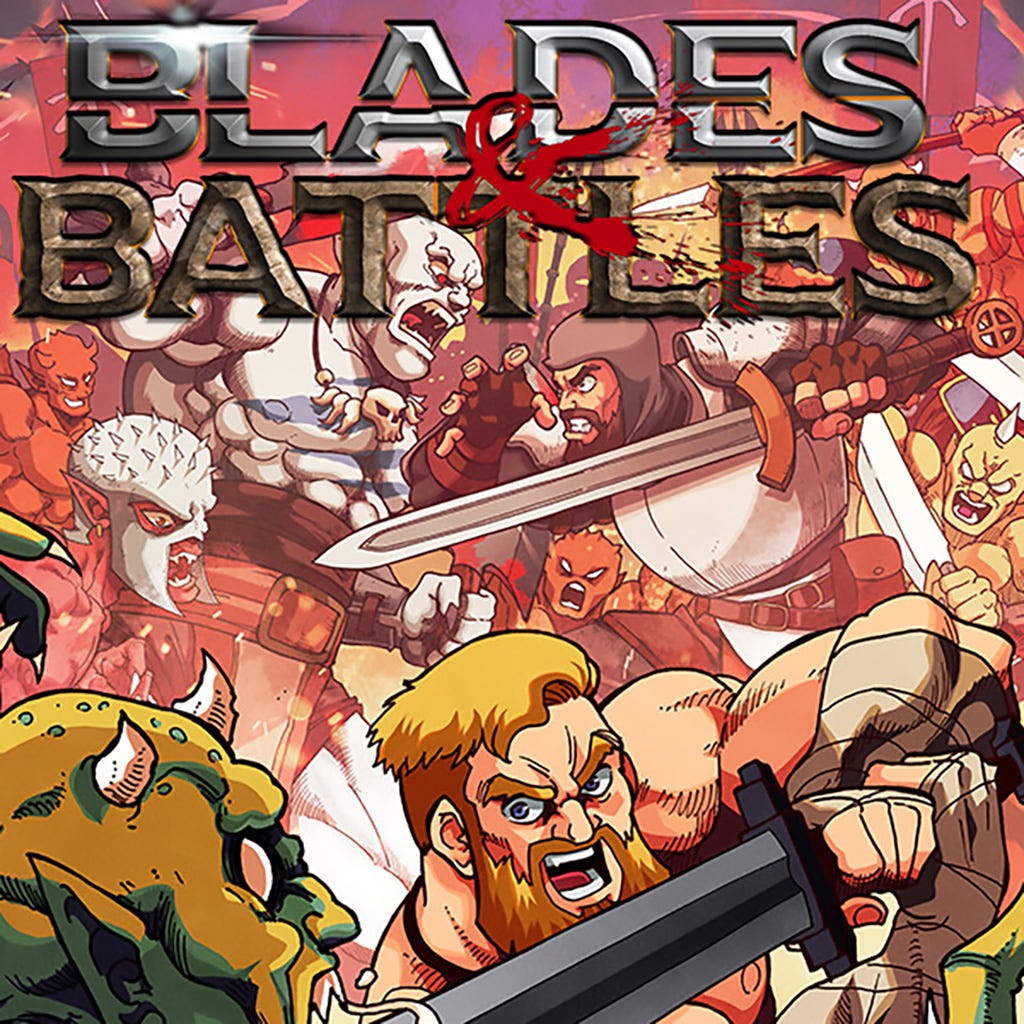
This time, however, the familiar arcade brawler formula gets an Arthurian makeover. You can step into the boots of Arthur or Lancelot and head into a gloriously over-the-top fantasy adventure to rescue Merlin from Morgana le Fay. This is not the refined, traditional version of Camelot you might expect from Arthurian legend, though. Arthur looks more like he has spent the morning lifting weights before breakfast, Lancelot brings elemental magic into the fight, and just about everything else is designed to make you hit things very hard. It is ridiculous, nostalgic and surprisingly entertaining.
Welcome To Camelot
The story is not here to deliver a complex retelling of Arthurian legend. Instead, it provides the excuse you need to grab a sword and start fighting. Merlin has been captured, Morgana is causing trouble, and a sizeable collection of goblins, skeletons and other assorted nasties have decided that stopping Arthur and Lancelot sounds like a sensible career choice.
There is something refreshing about how straightforward it all is. Blades & Battles knows you probably did not come here for a lengthy political drama about the Knights of the Round Table. You came here because the words “2D sword fighting brawler” caught your attention, and because there is something deeply satisfying about watching a huge sword connect with a screen full of enemies.
That old-school simplicity gives the game much of its charm. There is a clear objective, the enemies keep coming, and your job is to make sure they regret it. It is the kind of setup that would have felt perfectly at home in an arcade decades ago, but the modern presentation gives the formula enough visual polish to make it feel more than simply a trip down memory lane.
Arthur And Lancelot
Your choice of hero matters more than simply picking the character who looks cooler. Arthur is the heavyweight of the pair, relying on powerful physical attacks and a more direct approach to combat. He feels suitably chunky when swinging his weapon, and his attacks have a real sense of impact.
Lancelot, meanwhile, brings elemental magic into the mix and offers a more varied approach to dealing with groups of enemies. His abilities can help control the battlefield and create opportunities that Arthur’s raw strength cannot always provide. The distinction between the two characters is particularly useful when playing with another person, because combining their strengths can turn the battlefield into a wonderfully chaotic display of swords and magic.
Neither character feels like the obvious choice for every situation, which is important for replayability. Arthur is satisfying when you simply want to get stuck into the thick of the action, while Lancelot offers a little more flexibility when enemies begin filling the screen. Switching between them also gives the campaign a slightly different feel on subsequent playthroughs.
Sword, Sorcery And A Lot Of Juggling
Combat is where Blades & Battles earns its place. The game takes the familiar side-scrolling brawler formula and adds a much greater emphasis on juggling enemies through the air. You can launch opponents, follow them upwards and keep them suspended with additional attacks before bringing the whole thing crashing back down.
When it works, it feels fantastic. There is real satisfaction in watching an enemy bounce from one attack to another while you keep the combo going. It is considerably more involved than simply standing in front of an enemy and repeatedly hitting the attack button. Timing and positioning matter, and learning how your attacks connect with different enemies becomes increasingly important as the difficulty rises.
The juggling system also gives combat a little more personality than you might expect from such a straightforward brawler. You are not merely clearing enemies from the screen. You are trying to control them, manipulate their position and keep the action flowing. There is something wonderfully arcade-like about chasing a particularly satisfying combo and immediately wanting to try it again after a successful run.
When The Screen Gets Busy
Of course, enemies are not going to politely wait for their turn. As you progress, the number of creatures surrounding you increases, and the game demands more of your ability to track what is happening. Projectiles fly across the screen, enemies attack from different angles, and some encounters can become wonderfully chaotic.
This is where the ability to move vertically across the battlefield becomes important. Blades & Battles uses a 2.5D approach, allowing you to move through the depth of the environment rather than simply walking left and right. It might sound like a small addition, but being able to step out of the path of an incoming attack or reposition yourself before launching a group assault makes a meaningful difference.
There are moments when the hit detection can feel a little boxy, particularly when several enemies are piled together, and that can occasionally make combat feel less precise than you would like. It is not enough to ruin the experience, but it is noticeable when you are trying to execute a carefully timed sequence and the game decides that your sword connected with something slightly different from what you had in mind.
Magic With A Price
The special abilities add another layer to combat, but they come with a cost. Mana needs careful management, and certain powerful attacks can also drain your health. That means you cannot simply throw out your strongest ability every time the screen starts to look busy.
This resource management works particularly well because it gives you something else to think about amid the chaos. Do you save your special attack for the boss, or use it now to clear a particularly troublesome group of enemies? Do you risk spending health to escape a dangerous situation, or try to fight your way out using standard attacks?
These decisions are simple, but they fit the arcade nature of the game perfectly. You are never asked to manage an enormous collection of statistics or abilities. Instead, you are making quick decisions that can determine whether you walk away from an encounter or end up watching your character collapse beneath another pile of monsters.
Bring A Friend
Local co-op is one of Blades & Battles’ biggest selling points, and it is exactly the sort of game that benefits from having another person sitting beside you. There is something timeless about clearing a screen full of enemies together, particularly when things start going wrong and both players suddenly find themselves surrounded.
Arthur and Lancelot also complement one another well. One player can focus on physical damage while the other uses magic to control groups and create openings. When the two characters work together, the battlefield can become a spectacular mess of sword strikes, spells and enemies flying through the air.
It also brings back that old-fashioned couch multiplayer feeling that has become increasingly rare. There is no need to worry about complicated matchmaking or coordinating schedules with people online. You simply hand a controller to someone sitting next to you and get on with smashing monsters together. Sometimes that is all you need for a good evening.
A Love Letter To The 90s
Visually, Blades & Battles occupies an interesting space between old and new. The characters and environments have a modern 3D look, yet the game clearly wants you to remember the pixel-heavy presentation of classic arcade brawlers. Retro visual filters let you push the presentation even further towards that old-school aesthetic.
There is something particularly enjoyable about switching between the modern presentation and the more aggressively pixelated options. It reinforces the feeling that this is a game made by people who genuinely appreciate that era of gaming rather than simply using nostalgia as a marketing gimmick.
The environments also offer enough variety to prevent the journey from becoming visually monotonous. Ruined villages, forests and darker fantasy locations eventually lead towards places such as the Bone Castle, giving the campaign a suitably dramatic progression. The creatures themselves are varied enough to keep encounters interesting, while the larger bosses provide the spectacle you expect from this sort of adventure.
Turn Up The Chiptunes
The audio is another area where the 1990s influence is impossible to miss. Heavy, chiptune-inspired melodies sit alongside more traditional fantasy themes, while every sword swing, spell and impact is accompanied by suitably exaggerated sound effects.
It works because the game never tries to be subtle. A sword does not merely hit an enemy. It makes sure you know it has hit something. A spell is not quietly cast in the background. It arrives with all the dramatic noise you would expect from a fantasy arcade game, where everything is deliberately turned up a few notches.
The soundtrack also helps maintain the game’s momentum. There is an energy to the music that encourages you to keep moving forward, particularly during larger battles. It might not be the sort of soundtrack you put on while relaxing with a cup of tea, but during a monster brawl it fits the mood beautifully.
The Arcade Spirit Lives On
Perhaps the most appealing thing about Blades & Battles is that it does not overcomplicate its identity. Some games attempt to modernise classic genres by throwing dozens of systems at them, but sometimes the best approach is to remember why the originals were so much fun in the first place.
Here, that means fighting through waves of enemies, experimenting with combos, learning your character’s strengths and enjoying the ridiculous spectacle of it all. There is enough depth in the juggling system and character abilities to reward players who want to master the combat, but the basic controls remain approachable for anyone who simply wants to pick up a controller and start swinging.
The campaign is not especially long, and that is perhaps the biggest limitation. There is only so much content here before you start wishing for more stages, more characters and more reasons to return. The foundations are strong enough that it is easy to imagine Blades & Battles benefiting enormously from additional content, particularly if that content expanded the co-op experience.
Final Verdict
Blades & Battles is an unapologetically old-school beat ’em up with a wonderfully silly Arthurian twist. It takes the spirit of classic 1990s sword-fighting games and combines it with modern 3D presentation, aerial juggling, magic and surprisingly enjoyable tactical positioning. It is not trying to reinvent the genre, and honestly, it does not need to.
What it does instead is remind you why this type of game was so much fun in the first place. There is tremendous satisfaction in launching an enemy into the air, following them upwards and finishing the encounter with a ridiculous combo, particularly when someone beside you is doing the same thing with Lancelot’s magic. The local co-op is a genuine highlight, and the different approaches offered by Arthur and Lancelot give you a good reason to return.
A slightly short campaign and occasional hitbox frustrations prevent it from reaching the highest score, but neither issue takes away from what is an enjoyable and affectionate tribute to an era when fantasy brawlers were wonderfully straightforward. If you have fond memories of Golden Axe and similar arcade classics, there is plenty here to make those memories come flooding back.
Sometimes you do not need a complicated story, an enormous open world or a hundred-hour campaign. Sometimes you just need a massive sword, a mate on the sofa and an absolutely ridiculous number of monsters waiting to get hit.