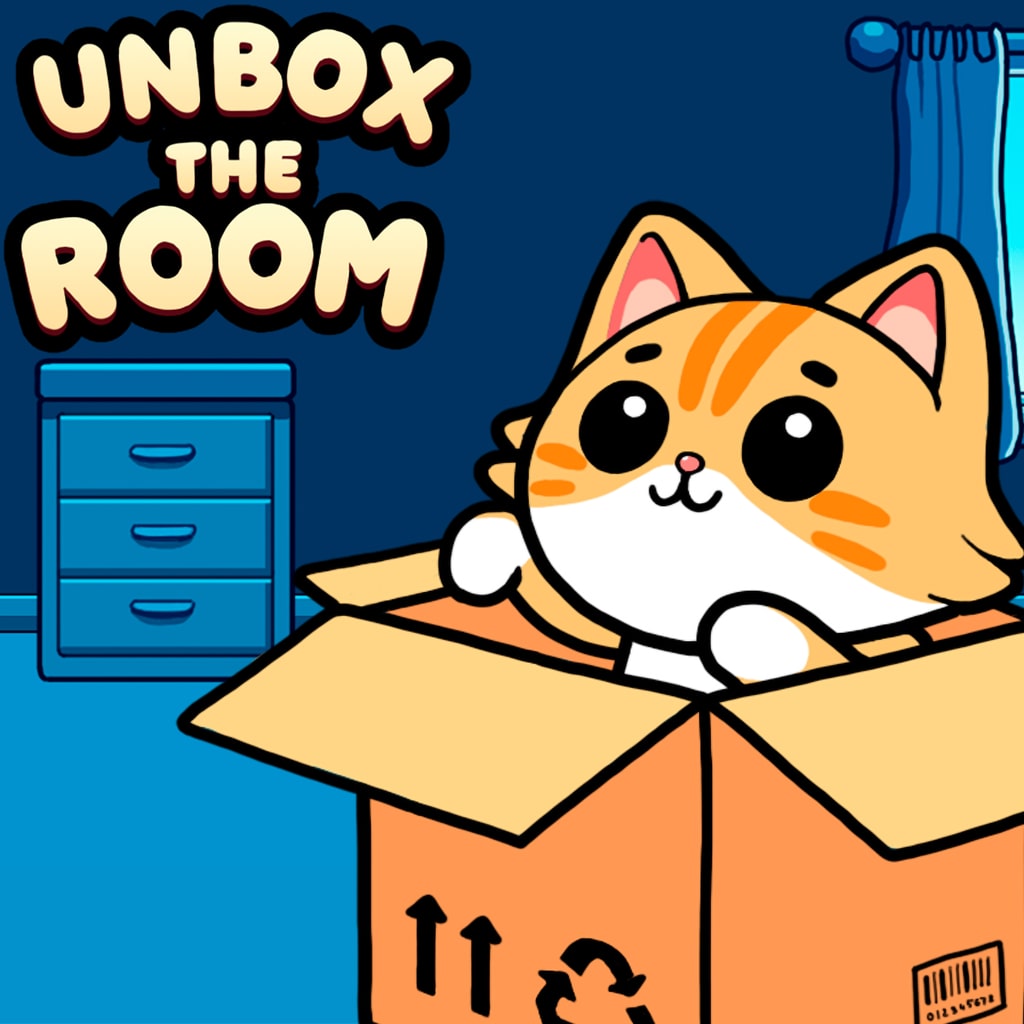
Moving house is rarely anyone’s idea of fun. Between endless cardboard boxes, misplaced belongings, and the nagging feeling that nothing quite belongs where you first put it, it’s often a stressful experience. Yet there’s also something quietly comforting about unpacking familiar possessions and watching an empty space slowly become a home. Unbox the Room takes that simple satisfaction and builds an entire game around it, inviting players to slow down, forget about scores or deadlines, and simply enjoy the process of making a house feel lived in.
Developed by PlayMax Games and published by BIG WAY, Unbox the Room arrives in a genre that has quietly flourished in recent years. Games centred on organisation, decoration, and mindfulness have found an enthusiastic audience, proving that not every experience needs explosions or frantic action to remain engaging. Rather than chasing excitement through spectacle, Unbox the Room focuses on atmosphere, gentle storytelling, and the small pleasures of everyday life. The result is an experience that feels less like a traditional game and more like spending an afternoon helping a friend settle into a new chapter of their life.
Every Box Tells a Story
At its heart, Unbox the Room is wonderfully straightforward. Each level begins with a room, or sometimes an entire home, waiting to be filled. Boxes are scattered throughout the space, each containing furniture, decorations, books, kitchenware, clothing, and countless personal belongings. Your task is to unpack everything and decide where each object belongs.
What immediately sets Unbox the Room apart from many decorating games is its subtle approach to storytelling. You’re never handed lengthy dialogue or dramatic cutscenes explaining who your clients are. Instead, their personalities emerge naturally through the possessions they own. A stack of well-thumbed novels, musical instruments resting against a wall, family photographs, children’s toys, or carefully packed kitchen utensils gradually paint a picture of lives already lived.
There’s something quietly intimate about discovering these details. Every object feels chosen rather than randomly generated, allowing you to build an emotional connection with people you never actually meet face to face. It transforms what could have been a repetitive organisational exercise into something much more personal.
Finding Beauty in Simplicity
The gameplay loop remains remarkably consistent throughout the experience, and that consistency works in its favour. Open a box. Examine what’s inside. Rotate each item if necessary. Find a logical, attractive place for it. Repeat until every room feels complete.
That might sound repetitive on paper, but it’s surprisingly therapeutic in practice. There are no countdown timers pushing you forward, no penalties for taking your time, and no demanding objectives to interrupt your flow. You move entirely at your own pace, experimenting with layouts until everything feels right.
The freedom offered here deserves praise. Rather than forcing every object into a single predetermined location, the game encourages creativity. Perhaps you’d rather display a collection of books neatly on shelves rather than stack them beside the bed. Maybe the favourite coffee mug belongs beside the kettle rather than in the cupboard. These little decisions help every completed room feel uniquely yours, even if you’re technically decorating someone else’s home.
That creative flexibility makes every completed space feel earned. You’re not solving puzzles so much as expressing a sense of comfort and balance.
Relaxation Without Losing Purpose
Many relaxing games struggle to maintain momentum because they mistake peace for uneventfulness. Unbox the Room avoids that trap thanks to its steady sense of progression. Each completed room reveals another home, another client, and another glimpse into someone else’s life.
The environments steadily become more detailed and varied, introducing different layouts, architectural styles, and decorative opportunities without abandoning the game’s accessible foundations. Bedrooms filled with childhood memories give way to modern apartments, cosy living spaces, and homes that reflect entirely different personalities.
This gradual expansion keeps the experience engaging throughout its runtime. You’re always curious to discover what lies inside the next unopened box.
The inclusion of Sandbox Mode further extends the game’s longevity. Without objectives or limitations, it allows players to experiment freely with layouts and furnishings, turning decoration into a genuinely creative pastime. For players who simply enjoy arranging spaces, this mode becomes an enjoyable playground that encourages endless experimentation.
Quiet Storytelling That Resonates
Perhaps the game’s greatest achievement is the emotion it evokes with almost no words. Objects become memories. Decorations become personality traits. An old teddy bear tucked carefully on a shelf says more about its owner than pages of dialogue ever could. A collection of travel souvenirs hints at adventures abroad, while handwritten notes and treasured keepsakes suggest relationships and milestones that predate the player’s arrival.
This environmental storytelling gives Unbox the Room a surprising warmth. Every completed room feels like helping someone start again, preserving the important pieces of their past while giving them space to build a future. It’s storytelling through observation rather than exposition, and it works beautifully because it trusts players to fill in the emotional gaps themselves.
Calm Presentation
Visually, Unbox the Room adopts a clean, inviting style that suits its relaxed tone. The environments don’t strive for photorealism, yet they’re detailed enough to feel believable. Soft lighting bathes each room in warmth, while furniture and decorations have enough character to avoid feeling generic.
The animations remain smooth and unobtrusive throughout, making interactions with objects tactile without becoming overly complicated. Rotating furniture, placing decorations, and adjusting layouts all feel intuitive, helping maintain the game’s peaceful rhythm.
Audio is equally restrained. Gentle background music drifts through each level, never demanding attention but constantly reinforcing the game’s calming atmosphere. Ambient household sounds provide just enough presence to make each home feel occupied without becoming distracting. Together, the presentation creates an inviting environment that players can comfortably lose themselves in for hours.
Small Frustrations
While Unbox the Room delivers a relaxing experience, it isn’t entirely without shortcomings. Item placement can occasionally feel fiddlier than intended. Certain objects require precise positioning before they’re accepted, leading to brief moments when you’re rotating an item repeatedly despite already knowing exactly where you want it. These interruptions are minor, but they briefly break the otherwise effortless flow.
Variety also relies heavily on the player’s appreciation for organisation. Although each home introduces different layouts and possessions, the underlying mechanics remain largely unchanged from beginning to end. Players seeking evolving gameplay systems or increasingly complex challenges may eventually wish for additional mechanics to accompany the decoration.
Even so, these criticisms never undermine the game’s central appeal. Its focus has always been relaxation rather than escalation, and it remains committed to that vision throughout.
Final Verdict
Unbox the Room understands something many modern games overlook: satisfaction doesn’t always come from defeating impossible bosses or chasing ever-larger rewards. Sometimes it comes from placing a favourite photograph on a bedside table, arranging books neatly on a shelf, or stepping back to admire a room that finally feels complete.
Its gentle pacing, environmental storytelling, and creative freedom combine to create an experience that feels genuinely restorative after a busy day. Every unpacked box reveals another small piece of someone’s life, quietly reminding us that homes are built from memories as much as bricks and furniture.
It may not reinvent the cosy simulation genre, but it embraces its strengths with confidence and sincerity. For players seeking a peaceful escape filled with warmth, personality, and simple pleasures, Unbox the Room delivers exactly what its title promises. Sometimes, making space for someone else’s memories can become a comforting experience in itself.