There is something magical about the old LCD handheld games of the 1980s and early 1990s. Long before sprawling open worlds and cinematic storytelling, those simple black-and-grey screens captured imaginations with little more than blinking sprites and catchy sound effects. Future Knight taps directly into that nostalgia, but instead of recreating those memories exactly as they were, it poses a far stranger question. What if those tiny electronic games hid a bizarre science-fiction adventure filled with cults, body horror, absurd comedy and frantic action?
Developed by Studio Koba alongside Aeternum Game Studios, Future Knight is unlike almost anything else released this year. It wears its retro inspirations proudly, yet beneath its nostalgic shell beats the heart of an inventive modern action game. It is unapologetically weird from its opening moments and only grows stranger as the journey unfolds. While not every idea lands perfectly, its confidence and originality make it difficult to forget.
Gameplay
Future Knight is best described as a hybrid of a run-and-gun shooter and a classic shoot ’em up, though even that only scratches the surface. Every level combines platforming, shooting and environmental hazards, constantly asking players to think about movement as much as firepower. Enemies attack from every angle, bosses fill the screen with projectiles, and the pace rarely slows long enough to be comfortable.
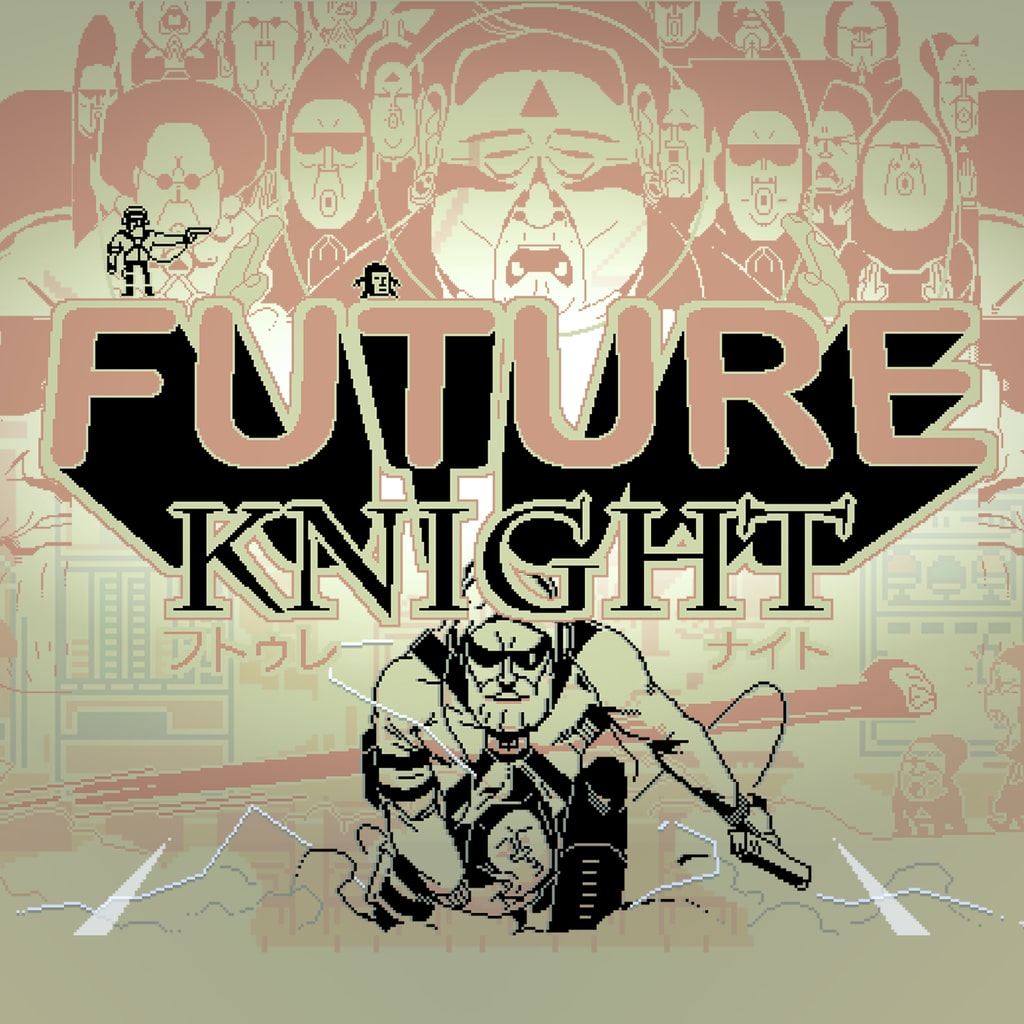
What immediately separates Future Knight from similar games is its dual-character system. The robot Future Knight delivers powerful ranged attacks and heavy weapons, while his bizarre companion Two More specialises in mobility, rapid dashes and squeezing into areas the larger hero cannot reach. Swapping between the two is not simply encouraged. It becomes absolutely essential.
The relationship between the pair creates a satisfying rhythm once everything clicks into place. Future Knight restores Two More’s energy, while Two More can recover Future Knight’s health. Instead of treating them as separate characters, the game encourages players to think of them as two halves of the same fighting style. Battles become elegant dances of constant switching, aggressive movement and quick decision-making.
The learning curve can feel intimidating in the opening stages. Players unwilling to embrace the switching mechanic may initially find the action overwhelming. Thankfully, persistence is rewarded, and after several levels the combat begins to feel surprisingly natural. Success becomes less about memorising enemy locations and more about maintaining a steady flow between both characters.
A World That Refuses to Make Sense
Few games embrace surreal storytelling quite like Future Knight. The basic premise alone feels like something pulled straight from an experimental animated film. Humanity faces extinction because the leader of a strange pyramid-scheme cult accidentally wipes everyone’s memories while washing her underwear. If that sounds ridiculous, it absolutely is.
Yet beneath all the absurdity lies a surprisingly clever narrative about memory, identity and time. The humour remains wonderfully unpredictable throughout, balancing ridiculous situations with moments of genuine mystery. Rather than explaining every bizarre event, the game simply asks players to accept its strange world and enjoy the ride.
Each biome represents one of the final eight hours before the apocalypse, allowing each level to showcase a completely different location and concept. One moment players are navigating dangerous construction sites, while the next they find themselves battling through sushi restaurants or bizarre industrial landscapes. This constant variety keeps the campaign fresh from beginning to end.
The pacing also deserves praise. Rather than overstaying its welcome, the adventure delivers a focused experience that introduces new mechanics regularly before reaching its memorable finale.
Visual Presentation
Future Knight’s visual identity may be its greatest achievement. Inspired by monochrome LCD displays, every character appears as if they have escaped from an old electronic handheld game. Yet the animation is remarkably fluid, avoiding any sense of primitiveness.
The developers have somehow created movement that resembles flowing ink trapped beneath liquid crystal screens. Sprites stretch, morph and twist in ways that feel both nostalgic and unsettling. Cute character designs sit alongside grotesque monsters, creating a fascinating visual contrast that perfectly suits the game’s surreal tone.
Boss encounters especially shine. Each one feels handcrafted to surprise players with increasingly bizarre designs and attack patterns. There is genuine creativity on display throughout the campaign, with encounters that constantly introduce unexpected visual ideas.
Performance remains smooth even during the busiest firefights, allowing the action to retain its frantic pace without becoming frustrating. Fast response times are absolutely essential for a game built around rapid movement, and Future Knight rarely lets technical issues interrupt the flow.
Sound Design
Audio plays a significant role in selling the illusion of stepping inside an old handheld device. Sound effects deliberately echo classic electronic games while adding modern depth where needed. Every weapon feels distinct, every dash lands with satisfying impact, and enemy explosions punctuate the action beautifully.
The soundtrack deserves particular recognition. Rather than simply relying on retro-inspired melodies, it blends nostalgic electronic influences with energetic modern compositions that perfectly match the game’s relentless pace. The music constantly reinforces the growing urgency as the countdown to disaster continues.
Voice work is used sparingly, allowing the bizarre dialogue and visual storytelling to take centre stage. Combined with the excellent soundtrack, this creates an atmosphere unlike almost anything else currently available.
Challenge Without Feeling Unfair
Future Knight is certainly not an easy game. Reflexes and positioning matter, and learning boss patterns becomes increasingly important as the campaign progresses. Players expecting a relaxed, nostalgic experience may be surprised by how demanding later encounters become.
Fortunately, difficulty rarely crosses into frustration because failures usually feel deserved. The controls remain responsive, character movement is precise, and the switching mechanic offers enough flexibility to overcome most situations through practice rather than luck.
Boss fights represent the game’s strongest challenges. Each introduces new mechanics that test mastery of both characters rather than relying purely on larger health bars. Victory feels genuinely satisfying because players are constantly encouraged to deepen their understanding rather than simply upgrading equipment.
Final Verdict
Future Knight could easily have settled for being another retro-inspired indie platformer. Instead, it takes bold creative risks, blending classic LCD nostalgia with surreal humour, inventive combat mechanics and unforgettable visual design. Its strange world will not appeal to everyone, but players willing to embrace its wonderfully bizarre vision will find an experience brimming with imagination and personality.
The dual-character system transforms what could have been straightforward shooting into something far more engaging, rewarding experimentation and mastery throughout the campaign. Combined with memorable bosses, consistently inventive level design and one of the most distinctive visual styles in recent memory, Future Knight stands confidently apart from its peers.
A few rough edges remain. The opening hours can feel punishing until the switching mechanic becomes second nature, and the sheer weirdness of its story may divide audiences seeking something more conventional. Even so, those minor issues do little to diminish what is ultimately an imaginative and thoroughly entertaining adventure.
Future Knight is a reminder that originality still matters. In an industry often dominated by familiar formulas, this eccentric little action game dares to be different from its opening scene to its closing moments. That confidence alone makes it worth celebrating.