The roguelite genre has become one of gaming’s most welcoming battlegrounds for experimentation. What began as a relatively niche formula has grown into a playground where developers can combine endless waves of enemies with wildly different ideas, creating experiences that are easy to pick up but surprisingly difficult to put down. Achilles: Survivor steps into that arena with a familiar foundation, but its clever use of tactical structures and Greek mythology gives it enough personality to stand out from the ever-growing crowd.
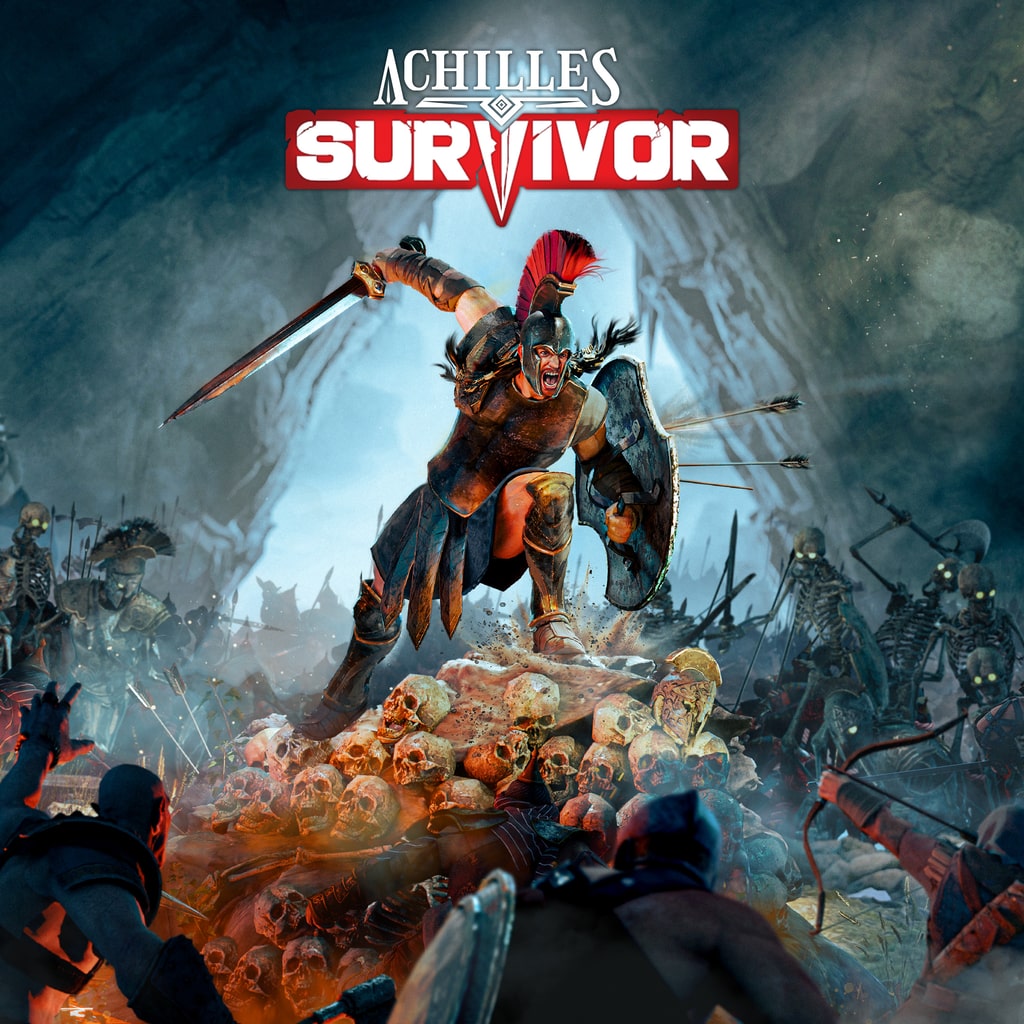
Developed and published by Dark Point Games alongside Galaktus, Achilles: Survivor takes the world established in Achilles: Legends Untold and transforms it into a fast-paced bullet-hell experience. Instead of the slower action RPG approach of its predecessor, this spin-off focuses on survival, experimentation and building the perfect combination of powers before the enemy hordes become completely overwhelming.
Players take control of Achilles, the legendary warrior of Greek mythology, or one of several other mythological heroes freed from the depths of Tartarus. After escaping the underworld and causing chaos among the realms of the dead, Achilles finds himself surrounded by endless waves of monsters and supernatural threats. The solution is simple: fight, adapt and become strong enough to survive another attempt.
The premise fits the genre perfectly. These games are built around repeated battles, gradual improvement and the thrill of watching a character evolve from a vulnerable fighter into an unstoppable force. Achilles: Survivor understands that appeal and adds its own tactical twist, making every run feel like a chance to discover something new.
More Than Just Another Bullet Heaven
At first glance, Achilles: Survivor appears to follow a familiar formula. Players move around an arena, automatically attacking enemies and collecting experience to unlock new abilities. The screen quickly fills with monsters, projectiles and visual effects, creating the satisfying chaos fans of the genre have come to expect.
However, Dark Point Games introduces a unique mechanic that changes how players approach survival. Rather than relying solely on weapons and upgrades, players can construct defensive structures during runs. These include flame turrets, healing shrines and summoned allies that help control the battlefield.
This addition gives Achilles: Survivor a strategic identity. In many survivor-style games, positioning is mostly about avoiding danger while letting your abilities handle the destruction. Here, players must think about where to establish their defences and how those structures can influence the flow of battle.
A well-placed turret can turn an impossible situation into a manageable one. A healing shrine can provide the breathing room needed to recover during intense moments. Summoned allies can distract enemies long enough for your strongest abilities to recharge. These decisions add a satisfying layer of tactical thinking that rewards players who look beyond simply increasing damage numbers.
The limitation of resources also prevents the building system from becoming too powerful. Players cannot cover the entire arena with defences and wait comfortably. Every structure needs to be placed with purpose, ensuring the mechanic remains central to survival rather than a simple bonus feature.
The Power of Mythological Heroes
One of Achilles: Survivor’s biggest strengths is its roster of legendary characters. While Achilles is naturally the centrepiece, the game expands beyond the famous warrior by introducing a variety of heroes, each with distinct abilities, strengths and playstyles.
Achilles himself embodies raw power, relying on close-range combat and devastating attacks that reflect his reputation as one of history’s greatest warriors. Paris offers a completely different approach, favouring ranged attacks and precision. Pythia brings magical abilities that transform the battlefield, while Brontes the Cyclops offers overwhelming strength and destructive force.
These differences encourage experimentation. A successful build with one character may fail with another, forcing players to adapt their strategies rather than relying on a single dominant approach.
This variety also improves replay value. The best survivor games thrive when players constantly ask, “What happens if I try this?” Achilles: Survivor creates plenty of those moments, whether it is combining unusual abilities, experimenting with different structures or discovering a character’s hidden potential.
Unlocking new heroes becomes an exciting goal rather than a simple checklist task. Each addition changes the rhythm of gameplay, giving players a reason to continue pushing deeper into the game’s challenges.
Building Your Own Legend
Progression is a crucial part of any roguelite, and Achilles: Survivor handles it with a rewarding approach that respects player time. Every run contributes to future success, even when defeat eventually arrives.
Completing challenges and collecting treasures unlocks permanent upgrades via the Favor system. These improvements increase strength, survivability and effectiveness across future attempts, creating the satisfying feeling that every battle matters.
This structure is especially important because failure is inevitable. The later stages of each run become increasingly brutal, with larger enemy groups, more aggressive attacks and powerful bosses that demand careful preparation. Rather than making defeat feel discouraging, the game ensures every attempt yields progress.
The result is a steady sense of growth. Early runs may feel overwhelming, but returning with improved abilities and a better understanding of enemy patterns creates a satisfying journey from weakness to dominance.
That feeling of progression is what keeps players invested. The goal is not simply reaching the end, but seeing how much further you can push your warrior each time.
Ancient Greece Through a Darker Lens
The world of Achilles: Survivor offers a strong visual identity that sets it apart from many other games in the genre. Rather than abstract arenas or generic fantasy locations, players battle across environments inspired by Greek mythology and the world of Achilles: Legends Untold.
The walls of Troy, Greek coastlines and the depths of Tartarus provide memorable backdrops for the chaos unfolding on screen. Each location feels connected to the game’s mythology, giving the endless battles a stronger sense of place.
Enemy design also benefits from the setting. Players face creatures inspired by ancient legends alongside terrifying forces from the underworld. This variety helps sustain excitement as new regions introduce distinct threats and challenges.
The presentation does not aim for photorealism, but it delivers a dark, dramatic atmosphere that suits the game’s tone. Explosions of colour during combat contrast with the harsher environments, making every ability activation feel impactful.
The soundtrack and sound effects further enhance the experience, providing the epic atmosphere expected of a mythological adventure.
Fighting the Same Battle Again
Like many games in the survivor genre, Achilles: Survivor’s greatest strength can also become its biggest limitation. The core gameplay loop is addictive, but repeated runs can eventually feel familiar, especially once players have unlocked most characters and upgrades.
The game offers enough variety through different heroes, structures and challenges to maintain interest, but players seeking a traditional story-driven adventure may find the focus on repetition less appealing.
Some balancing issues also arise during certain runs. Particular combinations of abilities can become dramatically more effective than others, occasionally making the outcome feel decided by a lucky early upgrade selection rather than pure skill. These moments are common in the genre, but refining the balance could make future updates even stronger. Thankfully, the satisfying combat and constant progression help overcome these minor issues.
Final Thoughts
Achilles: Survivor is a strong addition to the bullet heaven genre because it recognises that innovation does not always require a complete overhaul of the formula. Sometimes, a single meaningful idea is enough to create something memorable.
The structural building mechanics give every run a tactical edge, while the mythological setting and diverse hero roster provide a strong identity. Combined with rewarding progression and satisfying combat, the result is an experience that feels familiar yet refreshingly different.
It may not completely redefine the survivor genre, but it carves out its own space among the many games competing for players’ attention. Dark Point Games has created a fast, addictive and surprisingly strategic adventure that captures the spirit of legendary warriors fighting against impossible odds. Every run tells a story. Every defeat makes you stronger. And every victory feels like another chapter in the legend of Achilles.