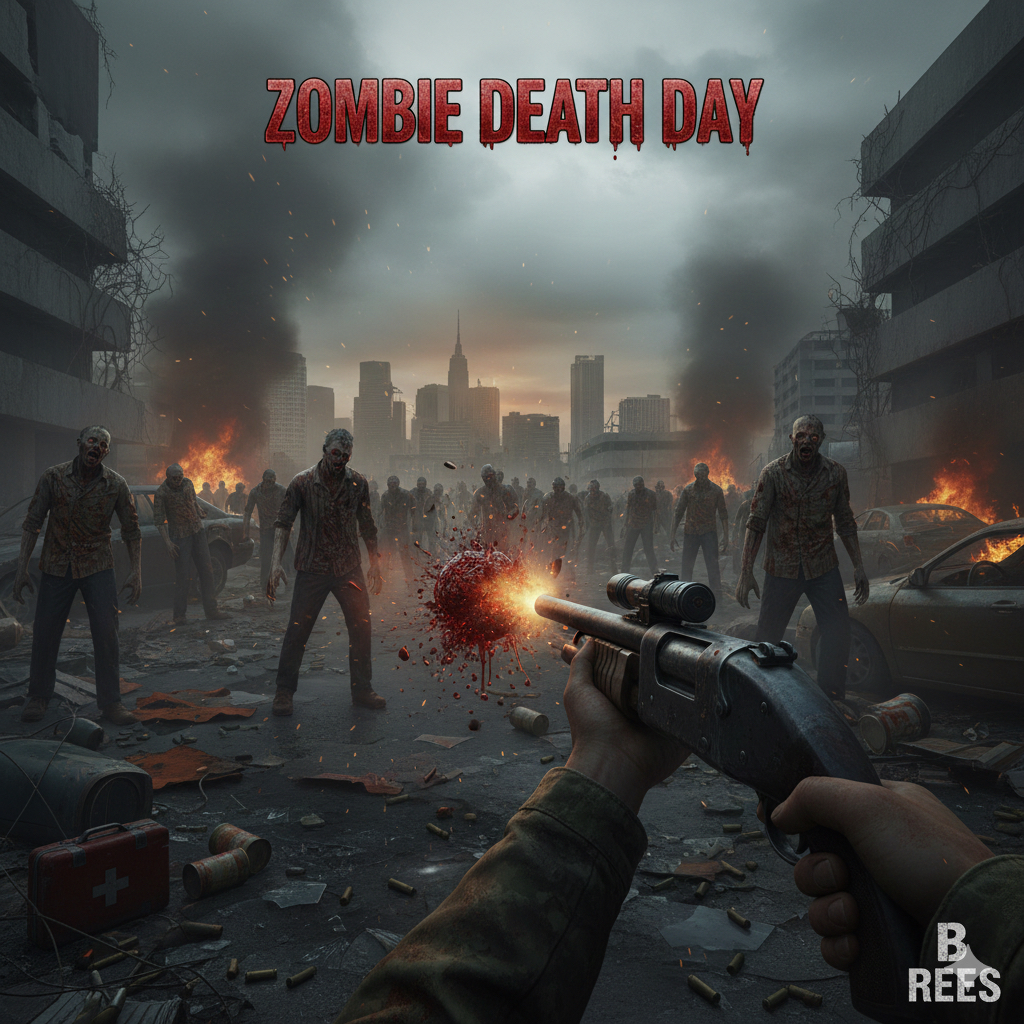
The zombie apocalypse genre has been explored from nearly every angle: base building sims, story-driven epics, co-op shooters, and roguelike walkthroughs among them. Amidst these, Zombie Death Day rolls onto the scene with a clear vision: give players a raw, survival-oriented experience where every bullet counts, every step could be your last, and the undead are as unforgiving as the wasteland you inhabit.
Developed and published by indie creator B Rees, Zombie Death Day is an unapologetically gritty take on survival. It trades polished spectacle for primal tension, forcing players to manage limited resources, navigate decaying environments, and confront both shambling hordes and sudden ambushes with a mixture of strategy and reflex.
For fans wanting their zombie thrill served lean and tense, the game has much to offer. Yet, its ambition sometimes outpaces its execution, leaving a strong concept that occasionally feels rough around the edges.
Premise and Setting
Set in a world long overrun by the undead, Zombie Death Day casts players as a lone survivor navigating desolate towns, abandoned outposts, and rural sprawl infested with danger. There is no overarching hub or sanctuary; every environment feels like a temporary haven at best.
The narrative, such as it is, is delivered sparsely through environmental storytelling: scribbled notes on bulletin boards, abandoned gear near collapsed shelters, cryptic audio recordings that hint at previous lives. If Zombie Death Day had strong ambitions to redefine story in survival games, they are muted and understated. Instead, the emphasis lies squarely on survival as experience — less about plot, more about persistence.
This approach works, but it also means players looking for character arcs or narrative payoffs may walk away feeling like an observer of ruin rather than a protagonist with a mission.
Core Gameplay Loop
At its heart, Zombie Death Day is a survival action game built around three intertwined pillars:
Combat and Tension
Combat is visceral and impactful. Zombies — slow, limping shamblers and the occasional sprinter — behave with enough variation to keep encounters fresh. Melee combat is brutal but risky: up close, every swing must count, and stamina drains fast. Ranged combat feels weighty. Bullets are finite, and reloading mid-battle often becomes a gamble.
The AI isn’t perfect — there are moments when enemies cluster unnaturally or pathfinding glitches create awkward moments — but in general, the threat feels real. Every encounter has teeth, and every misstep is punished.
Resource Management
Ammo, food, medical supplies — these currencies loom large in Zombie Death Day. Rummaging through rusted cars, basements, and long-abandoned homes becomes a key mechanic. Sometimes the thrill is not in the firefight, but in the quiet careful choice to press deeper into a dangerous house in search of one more bandage.
This scarcity forces players to think tactically. Do you risk a noisy firefight for ammunition, or sneak past undead hordes in hopes of reaching a safer stash? These decisions are where the game is at its strongest, turning every gear choice into a narrative of survival.
Exploration and World Design
The world of Zombie Death Day is sprawling and disjointed — a feature, not a flaw. Small towns connect to farmland, which gives way to dense woods, each environment populated by unique resource opportunities and lurking threats.
The lack of fast travel ensures the open world feels threatening yet rewarding when navigated well. Zebra crossings lead to hospital scavenges, forests guard hidden paths, and every abandoned bunker has the possibility of a crucial find — or a deadly encounter.
There are occasional pacing dips, particularly in larger open areas where the absence of immediate threats can soften the tension — but these lulls also build suspense. When danger does arrive, it feels justified.
Visuals and Audio
Zombie Death Day doesn’t rely on high-end graphics. Instead, it embraces a gritty, textured aesthetic that suits its post-apocalyptic world. Everything from rusted metal to peeling paint feels worn and real, and while the models aren’t the most detailed, they work in service of the atmosphere rather than distraction.
Sound design is one of the game’s stronger elements. Ambient effects — groaning wind, distant shuffles, and the tense crackle of static — set you on edge before any visual cue appears. Audio also plays a tactical role: a distant moan can signal an incoming horde, while the snap of a twig can betray your approach to an unseen foe.
Music is sparse, used sparingly to accentuate particularly bleak or fraught moments, which reinforces Zombie Death Day’s commitment to tension over bombast.
Control, Accessibility, and UI
Controls are serviceable but occasionally unwieldy. Aiming and movement feel solid during most encounters, but there are times when dodging feels imprecise or switching items mid-fight feels clunky. An improved control mapping interface and more intuitive quick-item selection could alleviate some of this friction.
The UI is functional, offering clear indicators for health, stamina, inventory, and objectives. That said, it’s not always as user-friendly as it could be; newcomers to survival games may find the lack of context or tutorialisation daunting.
Yet for players who relish learning systems through trial and error, this adds to the feeling of being thrust into a hostile world without a safety net — a design choice that, while divisive, is coherent with the survival theme.
Challenge and Replayability
Zombie Death Day is not an easy game, and it doesn’t pretend to be. Difficulty spikes come without much warning, and the playstyle that succeeds early in the game isn’t always the same one that keeps you alive later on.
While this can be frustrating, it also encourages experimentation. Survival games thrive when players feel they are mastering systems rather than memorising event scripts, and Zombie Death Day largely delivers on this front. Every death feels like a lesson, and every narrow escape feels hard-earned.
Replayability is boosted by a loose sandbox structure. There are no rigid missions pushing you forward, meaning each run feels like a unique narrative of survival, loss, and resilience.
Where It Falls Short
Despite its strengths, Zombie Death Day has areas where polish could have sharpened its impact:
- Narrative sparseness: The deliberate lack of story detail may leave some players disengaged.
- Control roughness: Clunky item switching and occasional movement frustrations detract during key encounters.
- Balance hiccups: There are moments where resource scarcity feels arbitrary rather than meaningful.
These issues don’t break the experience, but they do keep Zombie Death Day from feeling fully realised.
Final Verdict
Pros:
- Strong survival tension and resource strategy
- Gritty, atmospheric world design
- Meaningful, engaging exploration
- Audio complements the tone expertly
Cons:
- Steep learning curve with limited hand-holding
- Control and UI quirks in high-pressure moments
- Sparse narrative context
- Occasional pacing lulls
Summary:
Zombie Death Day is an evocative survival title that captures the dread and thrill of navigating a world overrun by the undead. Its strengths lie in tension-driven survival mechanics, atmospheric audio-visual design, and the sense of genuine risk in every choice. While not without its rough edges — particularly in controls and narrative depth — it offers an engaging challenge for fans of gritty, methodical survival games.
For those seeking an experience where every scavenge feels risky and every firefight feels earned, Zombie Death Day delivers a compelling slice of post-apocalyptic survival. For players who prefer smoother pacing, clearer guidance, or more story context, its uncompromising design may feel a little unpolished