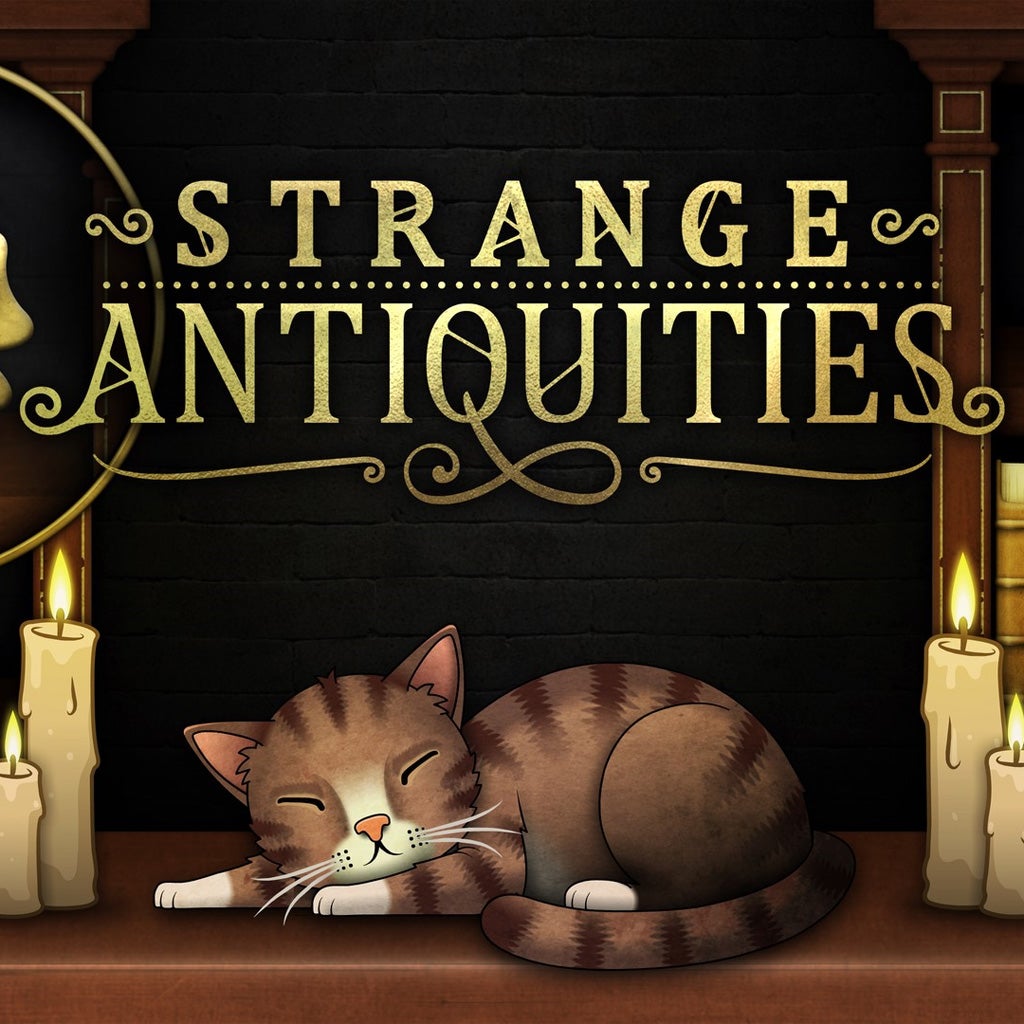
There are games that ask you to save the world. Others ask you to build one. Strange Antiquities asks you to sit quietly in a candlelit shop and decide what kind of damage you are willing to do in the name of understanding it.
Developed by Bad Viking and published by Iceberg Interactive, this follow-up to Strange Horticulture trades plants for artefacts and quiet botanical mystery for something more unsettling. You are an Apprentice Thaumaturge in the fog-drenched town of Undermere, tasked with identifying occult objects, serving customers with strange needs, and slowly uncovering whatever rot is spreading beneath the surface of reality. It is a shopkeeper simulation, yes. But it is also something far stranger.
The Ritual of Identification
At the heart of Strange Antiquities is a simple but deeply satisfying loop. A customer arrives. They present an artefact. You examine it. From there, the work begins.
You study symbols, textures, inscriptions. You cross-reference dusty illustrated tomes. You compare fragments of information until something clicks into place. Every object feels like a small investigation, and every correct identification carries a quiet sense of accomplishment.
This is not fast-paced puzzle solving. It is deliberate, almost ritualistic. You are encouraged to slow down, to sit with uncertainty, to let the answer reveal itself through attention rather than urgency.
The tactile nature of this process is where the game shines. Dragging objects across the desk. Flipping through pages. Noting contradictions. It feels less like solving a puzzle and more like performing careful academic archaeology on something that should probably not be touched at all.
A Shop Filled With Consequences
Once an item is identified, the next decision is rarely simple. Do you sell it? Do you use it? Do you help the person standing in front of you, or do you quietly make their life worse?
There are no obvious moral signposts. The game does not announce consequences in advance. Instead, it lets them unfold naturally, often much later than expected.
A harmless decision early on might return in a distorted form hours later. A small act of kindness might ripple outward in ways you did not anticipate. The town of Undermere remembers what you do, even when it does not immediately respond.
This creates a quiet tension that runs through every interaction. You are not just managing a shop. You are managing trust, fear, and the slow accumulation of unseen consequences.
Undermere, A Town That Breathes Uneasily
The setting of Undermere is one of the game’s greatest achievements. It is a place that feels lived in, but not safe. Fog clings to its streets. The lake beside it feels too still. Even the shop itself carries a sense of history that is not entirely comforting.
Exploration outside the shop adds another layer to the experience. You travel using hand drawn maps, visiting locations tied to rumours, requests, and unfolding mysteries. These excursions are not constant, but when they happen, they expand the world just enough to remind you that the shop is not the centre of everything. It is merely a threshold. There is a subtle unease to everything here. Nothing is openly hostile, but everything feels like it could become so at any moment.
The Weight of Knowledge
One of the most interesting aspects of Strange Antiquities is how it treats knowledge itself as something dangerous. The more you learn about an object, the more complicated your decisions become. Understanding does not simplify things. It complicates them. You begin to realise that knowing what something is does not always tell you what should be done with it.
This creates a fascinating emotional rhythm. You start each day with curiosity. You end it with uncertainty. There is no comfortable mastery here. Only deeper layers of ambiguity.
Jupiter, and the Small Comforts
Amid all the occult tension and moral unease, there is Jupiter, the shop’s cat. He offers no guidance, no insight, no supernatural assistance. He simply exists, occasionally demanding attention.
It is a small detail, but an important one. Jupiter anchors the experience in something recognisably human. A reminder that even in a world full of cursed objects and shifting realities, there are still moments of softness.
The game understands the value of these interruptions. They prevent the atmosphere from becoming oppressive. They give you space to breathe.
A Sequel That Expands Rather Than Repeats
Fans of Strange Horticulture will recognise the foundation here, but Strange Antiquities does not simply replicate its predecessor. It expands it. Where the first game focused heavily on static shopkeeping and plant identification, this entry introduces more movement. You leave the shop more often. You engage with the town more directly. You are given a broader role in the unfolding narrative rather than remaining purely observational.
This shift works well, though it is not without friction. The transition between calm shop management and occasional fieldwork can feel slightly uneven. The pacing sometimes stutters when moving between these modes.
But the added scope also gives the world more texture. Undermere feels less like a backdrop and more like a living system of interconnected problems.
Horror Without Loudness
What makes Strange Antiquities special is its restraint. It is not a loud horror game. It does not rely on shock or spectacle. Instead, it builds discomfort slowly, through implication, ambiguity, and consequence.
There are moments of genuine unease, but they are rarely sudden. They arrive quietly, often disguised as something routine. A customer request. An object that feels slightly wrong. A note that does not quite make sense. The horror here is intellectual as much as emotional. It lives in uncertainty.
The Limits of Stillness
For all its strengths, the game’s deliberate pacing will not suit everyone. There are long stretches where progress feels subtle rather than dramatic. Some players may find the repetition of identification work starts to blend together over extended sessions.
There is also a reliance on inference that can occasionally lead to frustration. While ambiguity is part of the design, there are moments where clarity would have improved flow without undermining atmosphere. These are not flaws that break the experience, but they do shape its accessibility.
A Game About Paying Attention
What Strange Antiquities ultimately asks of you is attention. Not urgency. Not efficiency. Attention. To objects. To people. To the quiet consequences of small decisions made in a candlelit room at the edge of a forgotten town.
It is a game that rewards patience and curiosity in equal measure. One that trusts you to sit with discomfort rather than rush past it.
Final Verdict
Strange Antiquities is a beautifully crafted exercise in atmospheric storytelling and deliberate puzzle design. It refines and expands on the foundation laid by Strange Horticulture, offering a richer world, deeper consequences, and a more expansive sense of place.
While its pacing and ambiguity may not suit all players, those willing to embrace its slower rhythm will find a deeply engaging experience built on curiosity, consequence, and quiet unease. It is not just about identifying strange things. It is about deciding what to do with them once you do.