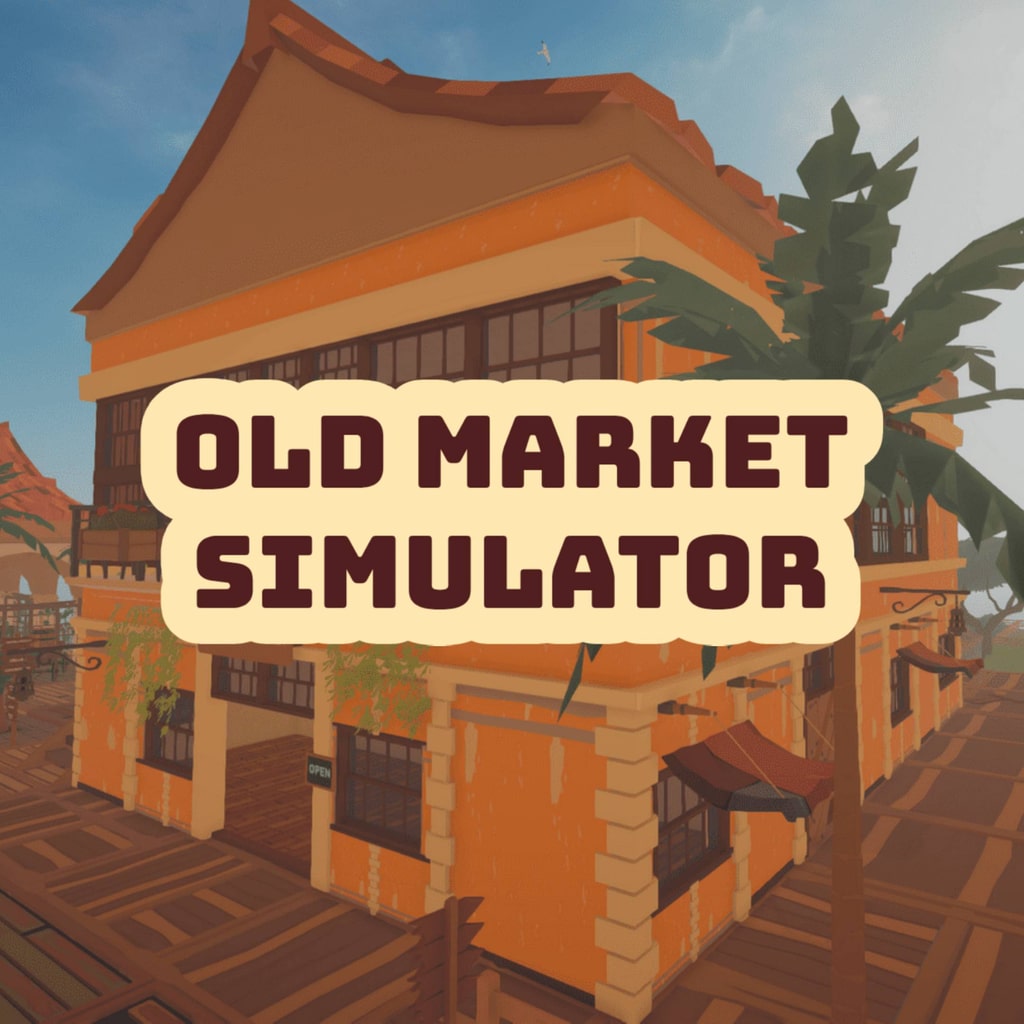
Most management sims ask you to think like a CEO. They pull the camera upward, turn people into statistics, and turn profit into abstraction. Old Market Simulator does something far more grounded. It asks you to show up, roll up your sleeves, and do the work yourself.
Developed and published by Alcedo Games alongside Gamersky Games, this expanded console version brings a 2024 PC favourite into a broader space, and in doing so, highlights exactly why it resonated in the first place. It is not about spreadsheets or empire building in the traditional sense. It is about labour. Repetition. Rhythm. And the slow satisfaction of turning effort into progress. You start small. A stall. A few goods. A quiet island community that expects nothing from you except consistency.
The Joy of Doing Everything Yourself
At the heart of Old Market Simulator is a loop built on manual action. You do not simply assign tasks and watch systems unfold. You perform them.
You stock shelves by hand. You arrange produce. You haggle directly with customers. You fish, farm, craft, and manage inventory through tactile interaction rather than abstract menus. This design choice could have easily become exhausting. Instead, it becomes strangely meditative.
There is a rhythm to it. Morning preparation. Midday rush. Evening cleanup. Each day feels like a cycle you gradually learn to move through more efficiently, not because the game automates it for you, but because you become better at it. It is the kind of progression you feel rather than measure.
A Life Built on Small Systems
As your market grows, so do your responsibilities. Farming becomes more complex, requiring attention to seasons and crop cycles. Livestock introduces daily care routines. Fishing adds unpredictability, with different waters offering different rewards. Crafting opens up new products that can significantly shift your profit margins.
None of these systems exist in isolation. They overlap constantly, creating a web of small tasks that gradually define your day.
What is impressive is how naturally these systems coexist. Nothing feels overly complicated, but nothing feels shallow either. Each activity feeds into the others, creating a loop that rewards planning without demanding perfection. You are always busy, but rarely overwhelmed.
Co-Op as the Real Engine
While Old Market Simulator can be played solo, it becomes something entirely different in co-op. With up to four players sharing responsibilities, the market transforms from a personal routine into a coordinated operation.
One player might handle farming while another manages sales. Someone else might take on fishing trips or crafting orders. Communication becomes essential, not in a competitive sense, but in a practical one.
This is where the game finds its strongest identity. It is not about optimisation in the traditional multiplayer sense. It is about shared labour. About dividing work in a way that feels natural rather than mechanical.
There is a quiet joy in looking around your market and seeing every corner being tended by someone else. Not because the game demands efficiency, but because collaboration emerges organically from the workload.
Growth That Feels Earned
Progression in Old Market Simulator is steady and grounded. You do not leap from small stall to massive enterprise overnight. Expansion happens gradually, through reinvestment and effort.
You upgrade storage. You expand farming space. You hire employees to help with repetitive tasks. Each step forward feels like the result of accumulated work rather than sudden success.
Even hiring staff does not remove you from the loop entirely. Employees assist, but they require management. They are not replacements for your labour, but extensions of it. This reinforces the game’s core philosophy. Growth is not about stepping away from the work. It is about handling more of it.
A World That Moves With You
The game offers multiple locations, each with its own tone and rhythm. A tropical island with a relaxed atmosphere. An East Town inspired by eastern architecture and busier trade routes. A Roman themed area built around reconstruction and recovery.
Each setting subtly shifts the way you approach your market. Customer preferences change. Event systems introduce seasonal demands. Prices fluctuate based on festivals and environmental conditions.
These changes are not overwhelming, but they do keep the experience from becoming static. They ensure that while your routine remains familiar, it is never identical.
Systems That Stay Grounded
One of the most refreshing aspects of Old Market Simulator is its refusal to overcomplicate its systems. Many modern simulation games lean heavily into automation, optimisation, and layered management layers. This game resists that pull.
Instead, it keeps everything close to the player. You are never far removed from the action. You are never just issuing commands. You are always doing. That design philosophy gives the game a physicality that is often missing from the genre. You feel the work rather than observing it.
The Quiet Limits of Repetition
Of course, this structure comes with its limitations. The same hands-on systems that create immersion can also lead to repetition over long sessions. Stocking shelves and processing goods, while satisfying at first, can begin to feel routine in extended play.
There is also a lack of overarching narrative structure. While events and seasonal changes add variety, there is no strong central story driving progression forward. The experience is defined entirely by player activity rather than narrative momentum. For some, this will be part of the appeal. For others, it may leave the experience feeling aimless over time.
Sound of a Working Day
The audio design reinforces the game’s grounded identity. There is no dramatic score pushing you forward. Instead, you get ambient sounds of water, footsteps, market chatter, and the soft clatter of daily work.
It is subtle, but effective. The soundscape supports the idea that this is a place where life is happening continuously, even when you are not directly interacting with it.
A Simulator of Effort, Not Efficiency
What Old Market Simulator understands better than most is that satisfaction does not always come from optimisation. Sometimes it comes from effort itself.
There is no grand fantasy here. No dramatic transformation into a corporate empire. Just a market that grows because you worked for it, day after day, task after task.
It is a game about showing up. About doing the small things well enough that they slowly become something larger.
Final Verdict
Old Market Simulator is a grounded, hands-on simulation that finds its identity in repetition, cooperation, and steady progression. It avoids complexity in favour of physical interaction, creating a loop that is as meditative as it is engaging.
While its lack of narrative structure and occasional repetition may limit long-term variety, its co-op focus and tactile systems make it a uniquely satisfying experience for players who enjoy grounded simulation gameplay. It is not about building an empire. It is about running a stall well enough that tomorrow feels just a little bit easier.